Skip to content

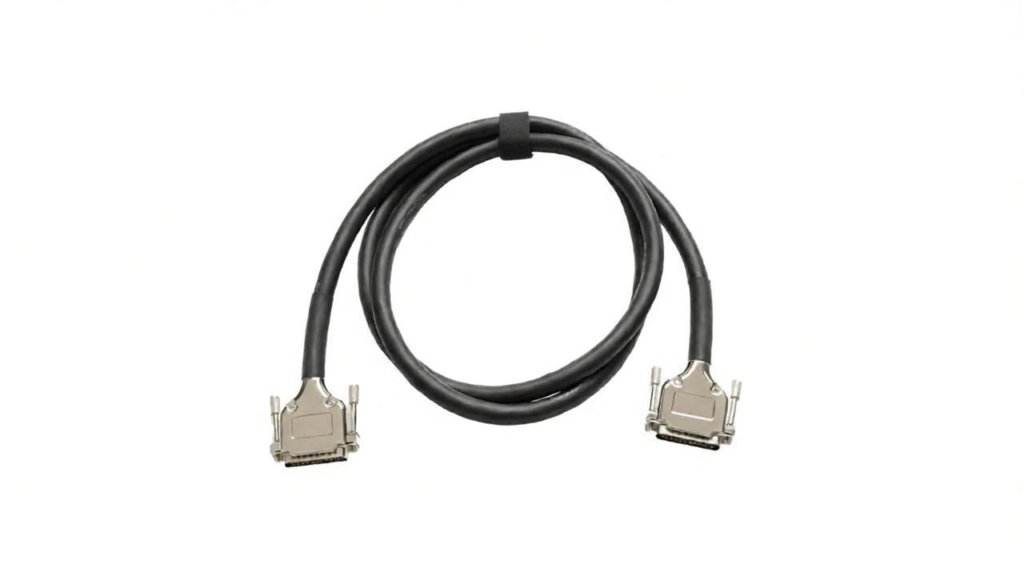
A video cable assembly can look simple on an RFQ: two connectors, a length, a jacket color and a quantity. The difficult part is that two cables with almost the same appearance can require completely different conductor structures, shielding systems, termination processes, electrical performance, test plans and component costs. A request such as “2-meter video cable, black, 5,000 pieces” may start a conversation, but it does not yet define what must be manufactured or how the finished assembly will be accepted.
For an accurate video cable assembly quote, provide the latest drawing or sample information, connector details, pinout, cable length and structure, required video interface and performance level, application conditions, testing and compliance requirements, target quantities, tooling or overmolding needs, packaging requirements and delivery information. These inputs allow the manufacturer to price the product against a defined construction and validation scope instead of filling important gaps with assumptions.
That distinction matters more than getting a price a day earlier. Imagine approving an attractive quotation, arranging internal purchasing approval and waiting for the first sample, only to discover that the cable was priced for basic connectivity while your equipment requires a much higher transmission level. The cable may physically fit and even pass a continuity check, yet still fail in the intended system. A strong RFQ is therefore less about sending a large number of documents and more about making sure the documents answer the questions that can change the product.
What Files Should You Send for a Quote?
A useful video cable assembly RFQ should include the latest drawing, BOM when available, connector information, pinout or wiring definition, cable length, sample photos or a physical sample, performance requirements, target quantity, testing requirements and packaging information. If some information is still open, identify it clearly so engineering can separate confirmed specifications from assumptions before sampling.
A complete RFQ does not necessarily mean a fifty-page engineering package. In many projects, five or six well-controlled references are more valuable than a folder full of old drawings and unmarked photographs. The manufacturer needs to know which file controls the mechanical structure, which document defines the wiring, which revision is current, whether the connector is fixed or still being selected, and whether the sample is a production reference or simply an example of the desired appearance.
Cablivo’s documented engineering workflow includes requirement review, drawing review, sample review, BOM review, connector confirmation, wire-sequence confirmation, pinout review, material selection, DFM feedback, prototype development, sample revision, sample approval and production preparation. This makes the project documents useful not only for quotation, but also for reducing the chance that the RFQ, approved sample and later production order quietly become three different versions of the same product.
| RFQ Input | Useful Information to Include | What It Helps Confirm | Main Risk When Missing |
| Drawing | Latest revision, connectors, length, dimensions, orientation | Mechanical construction | Suppliers may quote different physical products |
| BOM | Connector and material references | Component definition | Cost and sourcing assumptions may differ |
| Pinout | Pin-to-pin wiring or schematic | Electrical connection | Correct-looking cable may be wired incorrectly |
| Sample photos | Full product and connector details | Existing product structure | Internal construction remains uncertain |
| Physical sample | Actual reference assembly | Fit, feel and construction | Reverse assumptions may be inaccurate |
| Performance spec | Interface and required transmission level | Electrical target | Basic cable may be quoted for demanding application |
| Quantity | Samples and production volume | Commercial scale | Setup and sourcing assumptions differ |
| Test requirement | Electrical, functional and performance checks | Acceptance scope | “Tested” may mean different things |
| Packaging files | Label, barcode, bag, box and carton requirements | Delivered product definition | Finished cost may be understated |
Drawing and Revision
The latest controlled drawing is normally the strongest starting point because it converts a verbal description into measurable manufacturing information. A useful video cable drawing can identify overall length, connector ends, connector orientation, overmold or backshell geometry, cable exit direction, label location, branch dimensions, tolerances and any installation-critical dimensions. If a custom mold or restricted equipment clearance is involved, those mechanical details can affect both tooling and the final cable construction.
Revision control deserves the same attention as the drawing itself. An engineering team may have approved Rev. C while an older Rev. B still sits in a purchasing folder. A supplier can quote Rev. B perfectly and still quote the wrong product. The RFQ should therefore identify the controlling revision and, when necessary, note the major changes between revisions. Mechanical drawings should also be paired with performance specifications because a detailed outline drawing does not automatically define bandwidth, shielding or high-speed electrical requirements.
BOM and Pinout
A BOM becomes especially valuable when the project uses nominated connectors, contacts, cable materials, shielding components, shells, heat-shrink parts, accessories or customer-approved sources. An exact manufacturer part number tells the factory much more than a description such as “metal connector” or “shielded cable.” When equivalents are permitted, the RFQ should state what is allowed to change and which characteristics must remain fixed, such as mating dimensions, pin count, retention, plating, shielding or exterior geometry.
Pinout information prevents another common problem: assuming that a familiar connector always uses a familiar wiring arrangement. Standard connector families can appear in proprietary equipment with custom assignments, auxiliary conductors, special grounding or unused pins. A pin-to-pin table or wiring diagram is therefore one of the smallest documents in an RFQ but often one of the most valuable. Cablivo’s engineering scope specifically includes wire-sequence confirmation and pinout review for custom assemblies.
Samples and Photos
Clear photographs can be useful when a formal drawing is not yet complete. The most helpful photo set shows the full assembly, the front and side of each connector, cable jacket details, overmolded areas, branches, labels, the cable beside a measuring reference and the mating interface on the customer’s equipment. This gives engineering enough visual information to identify what still needs to be confirmed instead of refusing to discuss a project simply because a final drawing is not available.
A physical sample becomes more valuable when the product includes molded geometry, unusual flexibility, undocumented cable diameter, special connector protection or an internal construction that cannot be understood from photographs. Cablivo’s documented project process allows initial review from sample photos, connector photos, cable length, application details and quantity when complete drawings are unavailable. A physical sample should still be treated as one project reference rather than an instruction to copy every historical detail without understanding its purpose.
Quote-Ready Information
A strong RFQ tells the manufacturer what is fixed, what is preferred and what remains open for review. A statement such as “2.0-meter cable, connector part number attached, pinout per Rev. C, black jacket, performance per attached system specification, 20 engineering samples followed by 2,000 production pieces” gives far more useful information than “custom video cable, about two meters.” The difference is not the number of words; it is the number of assumptions removed.
This also improves supplier comparison. If several manufacturers receive the same drawing, same connector requirement, same performance target, same test scope, same quantity and same packaging specification, their quotations become much easier to compare. If one manufacturer assumes a generic connector while another prices the approved component, or one includes performance testing while another includes continuity only, the cheaper price may simply represent a different product definition rather than better manufacturing efficiency.
Which Connector and Interface Details Matter?
The quotation should identify the interface on each end, connector model or mechanical definition, male or female configuration, orientation, pinout, mating equipment, shielding arrangement and any molded-shell requirements. A connector that appears correct in a photograph can still be mechanically incompatible, electrically incorrect or unsuitable for the intended signal path, so connector confirmation should happen before component sourcing and sampling.

Connector errors are expensive because they tend to become obvious after real work has already been done. The cable may have been cut, stripped, terminated, molded and electrically checked before someone discovers that the connector faces the wrong way, interferes with the enclosure or does not mate with the intended equipment. A few extra minutes spent defining connector details at the RFQ stage can therefore prevent a disproportionate amount of rework later.
Cablivo’s documented project rules call for confirmation of connector model, male or female configuration, pin count, mating part, direction, terminal match, shielding requirement, overmolding requirement and availability. The emphasis is important because “HDMI cable” or “DisplayPort cable” identifies a broad product family, while manufacturing requires a much more exact description of what will be terminated, how it will be assembled and what it must connect to.
| Connector Detail | Example RFQ Information | Engineering Check | Possible Quote Impact |
| Interface | HDMI, DisplayPort, USB-C video, D-Sub, proprietary | Signal architecture | Cable design and termination |
| Connector model | Exact part number or approved equivalent | Mating and sourcing | Component cost |
| Gender | Male / female | Equipment compatibility | Component choice |
| Orientation | Straight, right-angle, defined exit | Installation clearance | Overmold or tooling |
| Pinout | Drawing or pin table | Wiring accuracy | Assembly and test process |
| Mating equipment | Display, HMI, camera, controller, dock | Real fit and function | Engineering review |
| Shield termination | Per drawing or specification | EMI and grounding approach | Termination process |
| Overmold | Standard or custom geometry | Strain relief and protection | Tooling and molding |
Interface Type
The phrase “video cable” does not define a single electrical architecture. Projects may use HDMI, DisplayPort, USB-C carrying DisplayPort video, D-Sub or a proprietary connection. The RFQ should therefore identify the actual source and destination interfaces rather than relying on the visual appearance of the plugs. USB-C deserves particular care because the connector form alone does not tell the manufacturer what protocols the finished cable must support.
DisplayPort can be carried through USB Type-C using DisplayPort Alternate Mode, which means two USB-C-ended products can have different functional requirements depending on the system architecture. USB-IF publishes VESA material specifically covering DisplayPort Alternate Mode on USB Type-C. For conversion assemblies, the RFQ should go further and explain the source device, receiving device and whether the design is intended as a passive interconnect or includes conversion electronics already defined by the product design.
Connector Model
When an exact connector is mandatory, send the part number, mechanical drawing or datasheet rather than expecting the factory to identify it from one photograph. This is especially important when mating dimensions, retention, shell geometry, locking features, shielding, internal solder layout or equipment clearances are important. Connectors that perform a similar electrical job are not automatically interchangeable in a finished assembly.
Availability should also be confirmed early because a technically suitable connector can still create a sourcing problem if the requested model is obsolete, allocation-controlled or unusually difficult to obtain. The company fact library specifically cautions against assuming that commonly used connector brands are always available or automatically replaceable. If alternatives are permitted, the approval process should be clear enough that changes affecting fit, appearance, function, test results, cost or delivery are reviewed before production.
Pinout and Shielding
Pinout should be treated as a controlled engineering reference, especially for custom equipment, conversion assemblies and interfaces that include auxiliary control or power functions. The RFQ can use a pin-to-pin table, wiring diagram or schematic reference, but the objective is the same: every conductor should have a clearly defined destination instead of being left to an assumption based on connector shape.
Shield termination also deserves explicit definition when it matters to the design. The drawing or electrical specification can indicate how connector shells, drain conductors, shields and grounds are handled. This becomes important because basic continuity testing answers only whether conductors connect to the intended contacts. A cable can have perfect continuity and still fail the real application if its high-speed structure, shield termination or signal performance is inappropriate. Wiring acceptance and video-performance acceptance should therefore be treated as related but separate requirements.
Device Compatibility
The equipment being connected often reveals constraints that are invisible in an isolated cable drawing. A cable going from an industrial computer to an HMI can face very different routing, clearance and interference conditions from a cable used between a desktop workstation and a monitor. The RFQ should identify the source and sink equipment or, when confidentiality prevents naming the product, at least describe the relevant interface environment.
Installation details can influence the final design in practical ways. A thick overmold may block an adjacent port. A straight exit may collide with an enclosure. A cable routed immediately downward may require a controlled exit direction or a different strain-relief approach. Providing equipment interface photos and the intended routing path allows the manufacturing discussion to move beyond “connector fits connector” and evaluate whether the complete assembly fits the real system.
How Should Cable and Video Performance Be Defined?
Video-cable performance should be defined by the applicable interface and performance category, intended bandwidth, actual system requirement, cable length, conductor and shielding structure, and the method used to verify the finished assembly. Terms such as “high speed,” “8K cable” or “supports 4K” are useful descriptions for conversation, but they are usually not precise enough to control a custom manufacturing quotation.

Current interface standards make the importance of precise performance language easy to see. HDMI Licensing Administrator currently identifies Ultra High Speed HDMI Cable for system configurations up to 48 Gbps and the newer Ultra96 HDMI Cable for bandwidth up to 96 Gbps under HDMI 2.2. VESA similarly defines certified DisplayPort cable performance around link-rate categories, including DP54 for up to 54 Gbps and DP80 for up to 80 Gbps.
Those numbers do not mean that every custom video cable project should automatically target the highest available level. They show why a connector name alone is not a performance specification. The engineering objective is to match cable construction and validation to what the actual product must deliver. Over-specifying can add unnecessary cost and complexity, while under-specifying can produce a cable that looks correct but fails when placed in the customer’s real system.
| Performance Category | Published Maximum Bandwidth / Throughput | Typical RFQ Value | Important Qualification Point |
| Premium High Speed HDMI Cable | 18 Gbps | Established HDMI applications | Specify official category if certification is required |
| Ultra High Speed HDMI Cable | 48 Gbps | Higher-bandwidth HDMI systems | Part of HDMI cable certification program |
| Ultra96 HDMI Cable | 96 Gbps | HDMI 2.2 applications requiring higher bandwidth | Supports all HDMI 2.2 applications |
| DisplayPort DP54 | 54 Gbps | UHBR10 / UHBR13.5 applications | VESA defines up to 2 m passive DP54 support |
| DisplayPort DP80 | 80 Gbps | UHBR20 applications | Cable length and certified performance are important |
The HDMI bandwidth values above are published by HDMI Licensing Administrator, while the DisplayPort values and DP54 length information are published by VESA.
Bandwidth and Video Target
Resolution is useful information, but resolution by itself can still leave major parts of the requirement undefined. A request for “4K” may represent different refresh rates, color formats, bit depths, compression methods and system features. For engineering quotation purposes, the project should identify the interface standard or certified performance category first, then describe the actual resolution and refresh conditions that the customer’s equipment needs to support.
HDMI 2.2 provides a good example of the scale involved. The specification supports up to 96 Gbps and includes configurations such as uncompressed full-chroma 4K240 and 8K60 at higher color depths, while Ultra High Speed HDMI Cable remains applicable to system configurations up to 48 Gbps. The useful RFQ question is therefore not “Can you make a 4K cable?” but “What specific link requirement must this assembly meet, at what length, and how will acceptance be verified?”
Cable Length
Length should always be stated as an actual controlled dimension, including the measurement method when connector bodies or overmolds make that important. In ordinary purchasing discussions, length appears to be a simple material-cost variable. In high-speed video applications, however, transmission distance can also influence the electrical difficulty of meeting the required link performance, so different lengths should not automatically be treated as identical versions of the same qualification result.
VESA’s DisplayPort documentation illustrates this relationship. DP54 was introduced to support UHBR13.5 at up to 54 Gbps over a passive cable length of up to two meters, while DP80 supports the higher UHBR20 link rate with a maximum throughput of 80 Gbps. VESA has also developed active DP80LL technology to extend high-performance UHBR20 connections beyond the length practical for earlier passive DP80 solutions.
Cable Structure
The internal cable construction should follow the required electrical performance and installation environment rather than a generic formula such as “more shielding equals better quality.” Relevant elements can include conductor construction, insulation, signal-pair geometry, foil shielding, braided shielding, drain arrangement, outer jacket, overall cable diameter, flexibility and the way the structure transitions into the connector termination.
Cablivo’s documented audio/video and signal-cable manufacturing capabilities include conductor stranding, insulation extrusion, braided shielding, foil wrapping, shield processing, cutting, soldering and related assembly processes. These processes matter because the quotation should reflect the construction actually needed. Adding layers without a reason can make a cable larger and less flexible, while removing shielding or changing geometry simply to lower cost can undermine the transmission requirement the project is supposed to satisfy.
Signal Verification
Basic cable testing and high-speed interface validation solve different problems. A continuity or open/short test can confirm that the conductor connections are correct, but it does not by itself demonstrate that a high-speed video assembly meets a defined transmission specification. When formal interface certification is required, that requirement should appear in the RFQ before the quotation is finalized rather than being added after samples have already been developed.
HDMI’s Ultra High Speed and Ultra96 cable categories are covered by the Ultra HDMI Cable Certification Program, with applicable certified products subject to testing and identification requirements. VESA also operates a DisplayPort Compliance Program in which products seeking the relevant logo must meet specified compliance requirements, with authorized test centers supporting certification activity. When formal certification is not required, the customer should still define the intended engineering acceptance method so every supplier is pricing the same validation scope.
What Application, Testing, and Compliance Details Are Needed?
An accurate RFQ should explain where and how the video cable will be used, how often it moves or is disconnected, the electrical and functional checks required, any video-performance validation, environmental or durability requirements, and the compliance obligations associated with the project or destination market. Test items should be linked to actual risks instead of copied from an unrelated cable specification.

Testing becomes much easier to specify when every test answers a real project question. Continuity checks whether the intended circuit is complete. A pull-force test can evaluate a mechanical connection or termination. Repeated bending can be relevant when the cable moves during normal use. Connector insertion and withdrawal testing can matter when an interface is plugged frequently. High-speed electrical validation becomes important when the product must meet a defined video performance target.
Cablivo’s quality framework is documented around incoming material inspection, in-process inspection, finished-product inspection, reliability testing, packaging inspection and pre-shipment review according to product type and project requirements. The same fact library specifically avoids claiming that every product automatically passes every possible test or certification. That approach is more useful for custom projects because the test plan can be built around the product instead of adding impressive-sounding test names that do not address its real failure modes.
| Application Condition | Information to Define | Relevant Validation Discussion | Practical Value |
| Fixed display installation | Routing, connector fit, required video function | Continuity, function, appearance | Avoids unnecessary dynamic tests |
| Repeated cable movement | Bend location and movement pattern | Bending or swing test | Evaluates flex-related risk |
| Frequent connection cycles | Mating frequency and connector type | Insertion/withdrawal testing | Evaluates connector durability |
| Industrial installation | Routing, EMI sources, environment | Signal and environmental review | Helps define shielding and materials |
| Molded connector | Cable exit and loading | Pull-force and strain-relief review | Evaluates termination protection |
| HDMI-certified product | Required HDMI category | Official certification requirements | Prevents unsupported claims |
| DisplayPort-certified product | Required DP compliance level | VESA compliance requirements | Aligns product and logo use |
| Export project | Country and requested documentation | Compliance/document review | Clarifies requirements before production |
Application Environment
The application description should explain what physically happens to the cable rather than relying only on broad labels such as “industrial” or “indoor.” A cable installed once behind a fixed display has a different risk profile from a cable attached to moving automation equipment. A video assembly routed through a control cabinet beside power components may create different shielding considerations from the same interface used in a clean office workstation.
The application can also expose mechanical requirements that would otherwise appear much later. A restricted enclosure may limit overmold dimensions. A cable bent immediately after the connector may require a different exit structure. A frequently handled assembly may place greater emphasis on strain relief and flexibility. Cablivo’s material guidance connects material selection with application, flexibility, durability, target market, cost and testing requirements rather than presenting one jacket or shielding structure as suitable for every project.
Electrical and Reliability Tests
Electrical and reliability tests should be separated by the failure mode they are intended to detect. Continuity, open/short and wire-sequence checks focus on connection correctness. Pull testing can be useful for evaluating the mechanical security of certain terminations. Repeated bending or swing testing can provide information for moving cable applications, while insertion and withdrawal testing may be relevant where connectors are expected to cycle frequently during normal use.
Cablivo’s documented capability set includes continuity, Hi-Pot, pull-force, bending and connector-life testing among project-based inspection options. These tests should not be presented as a mandatory package for every video cable. A fixed low-voltage display connection does not automatically need the same reliability plan as an industrial moving assembly. The RFQ should define which checks are required for engineering validation and which checks need to become part of routine production control.
Video Performance Testing
The required level of video validation depends on what the finished product must claim and how the customer intends to approve it. Some proprietary equipment projects may use a customer-defined functional test with specified source and display hardware. Other projects may require interface-specific electrical testing or formal certification. Those approaches involve different equipment, sample preparation, documentation and cost, so the quotation should not leave them under the vague phrase “video test.”
HDMI’s current certification program distinguishes official cable categories and requires applicable certified cable models to meet the defined testing and identification requirements. VESA similarly requires products using the DisplayPort logo to demonstrate compliance through its program and maintains authorized test centers for the relevant testing. When certification is not part of the project, the RFQ should instead describe the exact functional or electrical acceptance method that will be used.
Compliance Requirements
Compliance requests should name the real obligation instead of adding every familiar acronym to the RFQ. Material restrictions, finished-product certification, interface certification, customer documentation, traceability and packaging requirements are different obligations and may apply at different levels of the product. A manufacturer cannot responsibly infer which one is required from a line that simply says “CE/RoHS/REACH/UL/FCC required.”
The Cablivo fact library explicitly requires certification and testing statements to be tied to actual product type, target market, materials, supplier documents and project requirements, and it prohibits assuming that every cable already carries every certification. A stronger RFQ therefore specifies the destination market, required declarations or reports, interface certification if applicable, customer-specific material requirements and any documentation that must accompany shipment. This gives the manufacturer something concrete to verify before material sourcing and production planning begin.
How Do Quantity, Tooling, Packaging, and Delivery Affect the Quote?
Quantity, tooling, overmolding, SKU structure, packaging, labels, destination and required schedule are part of an accurate commercial quotation because they change how the cable is sourced, manufactured, inspected, packed and prepared for shipment. A drawing can be technically complete and still produce a misleading unit price if the manufacturer does not know the actual production quantity or finished packaging requirement.

One number is rarely enough to describe a project properly. The factory may need to understand engineering samples, pilot quantity, initial production, SKU distribution and realistic repeat demand. Tooling adds another layer because a custom overmold or connector-protection structure can create one-time development cost as well as a different sample process. Packaging can add materials, labels, barcode handling and SKU-specific operations that are completely invisible in the cable drawing.
Cablivo’s documented commercial baseline states that MOQ starts from 500 pieces for many custom cable projects, while the final requirement depends on connector type, cable structure, material, overmolding, tooling, packaging and order quantity. That is more useful than treating one MOQ number as universal because a simple existing-construction cable and a custom molded multi-component assembly do not create the same sourcing and setup conditions.
| Commercial Variable | Example RFQ Input | What Can Change | Quotation Value |
| Engineering samples | 10–20 pcs | Setup and development work | Separates sample cost from production |
| Initial production | 500 / 1,000 / 5,000 pcs | Material purchasing and scheduling | Provides meaningful quantity pricing |
| Length variants | 1 m / 2 m / 3 m | Material use and possibly validation | Prevents blended assumptions |
| Custom overmold | Straight or right-angle molded structure | Tooling and molding operations | Identifies one-time cost |
| Molded branding | Customer logo or custom geometry | Tooling and approval | Requires artwork/design confirmation |
| Packaging | Bulk, bag, barcode or retail box | Materials and labor | Defines finished delivered unit |
| Multiple SKUs | Different lengths, connectors or labels | Sorting and inspection | Requires stronger SKU control |
| Destination | Country and receiving warehouse | Packing and export preparation | Supports delivery planning |
| Requested schedule | Sample and production dates | Material and capacity planning | Allows feasibility review |
The quantities shown above are examples of information that can be provided in an RFQ, not universal minimum order rules. The actual commercial structure should be confirmed against the specific cable, connector, tooling, packaging and production conditions.
Quantity and Forecast
A quotation becomes more useful when prototype demand and production demand are separated. A statement such as “annual demand may reach 20,000 pieces” does not tell the manufacturer whether the immediate requirement is 10 samples, a 500-piece validation order, a 2,000-piece launch quantity or a large release. Each stage can create different material, setup and production considerations.
Forecast information should also be realistic. Inflating potential annual demand in an attempt to obtain a lower unit price can produce a quotation based on purchasing assumptions that will never occur. A better RFQ provides the confirmed first quantity and then clearly labels future quantities as forecasts. For multi-SKU programs, each configuration should have its own quantity because three cable lengths or several connector variants can create separate material requirements even when the total program volume looks large.
Tooling and Overmolding
Custom overmolding should be identified before the quotation is treated as final. A molded connector may involve cable exit direction, strain relief, connector protection, dimensional restrictions, appearance, logo geometry and material selection. When a new structure is needed, tooling can create a one-time cost and can add development steps before an approved sample is ready to become the mass-production reference.
Cablivo’s documented manufacturing capabilities include injection molding and overmolding for molded cables, connector protection, strain relief and custom molded cable projects, together with tooling equipment used for mold development and adjustment. Existing tooling can sometimes be considered, but it should not be treated as a benefit unless it genuinely matches the connector, cable diameter, exit direction and appearance required by the project. A mold that is “close enough” can still create installation or consistency problems later.
Packaging and SKU Control
Packaging is part of the finished product when the order requires individual bags, retail boxes, barcode labels, customer SKU labels, inserts, carton marks or other channel-specific presentation. These items affect material cost and packing labor, but their operational value is just as important. A correctly manufactured cable placed into the wrong SKU package can cause receiving problems, inventory errors and channel complaints even though the electrical product itself is perfect.
Cablivo’s documented capabilities include packaging and labeling, private-label packaging, multi-SKU management and shipment coordination. Its project examples also describe separate SKU labels, barcode control, carton information and packaging confirmation for distributor and branded programs. Final packaging files should therefore be revision-controlled in the same practical way as drawings so outdated artwork does not quietly return during a repeat order.
Delivery and Requotation
The RFQ should identify the intended destination, requested project timing and whether the stated date refers to samples, pilot production or the main order. A requested date is useful for planning, but it should not be confused with a fixed promise before material availability, connector sourcing, tooling, testing and packaging have been reviewed. Cablivo’s documented project guidance states that lead time depends on product structure, material availability, connector sourcing, tooling, quantity, testing and packaging.
Requotation becomes reasonable when a revision changes something the manufacturer must buy, build, test, tool, label or pack. Common triggers include a connector change, longer cable, different shielding, revised jacket, new overmold, extra testing, formal certification, reduced quantity or retail packaging replacing bulk packing. Before an order is released, the current quotation should line up with the final drawing, BOM, approved sample, quantity, test plan, packaging files and delivery requirements so the commercial document and engineering product describe the same assembly.
A good video cable assembly quote is not created by collecting as many specifications as possible. It comes from identifying the information that changes construction, performance, testing, manufacturing and delivery, then locking those details at the right stage of the project. If your documentation is complete, it can be reviewed directly against the quotation. If it is still incomplete, you can start with the drawing, sample photos, connector information, pinout, cable length, application, performance target and expected quantity, then close the missing items before sampling.
Cablivo is the overseas-facing brand of Shenzhen Tianxiaowei Electronics Co., Ltd. and supports custom cable, wire harness and cable assembly projects from drawing and sample review through connector confirmation, material discussion, prototyping, production, inspection, packaging and shipment coordination. Its documented product scope includes audio/video cables as well as other custom cable assembly categories. For a custom video cable assembly quotation, send the available engineering files, connector requirements, target performance, test requirements, quantities and packaging information so the project can be reviewed against the product you actually need to manufacture.