Skip to content


An electronics wire harness may look straightforward when it appears on a purchasing list: several wires, a few connectors, perhaps some heat shrink, labels, sleeving, seals, or an overmolded section. In practice, those visible parts represent only a portion of what determines the real manufacturing cost. A reliable quotation has to translate the project into actual component part numbers, wire specifications, terminal combinations, finished dimensions, pin assignments, assembly operations, inspection requirements, packaging work, and expected production volume. One missing connector suffix, one undefined tolerance, or one unclear pinout can change what the manufacturer is actually pricing.
For an accurate electronics wire harness quotation, provide the latest drawing or sample reference, BOM, connector and terminal part numbers, wire specifications, finished lengths, pinout or wire sequence, branch dimensions, application conditions, required testing, target quantity, packaging requirements, and shipping destination. When some documents are not yet available, clearly separate confirmed requirements from open items so the manufacturer can review the missing details before sampling or final pricing.
That distinction matters because a quotation should do more than produce a number. It should confirm that the customer and manufacturer are pricing the same physical and electrical assembly. Imagine receiving three quotations for what appears to be one harness. The first supplier prices the specified connector, the second assumes a compatible alternative, and the third includes only a basic electrical check while your project actually requires additional inspection and individual labeling. The lowest number may not represent the lowest cost at all. A well-prepared RFQ removes those hidden differences before they reach the sample or production stage.
What Files Are Needed for a Wire Harness Quote?
A useful wire harness RFQ normally includes the current assembly drawing, BOM, wire or circuit information, connector and terminal references, pinout, revision level, target quantity, test requirements, and packaging instructions. When a complete engineering package is unavailable, clear sample photos, physical samples, connector information, cable dimensions, sketches, and application details can still support an initial technical review before the final quotation is confirmed.

Drawing and Revision Control
The assembly drawing is usually the clearest reference for defining what the manufacturer is expected to build because it brings the physical structure of the harness into one controlled document. A useful drawing can show connector locations, finished lengths, branch points, wire identification, sleeve or heat-shrink positions, label locations, critical dimensions, tolerances, and special assembly notes. For a multi-branch electronics harness, the drawing should make it possible to understand how each branch relates to the main trunk without relying on verbal explanations scattered across different email threads.
Revision control is just as important as the drawing itself. A quotation based on an older revision may still look commercially attractive while no longer representing the product that engineering intends to purchase. Changes to connector part numbers, wire lengths, branch positions, pin assignments, shielding, protective components, labels, or overmold geometry may alter both material cost and processing work. The drawing revision, BOM revision, and RFQ reference should therefore agree before a quotation becomes the commercial basis for a prototype or production order.
BOM and Component Details
The BOM should identify the parts that materially define the harness rather than simply listing a general product description. Depending on the project, these items may include connector housings, terminals or contacts, seals, wires, multiconductor cable, heat-shrink tubing, protective sleeves, clips, labels, overmold materials, cable ties, grommets, and packaging components. Full manufacturer part numbers are preferable whenever they are available because connector families often contain visually similar versions with different pitch, keying, locking structures, colors, terminal systems, sealing arrangements, or mating compatibility.
A useful BOM review also checks whether the component list agrees with the drawing. If one document identifies a certain connector while another shows a different housing, the quotation should not silently choose between them. When alternative components are acceptable, the RFQ can clearly distinguish between “specified part required,” “approved equivalent allowed,” and “alternative may be proposed for review.” That small distinction can have a large effect on component sourcing, availability, pricing, qualification work, and long-term repeat orders.
Pinout and Wire Information
The physical drawing does not always define the electrical function of the harness. A pinout, wire list, or from-to table should therefore explain which conductor terminates at each connector cavity, terminal, PCB point, switch, sensor, motor, control module, or other device. For a simple two-ended harness, a connector-to-connector mapping may be enough. A more complex multi-branch assembly usually benefits from a structured wire list that identifies every circuit by wire number, origin, destination, color, gauge, material reference, and applicable finished length.
This information is critical because a harness can have the correct external appearance while being electrically wrong. Two wires reversed inside a six-position housing may not be visible during ordinary visual inspection, but the finished assembly may fail immediately when connected to the equipment. Pin numbering direction should also be unambiguous. Where connector faces are mirrored or similar housings appear at several branches, the drawing should clearly show the viewing orientation used to identify each cavity.
Samples, Photos, and Incomplete Documents
Not every electronics wire harness project begins with a complete released drawing and BOM. Replacement projects, old product lines, supplier-transfer programs, and early-stage development work may start with a physical sample, a wiring sketch, connector photos, partial specifications, or several older documents that do not completely agree. In these cases, the first objective is not to pretend the documentation is complete. It is to establish which facts can be verified from the sample and which technical points still need customer confirmation.
A physical sample is particularly helpful for checking connector orientation, branch layout, sleeve placement, label position, overmold shape, cable exit direction, and general assembly style. High-resolution photographs can support the first review when a sample cannot immediately be shipped. However, photographs cannot reliably reveal hidden conductor construction, exact terminal plating, internal shielding, electrical limits, or pin assignments. The strongest approach is to use the sample as a physical reference while gradually building a controlled specification around it before production is released.
| RFQ File or Reference | What It Should Clarify | Ready to Quote | Needs Review | High-Risk Gap |
| Assembly drawing | Lengths, branches, connectors, labels, tolerances | Current revision confirmed | Minor notes open | No revision or unclear dimensions |
| BOM | Connectors, terminals, wire, protection, packaging | Part numbers complete | Some alternatives allowed | Major components missing |
| Pinout / wire list | From-to relationship and wire sequence | All circuits defined | Few circuits pending | Connection mapping absent |
| Sample | Physical construction and orientation | Matches current design | Supplementary reference | Sample differs from drawing |
| Test specification | Required verification and acceptance criteria | Scope defined | Some criteria pending | Test requirement unclear |
| Packaging specification | Bags, labels, kits, cartons or protection | Format confirmed | Artwork pending | No packing method defined |
| RFQ quantity | Prototype and production demand | Quantity stated | Forecast only | No quantity provided |
A practical RFQ package does not have to be large to be useful. The important point is that each document has a clear purpose and that the documents do not contradict one another. Procurement teams often save more time by sending five controlled files that agree than by sending twenty drawings, photographs, spreadsheets, and emails without identifying which version is current. The same discipline also helps the manufacturer prepare a more reliable sample, because component sourcing, cutting lengths, terminal processing, connector assembly, inspection, and packaging can all follow one approved technical basis rather than several competing references.
Which Wire Harness Specifications Must Be Defined?
A quotation should define the harness at component, electrical, mechanical, and finishing levels. Wire gauge, wire type, finished lengths, connectors, terminals, pinout, branch dimensions, tolerances, shielding, sleeving, labels, and overmolding can all change materials or processing. The clearer these specifications are at RFQ stage, the easier it becomes to compare suppliers fairly and move from sample approval to repeatable production.

Wire Size, Type, and Length
Wire definition should begin with the electrical and mechanical requirements of each circuit rather than with appearance alone. The conductor size or AWG should be confirmed together with the required wire or cable type, insulation structure, color, and any approved material specification when those details have already been selected by the engineering team. Current, voltage, conductor length, terminal compatibility, temperature exposure, required flexibility, and the installation environment can all influence the final choice. A wire that physically fits a housing is not automatically suitable for the circuit that housing serves.
Length also needs a clear measurement reference. “300 mm wire” may mean cut length, finished terminal-to-terminal dimension, connector-face-to-connector-face distance, jacket length, or a route between two defined points. In branched assemblies, overall length alone is rarely enough. The position of each breakout and the finished length of individual branches may directly affect installation inside a chassis, control box, electronic device, or sensor assembly. Defining critical measurement points before sampling also makes dimensional inspection during production much more meaningful.
Connectors and Terminals
Connector confirmation is one of the highest-value steps in a custom wire harness RFQ because seemingly small differences can make the finished product impossible to install. Whenever possible, the complete connector model should be provided together with gender, pin count, mating part, keying, orientation, terminal system, sealing requirement, and other configuration details that matter to the application. A generic phrase such as “4-pin connector” may describe dozens of housings that look similar in a photograph but do not mate with the same equipment.
The terminal and housing should be reviewed together rather than treated as unrelated line items in a BOM. The selected contact must be compatible with the connector family and the intended conductor size. If a waterproof seal is involved, the seal may also need to match the wire diameter and housing design. These relationships become especially important when a project allows substitutions, because an alternative connector may look equivalent but require a different terminal, seal, crimp condition, tooling method, or mating counterpart.
Pinout, Branches, and Tolerances
Pinout and wire sequence should be controlled as engineering data rather than left to visual interpretation. Every cavity should have a defined destination, and the connector orientation used for numbering should be obvious. In assemblies containing several identical housings, mirrored connector faces, or multiple branches with similar colors, the drawing should clearly identify how each component is viewed and which branch it belongs to. This reduces the chance that a sample passes a superficial appearance check while failing electrically when it reaches the actual equipment.
Mechanical tolerances should be assigned according to function. Tight tolerances are valuable where connectors need to reach fixed mounting points, a harness passes through a restricted opening, or branch points must align with several components inside a compact enclosure. Other free-routing sections may not benefit from the same control. Applying unnecessarily tight tolerances to every dimension can increase manufacturing and inspection work without improving the installed product. A better specification distinguishes installation-critical dimensions from flexible routing dimensions and makes those priorities visible on the drawing.
Shielding, Protection, and Overmolding
Shielding, protective sleeving, heat shrink, clips, cable ties, conduit, seals, and overmolded structures should be defined at quotation stage when they are part of the intended product. These features are not minor cosmetic additions. They may introduce additional material, preparation, termination, tooling, assembly, inspection, and packaging requirements. Shielding also needs to be considered as part of the electrical structure because the termination method can matter as much as whether foil or braid is present around the conductors.
Overmolding deserves particular attention because it may involve connector geometry, cable exit direction, strain-relief design, molded material, appearance standards, sealing intention, and dedicated tooling. A customer may initially describe the requirement as “add overmolding,” while the manufacturer still needs to know what the molded structure is expected to accomplish. A sample can then be used to confirm fit, appearance, connector protection, and handling before the approved structure becomes the basis for repeat production.
| Specification Area | Information to Define | Useful Decision Standard | Risk if Undefined |
| Wire | Gauge, type, color, insulation, conductor | Matches electrical and application needs | Wrong electrical or handling performance |
| Length | Finished length and branch dimensions | Measured from defined reference points | Installation mismatch |
| Connector | Full part number, gender, pin count, orientation | Mates with actual equipment | Cannot connect or fit |
| Terminal | Contact part number and wire compatibility | Matches housing and conductor | Crimp or retention problems |
| Pinout | Pin-to-pin or circuit mapping | Every circuit traceable | Functional failure |
| Tolerance | Critical dimensional limits | Tight only where function requires | Unnecessary cost or poor fit |
| Shielding | Structure and termination | Matches signal/environment need | Signal or interference issues |
| Overmolding | Geometry, material, exit direction, function | Sample approved before production | Tooling or fit changes |
| Labels | Content, position, durability requirement | Customer-approved information | Installation or SKU confusion |
Specifications are most useful when they connect directly to the real application rather than becoming a long list of impressive technical terms. A compact internal electronics harness may care more about connector accuracy, branch routing, and pin assignment than heavy mechanical protection. An industrial equipment harness may place more emphasis on sleeving, strain relief, labeling, shielding, or environmental exposure. Defining what actually matters helps the manufacturer quote the product you need instead of adding unnecessary features simply because they are common in another industry or another cable category.
How Do Application and Testing Requirements Affect the Quote?
Application information explains what the harness has to do after installation, while testing requirements define how that performance should be checked. Two harnesses with similar connectors and dimensions can require different materials, protection, assembly steps, or verification when one remains static inside electronics and another operates around movement, moisture, heat, vibration, or industrial equipment. Testing should therefore follow the real project rather than a generic checklist.

Electrical and Functional Conditions
The RFQ should explain what the circuits do and provide the electrical information that can affect conductor choice, connector selection, routing, shielding, or inspection. Depending on the project, useful information may include voltage, current, signal function, polarity, grounding arrangement, shielding requirements, or another customer-defined electrical characteristic. The same connector housing can appear in low-current signal circuits, power connections, sensor systems, control interfaces, or mixed-function assemblies, so the physical connector by itself does not tell the manufacturer how the harness is expected to operate.
Pinout errors deserve special attention because they can create much more than a simple inspection failure. Reverse polarity, power routed to the wrong cavity, incorrect ground location, or signal misconnection can make equipment malfunction and may complicate troubleshooting. When a harness carries signal-sensitive circuits, the project may also define shielding, impedance, frequency behavior, or another controlled electrical requirement. Those parameters should come from the actual equipment specification rather than being inferred from the product category.
Mechanical and Environmental Conditions
A harness installed once inside a protected enclosure experiences a very different service condition from one connected to a moving mechanism, frequently opened panel, handheld product, industrial sensor, or outdoor device. Useful RFQ information can include whether the cable remains static or moves repeatedly, how tightly it bends, whether connectors are frequently mated, whether the assembly experiences pulling or vibration, and whether it is exposed to heat, cold, humidity, moisture, abrasion, oils, chemicals, dust, sunlight, or other application-specific conditions.
Material and construction choices should follow those realities rather than a one-material-fits-all formula. PVC, TPE, TPU, PUR, silicone, PE, XLPE, braided shielding, foil shielding, sleeving, and overmold structures can each serve different project needs. The right question is not which material sounds most advanced. It is which combination matches the electrical requirement, installation environment, flexibility, durability expectation, cost target, target market, and verification plan of the actual product.
Test Scope and Acceptance
Testing should answer four practical questions: what will be tested, how it will be tested, what result is considered acceptable, and how much of the production quantity receives that verification. Continuity or wiring checks are commonly relevant to harnesses because they can identify open circuits, shorts, or incorrect pin mapping when the correct fixture and test program are used. Depending on the application, a project may also discuss insulation or hi-pot testing, pull-force evaluation, connector fit, dimensional inspection, functional testing, visual inspection, bending evaluation, insertion and withdrawal checks, or another defined reliability requirement.
Not every harness needs every test, and adding tests without a real reason does not automatically improve the product. Unnecessary inspection can increase handling and cost, while omitting a critical verification step can leave an important failure mode uncontrolled. The RFQ should therefore identify which tests apply to every assembly, which are used during qualification or sampling, which follow a sampling plan, and whether records or reports need to be supplied with the order.
Compliance and Documentation
Compliance requirements should be connected to the actual product, material set, target market, customer standard, and documented certification scope. A custom wire harness should not be presented as automatically compliant with every well-known international requirement simply because a particular component supplier may have material documentation. When a project needs a specific declaration, third-party report, flammability requirement, traceability file, inspection record, customer-specific standard, or regulatory document, that expectation should be included in the RFQ rather than introduced after the sample has already been approved.
This is particularly important for medical device projects, automotive-related assemblies, aerospace applications, or other high-requirement environments where broad marketing claims are not a substitute for documented scope. If a compliance requirement is still being evaluated, it is better to mark it as an open item and confirm it before production release. That approach keeps technical review, material selection, testing, and commercial pricing aligned with what the finished project actually requires.
| Application / Test Area | Typical Question to Answer | Possible Verification | RFQ Decision Point |
| Circuit mapping | Are all wires connected to the correct pins? | Continuity / wiring test | Define coverage |
| Insulation | Is electrical isolation verification required? | Hi-pot / insulation test if specified | Define test condition |
| Crimp | Does terminal connection meet project requirements? | Pull-force evaluation | Define acceptance value or specification |
| Flexing | Will the harness move repeatedly? | Bend or swing test if required | Define motion and cycle requirement |
| Connector use | Is frequent mating expected? | Insertion / withdrawal evaluation | Define application requirement |
| Dimensions | Are routing dimensions installation-critical? | Dimensional inspection | Mark critical dimensions |
| Environment | Is moisture, heat, humidity, or corrosion relevant? | Project-specific environmental testing | Define conditions |
| Documentation | Are test records required? | Inspection or test report | Define format and frequency |
| Compliance | Is a market or customer requirement applicable? | Document review or third-party test | Confirm exact requirement |
A useful test plan is not necessarily the longest one. It is the one that addresses the realistic failure modes of the assembly. For a control-panel harness, correct pin mapping, crimp integrity, label accuracy, and dimensional fit may be the main concerns. A moving equipment cable may add bend durability and strain-relief evaluation. A protected electronics harness may need a simpler mechanical test scope but stricter connector or functional verification. Linking testing to the real application makes the quotation easier to understand and gives both engineering and procurement teams a clearer basis for deciding what quality controls they are actually purchasing.
How Do Quantity and Packaging Affect Pricing?
Quantity changes the economics of component purchasing, production setup, tooling allocation, inspection, and repeat manufacturing, while packaging adds its own materials, labor, labeling, kitting, and shipment preparation. A useful RFQ separates prototype quantity, first production quantity, and expected recurring demand when those figures are known, then defines packaging clearly enough that every supplier is quoting the same commercial scope.

Prototype and Production Quantity
The RFQ should state the quantity that actually needs to be priced because prototype builds, first production orders, and repeat production runs serve different purposes. A prototype may be used to verify connector fit, routing, pinout, dimensions, materials, overmold appearance, labels, or functional performance. Its unit cost can be higher because component sourcing, setup, programming, fixture preparation, tooling, and engineering review are spread across a smaller number of assemblies rather than a stable production volume.
Production pricing normally assumes that the specification is more mature. Final drawing, final BOM, approved sample, material selection, test scope, packaging, and labeling should therefore be substantially confirmed before a mass-production quotation is treated as fully comparable. For many custom Cablivo cable and harness projects, MOQ starts from 500 pieces, while the actual requirement can depend on connector type, cable structure, material, overmolding, tooling, packaging, and the overall order configuration.
Forecast and Release Planning
Expected annual demand can give the manufacturer useful context about whether a project is a one-time order or part of a continuing supply program. This matters when connectors, custom materials, packaging, tooling, or other project-specific resources need longer-term sourcing and production planning. A realistic forecast can also help procurement teams discuss quantity breaks that reflect actual purchasing behavior rather than requesting an extremely high-volume price that does not match the expected release pattern.
Forecasts should still be identified as forecasts rather than purchase commitments. An annual demand of 20,000 pieces delivered in four quarterly orders creates a different manufacturing and inventory pattern from 20,000 pieces delivered in one shipment. When comparing suppliers, use the same quantity basis and release assumptions for everyone. A 500-piece quotation should not be compared directly with another supplier’s 10,000-piece quotation without understanding how volume, materials, setup, testing, and packaging are distributed across each price.
Packaging and Labeling
Packaging becomes part of the product scope as soon as the requirements go beyond simple factory packing. Depending on the sales channel or receiving process, the project may use bulk packing, individual bags, PE or OPP bags, zip bags, industrial packaging, retail boxes, private-label packaging, multi-SKU separation, kitting, barcode labels, or customer-specific carton identification. These choices influence material consumption, assembly labor, packing time, carton configuration, and sometimes shipping volume.
Multi-SKU projects deserve particular care because two harnesses may look almost identical while differing in pinout, branch length, connector orientation, or label information. Clear part numbers, bag quantities, barcode rules, carton quantities, and outer-carton marks can help reduce mix-up risk during warehouse handling and downstream assembly. Regulatory wording, warning labels, importer information, barcodes, SKU codes, and instruction content should come from the customer or be formally approved rather than created casually during packing.
Shipment and Export Preparation
The shipping destination does not necessarily change the electrical harness itself, but it can influence packaging, commercial terms, documentation, freight discussions, and delivery preparation. At minimum, an RFQ can identify the destination country and indicate whether the requested price covers only the manufactured product or whether shipment-related pricing and coordination are also required. That distinction prevents an ex-factory product quotation from being compared incorrectly with another offer that includes additional logistics or destination-related services.
Packaging density can also have a noticeable effect on international shipment cost. Large retail boxes, individually protected connectors, multi-SKU kits, or specialized packaging can increase carton volume compared with basic bulk packing. For larger orders, carton dimensions, weight limits, warehouse labels, pallet requirements, and shipping marks may need to be confirmed before the final packaging run. Treating product configuration, packaging, and logistics as connected but separate parts of the quotation makes the commercial comparison much clearer.
| Commercial Variable | Example RFQ Information | Why It Matters | Comparison Rule |
| Prototype quantity | Sample or validation quantity | Engineering and setup cost | Do not compare with production pricing |
| First production order | Confirmed purchase quantity | Material and process planning | Compare suppliers at same quantity |
| Annual forecast | Expected yearly demand | Long-term sourcing context | Mark as forecast, not commitment |
| Release quantity | Monthly, quarterly, or other call-off | Inventory and scheduling impact | Use same release pattern |
| Packaging | Bulk, individual, retail, kitted | Material and labor cost | Quote identical packaging |
| Labels | SKU, barcode, part number, carton mark | Identification and traceability | Customer approves content |
| Tooling | Overmold or custom fixture requirement | One-time or project cost | Separate NRE where appropriate |
| Destination | Country or receiving location | Logistics discussion | Compare equivalent commercial scope |
Price becomes much easier to evaluate when the quotation basis is visible. A unit price without quantity, packaging, testing, and tooling context can appear precise while hiding important assumptions. Mature procurement teams often benefit from asking suppliers to separate recurring unit cost from project-specific items such as tooling, fixtures, special packaging, or one-time development work. That format does not automatically make a quotation cheaper, but it makes the commercial structure easier to understand and reduces the risk of comparing numbers that were calculated from different scopes.
What If the RFQ Is Incomplete?
An incomplete RFQ does not always prevent a project from starting, but the quotation should clearly separate confirmed information from assumptions. Begin with the best available reference—sample, photos, connector information, cable dimensions, wire details, application, target quantity, testing expectations, and packaging needs—then close the missing technical points before treating the quotation as the final production basis.
Minimum Information to Start
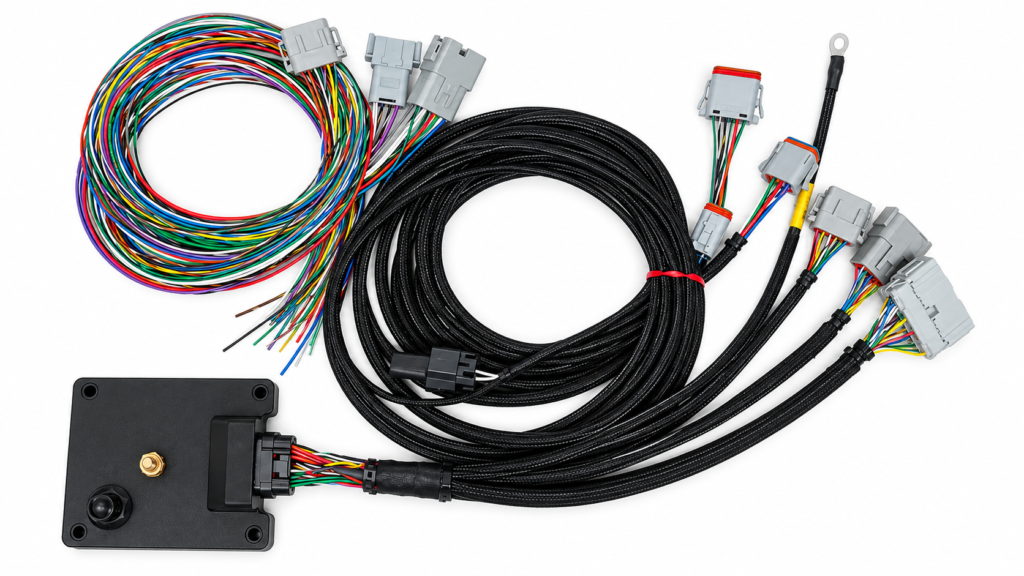
When a complete drawing or BOM is not available, the first objective is to provide enough confirmed information for the manufacturer to identify the product, understand its application, and recognize the major cost and technical drivers. A practical starting package can include clear photographs of both connector ends, connector part numbers where known, overall and branch lengths, wire gauge or known cable type, expected pinout, product application, target quantity, test expectations, and any special packaging requirement.
Photographs should include more than one overall image. Close-up views of connector faces, locking features, labels, branch points, heat shrink, sleeving, and cable exits can make the initial review much more useful. If a connector part number is unknown, photographs beside a dimensional reference may help narrow the possibilities, but the final connector should still be confirmed before sample production because visually similar connector families can differ in keying, terminal systems, mating configuration, or pin count.
Sample-Based Projects
A physical sample can be especially valuable in supplier-transfer projects, legacy equipment, replacement harnesses, or products whose original documentation is incomplete. It allows the manufacturer to review the actual assembly instead of relying only on an old drawing or a few photographs. Finished dimensions, connector orientation, routing, labels, protective components, overmold shape, and general material appearance can often be checked directly from the sample and compared with whatever technical records are still available.
Even so, sample-based quotation should not become guess-based quotation. Hidden electrical details may still require confirmation, including pinout, circuit function, conductor size, internal shielding, test criteria, voltage or current requirements, and customer-specific material or compliance expectations. The better approach is to turn the physical reference into controlled documentation over the course of engineering review and sample validation, so future production does not depend only on visual comparison or institutional memory.
Assumptions Before Sampling
Before prototype production, priority should be given to open points that could make the sample unusable. Connector model, mating part, gender, pin count, orientation, terminal compatibility, pinout, wire sequence, overall length, branch positions, and critical dimensions usually deserve confirmation first. If any of those points remain uncertain, the uncertainty should be visible in the project discussion rather than buried inside an apparently final quotation.
The next layer includes features that influence how the sample will be evaluated, such as shielding, sleeving, overmolding, strain relief, labels, packaging, and required tests. Not every detail must always be frozen before the first engineering sample, especially when the sample itself is intended to evaluate fit, routing, molded appearance, or connector selection. What matters is that both sides understand which features are approved and which remain provisional. Sample feedback can then be converted into a controlled revision before the design moves toward production preparation.
Quote Accuracy and Risk
Missing information does not simply make a quotation higher or lower. More importantly, it makes quotations less comparable. One manufacturer may price the exact specified connector, another may assume a compatible alternative, and a third may exclude a component because it was not visible in the sample photographs. One quotation may include individual labels and electrical testing, while another assumes bulk packing and only basic inspection. The numbers may all be mathematically correct, yet they represent different products and different scopes.
The most useful quotation therefore identifies what is confirmed, what is assumed, what is excluded, and what still requires technical review. For custom wire harness projects, Cablivo’s documented engineering scope can include requirement review, drawing review, sample review, BOM review, connector confirmation, wire-sequence confirmation, pinout review, material discussion, prototype development, sample revision, testing requirement review, production preparation, packaging, labeling, and shipment coordination.
| RFQ Status | Available Information | Appropriate Next Step | Quotation Confidence |
| Complete | Drawing, BOM, pinout, quantity, tests, packaging confirmed | Detailed quotation | High |
| Mostly complete | Drawing and BOM available, minor details open | Quote with listed open points | Medium-high |
| Sample-based | Physical sample plus known application and quantity | Sample review and specification capture | Medium |
| Early development | Connector, function, length, quantity partly known | Engineering review first | Preliminary |
| Photo-only | Product photos with few technical details | Identify missing specifications | Low |
| Conflicting documents | Drawing, BOM, or revision information disagrees | Resolve conflicts before final quote | Low |
| No quantity | Technical specification available but volume unknown | Confirm quotation quantity | Incomplete |
| No test scope | Product defined but acceptance criteria unclear | Confirm required verification | Incomplete |
A strong electronics wire harness RFQ does not have to begin with perfect documentation. It does need a clear path from the information available today to the specification that will eventually control the sample and production order. That path usually involves reviewing drawings or samples, confirming connectors and pinout, checking wire and material requirements, identifying test expectations, approving the sample, and then aligning the final BOM, labels, packaging, and production details around the approved configuration.
If you are preparing a custom electronics wire harness project, you can send Cablivo your drawing, sample photos, BOM, connector model, cable length, wire gauge or AWG, pinout, wire sequence, application, target quantity, testing requirements, packaging requirements, and shipping destination. If several of those items are still missing, send the information already available so the project can be reviewed and the remaining technical questions can be identified before quotation, sampling, and mass-production discussion. Cablivo is a Shenzhen-based custom cable, wire harness, and cable assembly manufacturer supporting project work from requirement and drawing review through sample development, production, testing, packaging, labeling, and shipment coordination.
The goal is not simply to receive a price as quickly as possible. The better result is a quotation that clearly corresponds to the wire harness you actually need, a sample that can be evaluated against known requirements, and a production specification that can be repeated without reopening the same unanswered questions every time the project moves to the next order.