Skip to content


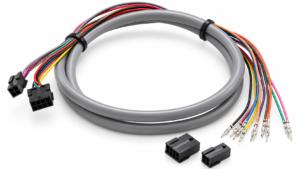
A home appliance wire harness can look surprisingly simple when it is placed on a desk. Once it is installed inside a refrigerator, washing machine, oven, dishwasher, air conditioner, coffee machine, water heater or another appliance, however, it becomes part of a tightly controlled electrical and mechanical system. A small change in wire gauge, terminal model, branch position, connector direction, insulation material or test requirement can alter material cost, sourcing difficulty, tooling, labor, testing time and production risk. This is why a photograph and a message asking for “the same harness” rarely provide enough information for a dependable production quotation.
To quote a custom home appliance wire harness accurately, a manufacturer normally needs drawings or reference samples, a BOM, connector and terminal details, pinout and wire sequence, wire specifications, harness dimensions, appliance conditions, testing requirements, order quantities, packaging instructions, target market and expected schedule. The quotation becomes more reliable when confirmed specifications are clearly separated from assumptions that still require engineering review.
A project does not always begin with a perfect technical package. Some engineering teams have a controlled drawing and complete BOM, while others only have an old harness, several connector photographs and measurements taken from an existing appliance. Both situations can move forward, but they should not be priced in the same way. Consider three quotations for an apparently identical washing-machine harness: one includes specified connectors and full electrical testing, one assumes alternative components, and one excludes labels and test fixtures. The prices may look comparable, yet each supplier is pricing a different scope. The purpose of a complete RFQ is to make those differences visible before sampling and production begin.
| RFQ Category | Information to Provide | Main Quotation Impact | Risk When Undefined |
| Product files | Drawing, wiring diagram, BOM, sample or photographs | Establishes the product structure and quotation basis | Different suppliers interpret different products |
| Electrical design | Voltage, current, circuit function, pinout and polarity | Affects wire, terminal, connector and test selection | Overheating, miswiring or unsuitable components |
| Mechanical design | Overall length, branches, routing and tolerances | Affects cutting, fixtures, labor and installation fit | Harness cannot reach or cannot be installed |
| Components | Connector, terminal, seal, sleeve, clip and label | Drives material cost, sourcing and production setup | Hidden substitutions or missing items |
| Appliance environment | Heat, moisture, movement, vibration and abrasion | Influences insulation and protection requirements | Premature wear or unsuitable material |
| Quality plan | Electrical, mechanical and dimensional tests | Determines equipment, fixtures, cycle time and records | Quotations include different inspection scopes |
| Commercial plan | Samples, MOQ, release quantity and annual forecast | Affects purchasing and production efficiency | Prototype pricing compared with production pricing |
| Delivery plan | Packaging, labeling, destination and schedule | Affects packing labor and export preparation | Costs and delays added after sample approval |

What Files Should You Provide?
An accurate quotation begins with the clearest available product definition. A controlled drawing, wiring diagram, BOM, pinout and approved reference sample provide the strongest foundation. When formal documents are incomplete, detailed photographs, measured dimensions, connector information, appliance details and target quantity can support an initial review, provided that all unresolved specifications are recorded as assumptions before final pricing.
Drawings and Layouts
A useful wire harness drawing does more than show a cable between two connectors. It should identify overall length, branch lengths, breakout locations, connector orientation, wire colors, protective sleeves, clips, labels, ties and dimensional tolerances. Each branch should have a clear reference, such as J1, J2, M1 or S1, so that the drawing can be connected with the pinout, BOM, production instructions and electrical test program. Without consistent references, a technically correct document can still be difficult to use on the production floor.
Measurement points also need to be visible. A dimension measured from connector housing face to connector housing face is not the same as a dimension measured from wire exit to wire exit or terminal tip to terminal tip. This difference can determine whether a harness fits comfortably, pulls against a control board or fails to reach a fixed motor connection. Where installation space is limited, photographs or mechanical layouts showing clips, sheet-metal edges, moving parts and nearby components provide valuable context that a loose harness drawing cannot show.
BOM and Component Data
The bill of materials should list every component that affects compatibility, cost, sourcing or processing. Typical items include wires, connector housings, terminals, seals, secondary locks, cavity plugs, heat-shrink tubing, protective sleeves, cable ties, clips, tapes, labels and packaging materials. Manufacturer part numbers are much more useful than broad descriptions. A phrase such as “white four-pin connector” may match many incompatible products, while a complete part number can identify connector family, pitch, keying, terminal system and mating component.
Each BOM item should also indicate whether it is mandatory, preferred or open to an approved alternative. This matters when a specified connector has a high purchase minimum, extended sourcing time or a terminal that requires dedicated tooling. Customer-supplied parts need additional clarification covering incoming inspection, shortages, expected process loss and replacement responsibility. These details may look commercial rather than technical, but they affect material planning and can change the final quotation substantially.
Pinout and Wiring Data
The pinout defines the electrical identity of the harness. It should show which wire enters each connector cavity, where that circuit terminates and what function it performs. A practical pinout table usually includes connector reference, cavity number, wire color, wire gauge, circuit name, destination and polarity. Relying only on color is risky because similar colors may be difficult to distinguish, and different suppliers may interpret color descriptions differently.
Splices, doubled wires, grounding points, shielding, drain wire termination, unused cavities and cavity plugs should also be recorded. A harness may appear perfect during visual inspection while containing a reversed sensor circuit, an incorrect motor connection or a misplaced supply wire. The approved pinout therefore becomes more than an engineering reference; it is also the basis for electrical test programming. When the pinout changes, the drawing, BOM, sample status and test fixture should be reviewed together rather than updated as separate documents.
Samples and Revision Control
A physical sample can be valuable when the original documents are unavailable, but it does not reveal every controlled characteristic. Wire gauge may be measurable, yet insulation composition, terminal plating, conductor structure, electrical rating and internal splice construction may remain uncertain. High-resolution photographs should show the full harness, both sides of each connector, connector markings, terminal areas, labels, branch points, sleeves and packaging. A measurement reference or clearly recorded dimensions should accompany those photographs.
Version control becomes critical when an appliance family contains several similar harnesses. Each drawing, BOM and sample should carry a part number, revision level, issue date and approval status. Files named “final,” “new final” and “latest final” create avoidable confusion. The quotation should identify the exact document revisions used for pricing. When a sample differs from a drawing, the engineering and procurement teams should formally decide which source controls the project before the sample is copied or production materials are ordered.
| File or Reference | Minimum Useful Content | Preferred Content | Quotation Value | Common Problem if Missing |
| Harness drawing | Overall length and connector positions | Branch dimensions, tolerances, sleeves, clips and labels | Defines cutting and assembly work | Incorrect routing or installation fit |
| Wiring diagram | Basic connection paths | Circuit functions, voltage, current and grounding | Clarifies electrical duty | Wrong wire or terminal selected |
| BOM | General material descriptions | Manufacturer part numbers and alternative status | Supports accurate material costing | Unapproved substitutions |
| Pinout | Wire-to-pin relationship | Cavity, color, AWG, function and destination | Supports wiring and test programming | Miswiring or reversed polarity |
| Physical sample | Complete assembled harness | Approved sample with revision record | Supports construction review | Unknown internal materials |
| Product photographs | Full product image | Connector close-ups and installed views | Supports initial feasibility review | Incorrect connector identification |
| Revision record | Latest document date | Part number, revision and approval status | Controls quotation basis | Old and new versions mixed |
| Packaging file | General packing request | Label artwork, pack count and protection details | Includes realistic packing cost | Packaging added after pricing |

Which Harness Specifications Must Be Defined?
The quotation should define electrical ratings, wire construction, dimensions, connectors, terminals, protective materials and permitted component alternatives. These details determine whether the harness can carry the required load, fit the appliance and be produced consistently. A change that appears minor, such as a tighter length tolerance or different terminal plating, may affect materials, tooling, inspection time and production cost.
Electrical Requirements
The RFQ should state operating voltage, maximum current, circuit function and expected load for each important circuit. One appliance harness may combine power input, motor supply, heater connection, grounding, switches, sensors, displays and low-voltage communication. These circuits should not automatically use the same wire or terminal merely because they are bundled together in one assembly.
Continuous current and peak current need to be separated when motors, compressors, pumps, solenoids or heaters are involved. A short starting current may affect terminal and connector selection even when normal operating current is lower. Grounding and polarity should be clearly marked, and any requirement for twisted conductors, shielding, drain wires or separation between signal and power circuits should be included before quotation. The manufacturer uses these inputs to evaluate processing feasibility and component suitability; it should not invent appliance electrical requirements on behalf of the product designer.
Wire and Material Selection
Each wire specification should include gauge, conductor type, insulation material, color, temperature requirement, voltage requirement and any controlled wire designation. Common conductor directions include bare copper and tinned copper, while insulation or jacket choices may include PVC, XLPE, silicone, TPE, TPU, PUR and PE. These materials serve different needs and should not be treated as interchangeable options selected only by price.
Material selection needs to follow actual service conditions. A flexible door harness may prioritize bending performance, while wiring near a heater may prioritize temperature capability. A harness near sheet-metal edges may require additional abrasion protection even when the base insulation is suitable electrically. Terms such as “high temperature,” “waterproof” or “flame resistant” are not complete specifications unless they are connected to an agreed requirement, material document or test condition. Target-market documentation should also be confirmed against the exact materials being quoted rather than assumed across an entire product category.
Dimensions and Tolerances
Dimensions should define the harness in its installed condition. Important values include overall length, branch lengths, breakout positions, exposed wire lengths, strip lengths, sleeve coverage, label positions, clip locations and connector exit directions. Every measurement needs a clear reference point, because a nominal length without visible start and end points can be interpreted several ways.
Tolerances should reflect genuine installation requirements. A harness routed loosely behind a panel may tolerate more variation than one mounted precisely between a control board and a fixed compressor connection. Tight tolerances may require form boards, measurement fixtures or additional inspection, increasing production time. Bundle diameter, branch angles and bend restrictions also matter in narrow channels. An electrically correct harness can still fail at appliance assembly if it is too bulky, exits a connector in the wrong direction or cannot follow the intended route without stressing the terminals.
Connectors and Alternatives
Connector confirmation should cover manufacturer, family, housing part number, terminal part number, gender, pin count, pitch, color, keying, mating component, seals, locks and orientation. The housing and terminal must be reviewed as a matched system. A terminal may fit physically inside a housing but still be unsuitable for the selected conductor size, insulation diameter or current requirement.
Sealed connections require particular care because performance depends on the housing, terminal, wire seal, cavity plug, secondary lock, cable diameter and mating condition. When alternatives are permitted, the approval method should be documented. A lower-cost connector is not automatically equivalent because it has the same number of pins. Mating geometry, locking strength, current capability, wire range, materials, temperature conditions and supply stability need to be considered. Any alternative used in the quotation should be identified clearly so procurement teams can compare equivalent scopes rather than simply comparing unit prices.
| Specification Area | Information to Confirm | Common Example or Comparison | Selection Value | Important Caution |
| Wire gauge | AWG or conductor area | Signal circuits may use finer wire than motor or heater circuits | Matches conductor to electrical duty | Final size depends on current, temperature and bundling |
| Voltage | Operating and test voltage | Low-voltage control and mains-related circuits may coexist | Guides insulation and test planning | One rating may not cover every circuit |
| Current | Continuous and peak current | Motor starting current can exceed normal current | Supports wire, terminal and connector review | Peak load should not be omitted |
| Length | Overall and branch dimensions | Short internal leads and branched assemblies need different controls | Ensures physical fit | Measurement points must be visible |
| Tolerance | Permitted dimensional variation | Tight fixed-point installation versus loose routing | Balances fit and production cost | Avoid tighter limits than the appliance requires |
| Connector | Housing, terminal and mating part | Board, motor, sensor and power interfaces differ | Prevents mating errors | Visual similarity does not prove compatibility |
| Insulation | PVC, XLPE, silicone, TPE, TPU, PUR or PE | Selected for heat, flexibility, moisture or abrasion | Aligns material with service conditions | No material fits every appliance location |
| Protection | Sleeve, tape, heat shrink, grommet or overmold | Used near edges, joints and movement points | Reduces mechanical risk | Protection needs to match actual routing |
| Alternatives | Mandatory, preferred or approval required | Exact specified brand versus reviewed substitute | Supports supply flexibility | Alternatives should be declared in the quotation |

What Appliance Conditions Affect the Quote?
The manufacturer needs to understand the appliance, harness function, installation location, heat, moisture, vibration, movement, abrasion and target market. A harness located inside a dry control compartment has different needs from one routed beside a heater, compressor, pump or moving door. These conditions influence material selection, connector protection, branch structure, assembly methods, testing and installation fit.
Appliance and Circuit Function
The RFQ should identify the appliance type, model family and exact function of the harness. A refrigerator control harness, washing-machine motor harness, oven heater lead, dishwasher pump connection and air-conditioner sensor assembly may all be described as appliance wire harnesses, yet their electrical and environmental requirements are very different.
A single appliance can also contain several harness types. One may carry mains-related power, another may connect a display to a control board, and a third may link sensors, switches, valves or fans. A functional statement such as “this harness connects the main board to the drain pump and water-level sensor” gives the engineering team far more useful context than the phrase “washing-machine cable.” Regional versions, optional features and control-board revisions should also be listed because small differences can create separate harness part numbers that require individual drawings, labels and test programs.
Heat and Moisture
Temperature information should describe the actual area surrounding the harness, not only the general room environment. An appliance may operate indoors while local wiring beside a heater, compressor, motor, transformer or power component experiences higher temperatures. Continuous exposure, short operating peaks and abnormal conditions may require different engineering decisions.
Moisture can appear as condensation, steam, splashing water, detergent, cooking grease or cleaning chemicals. The RFQ should specify which part of the harness needs protection, whether that is the connector interface, splice, terminal, cable exit or full assembly. A sleeve alone does not make a connection sealed. Protection may involve connector seals, wire seals, cavity plugs, grommets, heat shrink, overmolding and controlled routing. Installation photographs are often the clearest way to show where heat or moisture reaches the harness and whether liquid could collect around a connector.
Vibration and Movement
Motors, compressors, pumps, fans, drums, doors and drawers can transfer vibration or repeated movement into the harness. These forces may affect conductor fatigue, terminal retention, connector locking, branch junctions and cable exits. The project description should identify fixed points, free-moving areas, approximate bend radius, movement path and available slack.
Too little slack can pull directly on terminals, while excessive slack may rub against sheet metal or enter a moving mechanism. Clips, ties, sleeves, tape, heat shrink, grommets and molded strain relief can control these risks, but each addition should solve a real installation problem rather than being added automatically. Where repeated movement matters, sample validation should reproduce the actual bending direction and mounting condition as closely as practical. A generic bend test performed in the wrong direction may provide data without representing real appliance use.
Installation and Target Market
An installation layout helps the manufacturer understand narrow channels, metal edges, mounting clips, screw locations, moving parts and connector access. It also reveals how appliance assembly workers will handle the harness. A connector that is difficult to reach, easy to reverse or visually similar to another connector may require keying, color identification, labels or a revised branch layout.
The destination market should be discussed during RFQ review rather than after material selection. Relevant topics can include specified appliance wiring materials, substance restrictions, flame-related requirements, customer workmanship standards, labeling, traceability and supporting documents. A material document for one wire does not automatically establish compliance for the complete harness or appliance. The final requirement depends on the actual wires, terminals, connectors, processing, documentation and final product evaluation. Quotation language should therefore identify what is included and which compliance items still need customer confirmation.
| Appliance Scenario | Main Harness Risk | Information Needed | Possible Engineering Response | Quotation Effect |
| Heater or oven area | Local heat exposure | Temperature condition and distance from heat source | Material, sleeve and routing review | Different wire or protection cost |
| Refrigerator compartment | Condensation and compressor vibration | Installation zone and operating environment | Moisture-aware routing and secure clips | Added protection and validation |
| Washing machine | Movement, detergent and vibration | Drum, motor and splash locations | Flexible routing and strain relief | More assembly and test work |
| Dishwasher | Steam, heat and water exposure | Exposure duration and connector position | Seals, plugs and protective structure | Connector and sealing cost |
| Air conditioner | Fan or compressor vibration | Harness path and mounting points | Clip control and abrasion protection | Fixture and inspection requirements |
| Appliance door | Repeated bending | Movement path and bend radius | Flexible conductor and controlled slack | Material and durability testing |
| Tight control box | Limited routing space | Available dimensions and clearance | Smaller bundle and controlled branches | Additional dimensional control |
| Multi-market model | Different electrical and label needs | Countries, voltage versions and documents | Separate BOMs, labels and revisions | Multi-SKU management cost |

Which Tests and Quality Requirements Are Needed?
The RFQ should define each required test, its acceptance limit, test frequency and reporting requirement. Common checks include continuity, open circuits, shorts, miswiring, polarity, insulation, Hi-Pot, terminal pull force, connector fit, dimensions, appearance, labels and packaging. A statement such as “100% tested” has limited value unless both parties agree on exactly what the test detects and records.
Electrical Testing
Continuity testing confirms that each intended electrical path is complete. A broader electrical test can also detect open circuits, unintended shorts, crossed wires, incorrect cavity positions and reversed polarity. For a multi-branch harness, the test program should be created from the approved pinout so every connector and cavity has an unambiguous reference.
The RFQ should state whether electrical testing applies to every completed harness or to a defined sample. Safety-related and function-critical connections may justify complete testing, but the quotation still needs to specify the coverage. Complex connectors and multi-SKU projects may require dedicated mating fixtures and separate test programs. This setup can create tooling and programming costs. Two suppliers can both state “electrical test included” while one performs basic continuity only and the other checks continuity, shorts, miswiring and polarity, so quotations should be compared against an identical test definition.
Safety and Insulation Tests
Hi-Pot, insulation resistance and grounding checks may be relevant for harnesses connected to power inputs, heaters, motors or protective-earth circuits. The customer should provide the required test voltage, duration, leakage limit, test frequency and applicable circuits. A general request for high-voltage testing does not provide enough detail to plan equipment setup, operator protection, fixture design or cycle time.
Acceptance criteria should come from the appliance design, customer specification or agreed quality plan. The harness manufacturer can evaluate feasibility and prepare the test process, but it should not invent electrical safety limits. Ground circuits may also require controlled terminal, wire and attachment specifications together with resistance or continuity requirements. Where reports are required, the RFQ should identify whether the customer needs individual records, batch summaries, retained data or only confirmation that the agreed test was completed.
Mechanical and Environmental Tests
Mechanical checks may include terminal pull force, connector retention, insertion and withdrawal force, tensile evaluation, strain-relief checks or repeated bending. Pull-force criteria should be linked to the actual wire gauge, conductor construction, insulation and terminal combination. Applying one value across unrelated terminals can produce misleading results.
Environmental evaluation may include heat, humidity, corrosion, vibration, movement or flame-related material testing. The test needs an agreed condition, duration, sample quantity and acceptance method. Some tests are suitable for sample validation, while others may be used for periodic process control. Destructive tests cannot normally be performed on every finished harness, so the sampling method should be understood. When external laboratory work is needed, the quotation should identify who approves the test plan, who selects the laboratory, which reports are required and whether laboratory charges are included.
Inspection and Records
Quality control begins before final testing. Incoming inspection can verify wires, terminals, connector housings, seals, colors and supplier documents. In-process checks may review cut length, stripping, crimp appearance, wire sequence, soldering, sleeve position and branch assembly. Finished inspection should compare the harness with the approved drawing, BOM, pinout, sample and packaging file.
Documentation requirements should match project risk. Useful records may include first-article inspection, dimensional reports, electrical test records, material documents, crimp verification, sample approval, lot traceability and outgoing inspection results. More paperwork does not automatically create better quality, but missing records can make root-cause analysis difficult. The RFQ should distinguish between documents supplied with every shipment, documents retained by the manufacturer and documents needed only during development. This keeps the quality plan useful without adding unnecessary administrative cost.
| Test or Inspection | Main Purpose | Typical Use | Acceptance Basis | Quotation Consideration |
| Continuity test | Confirms intended electrical path | Most multi-wire harnesses | Approved pinout | Fixture and test cycle |
| Open-circuit detection | Finds incomplete paths | Power, signal and control circuits | No unintended open | Usually part of electrical test |
| Short-circuit detection | Finds unintended connections | Multi-pin and branched harnesses | No prohibited short | Test program complexity |
| Miswire check | Finds wires in wrong cavities | Similar colors or many circuits | Correct cavity-to-cavity path | Requires controlled pinout |
| Polarity check | Finds reversed directional circuits | DC power, motors and sensors | Approved polarity | Important functional control |
| Hi-Pot test | Evaluates dielectric withstand | Higher-voltage circuits | Defined voltage, time and leakage | Equipment and safety controls |
| Insulation resistance | Evaluates insulation performance | Power-related harnesses | Customer-defined limit | Test setup and records |
| Pull-force test | Checks crimp retention | Terminal-processed wires | Wire and terminal-specific value | Destructive sample testing |
| Connector fit | Confirms mating and locking | New or alternative connectors | Approved mating component | Sample or gauge availability |
| Dimensional inspection | Checks lengths and positions | Tight installation layouts | Drawing tolerances | Measurement labor and fixtures |
| Environmental test | Reviews heat, humidity or movement | High-requirement locations | Agreed conditions | Duration, samples and laboratory cost |
| Packaging inspection | Checks count, labels and protection | Multi-SKU and export orders | Approved packaging file | Packing labor and outgoing review |

How Do Commercial Details Affect the Quote?
Quantity, tooling, packaging, labels, delivery destination, schedule and quotation assumptions directly affect project cost. Provide prototype demand, pilot quantity, first production order, normal release size and annual forecast. The quotation should separate recurring unit price from tooling and fixture charges while identifying document revisions, component basis, testing scope, packaging method, validity, exclusions and conditions that may require pricing review.
Quantities and Order Structure
A useful RFQ contains more than one quantity. It should distinguish engineering samples, validation units, pilot production, first production order, normal release quantity and estimated annual demand. These stages have different cost structures. Prototype production may involve small-lot material purchasing, manual preparation and engineering setup spread across only a few units.
Production pricing can improve when materials, cutting, crimping, assembly, testing and packaging are planned for repeatable batches. However, a large annual forecast should not be used as the only price basis when actual releases will remain small. Procurement teams gain a more realistic cost picture by requesting price levels that reflect likely purchase quantities. For many custom cable projects, MOQ may start from 500 pieces, while the final requirement depends on connectors, structure, materials, tooling, overmolding, packaging and order planning.
Tooling and Setup Costs
Tooling may include overmold molds, strain-relief molds, connector protection molds, form boards, crimp applicators, assembly fixtures, dimensional gauges and electrical test fixtures. These charges should normally be separated from recurring unit cost so the customer can understand what belongs to development and what belongs to each production unit.
The quotation should explain the purpose of every major tool, whether it is customer-specific and whether modification is possible. Overmolding is not only an appearance process. It may control cable exit direction, protect the cable-to-connector transition, create strain relief or support a sealing structure. A quotation with a low unit price may exclude essential tooling, while another quotation includes the full production setup. Comparing total project cost, sample cost, tooling, fixtures and production price provides a clearer decision than comparing unit price alone.
Packaging and Labels
Packaging can become a significant part of an appliance harness program, particularly when there are multiple part numbers, fragile connector latches, long branches or assembly-line kitting requirements. The RFQ should state whether harnesses will be bulk packed, bundled in fixed quantities, individually bagged, placed in trays, protected with caps or supplied as model-specific kits.
Label details may include customer part number, revision, model, supplier code, date, lot number, barcode, QR code or installation position. The label material, size, print content, position, scanning requirement and durability should be approved before production. Similar harnesses should be separated clearly through part numbers, labels, color identification or different inner cartons. Export orders may also require carton marks, pallet limits, packing lists and destination-specific shipping documents. Confirming these items early prevents finished harnesses from being repacked or relabeled after production.
Schedule and Quote Assumptions
The project schedule should separate quotation, sample development, sample evaluation, revision, approval, pilot production, bulk production and delivery. Sample timing depends on product structure, connector availability, material preparation, tooling and testing. Production timing should be confirmed only after the approved sample, final drawing, BOM, quantities, labels, packaging and commercial terms are complete.
Every quotation should state its technical basis, including drawing revision, BOM revision, connector brand, wire material, test coverage, packaging method, order quantity and trade terms. Assumptions such as “equivalent connector,” “standard testing,” “bulk packaging” or “customer-supplied material” can create major differences between quotations. The supplier should also identify changes that may require review, such as revised quantities, new tests, component shortages, tighter tolerances, additional documentation or altered packaging. An accurate quotation is always connected to a defined product and commercial scope.
| Commercial Factor | Information to Provide | Effect on Quotation | Procurement Check | Common Mistake |
| Prototype quantity | Number of engineering samples | Affects small-lot material and setup cost | Confirm tooling and tests included | Comparing sample price with production price |
| Pilot quantity | Trial-build requirement | Supports early process planning | Request separate pilot pricing | Treating pilot production as bulk production |
| Production quantity | First order and normal release | Affects material purchasing and efficiency | Use realistic volumes | Quoting only a large annual figure |
| Annual forecast | Expected yearly demand | Supports supply planning | Separate forecast from firm orders | Treating forecast as guaranteed volume |
| MOQ | Minimum practical quantity | Depends on materials, components and setup | Confirm for each harness version | Assuming one MOQ covers all products |
| Tooling | Molds, fixtures, applicators and test jigs | Adds non-recurring development cost | Ask what each charge covers | Choosing a quote that excludes tooling |
| Testing | Items, frequency, limits and records | Adds fixtures, labor or laboratory cost | Compare the same testing scope | Accepting “tested” without definition |
| Packaging | Pack method, labels and protection | Adds materials and labor | Approve packaging before production | Adding packaging after price confirmation |
| Multi-SKU control | Part numbers, labels and carton separation | Adds version and warehouse controls | Confirm segregation method | Mixing similar harness models |
| Schedule | Sample, pilot, production and delivery dates | Affects sourcing and planning | Identify the actual critical date | Starting production before sample approval |
| Destination | Country, trade term and carton limits | Affects packaging and logistics preparation | Check freight scope | Comparing different delivery terms |
| Quote validity | Valid period and cost basis | Controls material and sourcing changes | Review expiry conditions | Treating an old price as permanent |
A complete home appliance wire harness RFQ does not need to become an oversized technical manual. It needs to make the important decisions visible. The highest-value inputs are the harness function, electrical connection, fixed components, dimensions, installation environment, tests, order quantities, packaging and unresolved assumptions. When these are clear, engineering and procurement teams can compare quotations on the same basis and reduce repeated clarification during sample development.
Cablivo is the overseas-facing brand of Shenzhen Tianxiaowei Electronics Co., Ltd., a Shenzhen-based custom cable, wire harness and cable assembly manufacturer with 18 years of industry experience, more than 20,000 square meters of factory space, a team of over 1,500 people and three manufacturing bases. Project support can cover requirement review, drawing and BOM review, connector confirmation, sample development, production preparation, testing, packaging, labeling and shipment coordination according to the confirmed product requirements.
Start Your Home Appliance Wire Harness RFQ. Send the available drawing, wiring diagram, BOM, connector model, terminal information, sample photographs, cable length, wire gauge, pinout, appliance application, target market, testing requirements, packaging plan and expected quantity. When complete drawings are not available, begin with clear sample photographs, connector close-ups, measured lengths and application details. The project information can then be reviewed to identify missing specifications and establish the next step for quotation, prototype development, sample approval and production discussion.
Suggested CTA Buttons: Send Your Drawing · Upload Sample Photos · Share Your BOM · Request Engineering Review · Get a Custom Wire Harness Quote