Skip to content


A custom security camera wire harness can look straightforward on a workbench: several conductors, a few connectors, perhaps a branch, sleeve, or molded junction. Yet two harnesses that look almost identical can require different terminals, wire gauges, pin assignments, shielding structures, jacket materials, crimping processes, overmolding, tests, labels, and packaging. Those differences directly affect material cost, labor, tooling, inspection, and production risk. A manufacturer that receives only a photograph and an approximate length must either ask more questions or make assumptions, and assumptions are where inaccurate quotations often begin.
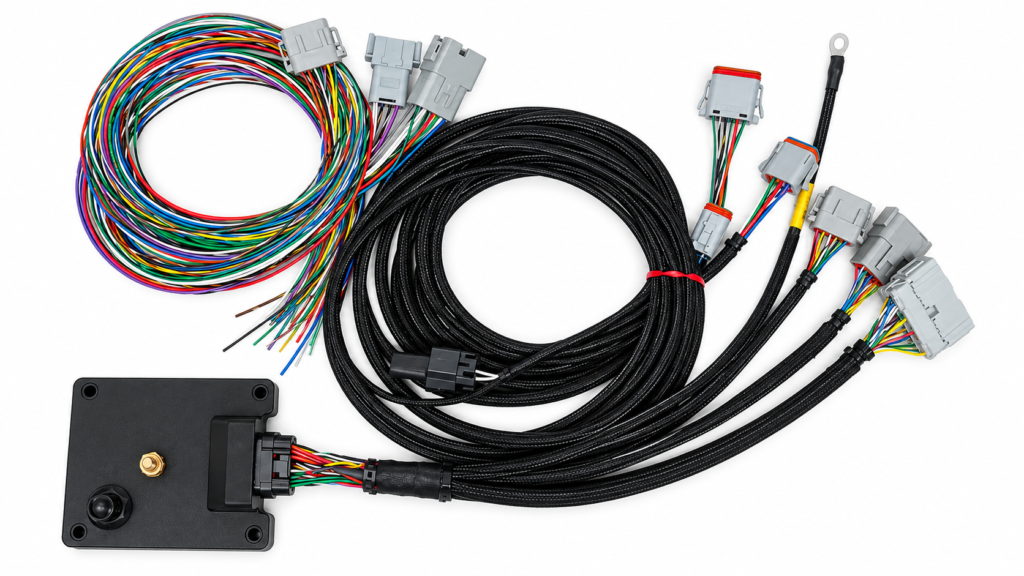
For an accurate security camera wire harness quote, provide the drawing or sample information, BOM, connector models, pinout and wire sequence, cable lengths, wire gauge, material and shielding requirements, application environment, testing requirements, target quantity, labeling, packaging, and shipping destination. Clear specifications reduce assumptions and allow material, process, testing, and production costs to be evaluated against the actual assembly.
Consider a harness quoted with the correct-looking connector housing but the wrong terminal, or a branch that later needs another 80 mm to reach a camera PCB. The first quotation may have been mathematically correct for the information received, yet it no longer represents the product that will actually be manufactured. A well-prepared RFQ prevents that problem before the project reaches sampling.
What Information Is Needed for an Accurate Quote?
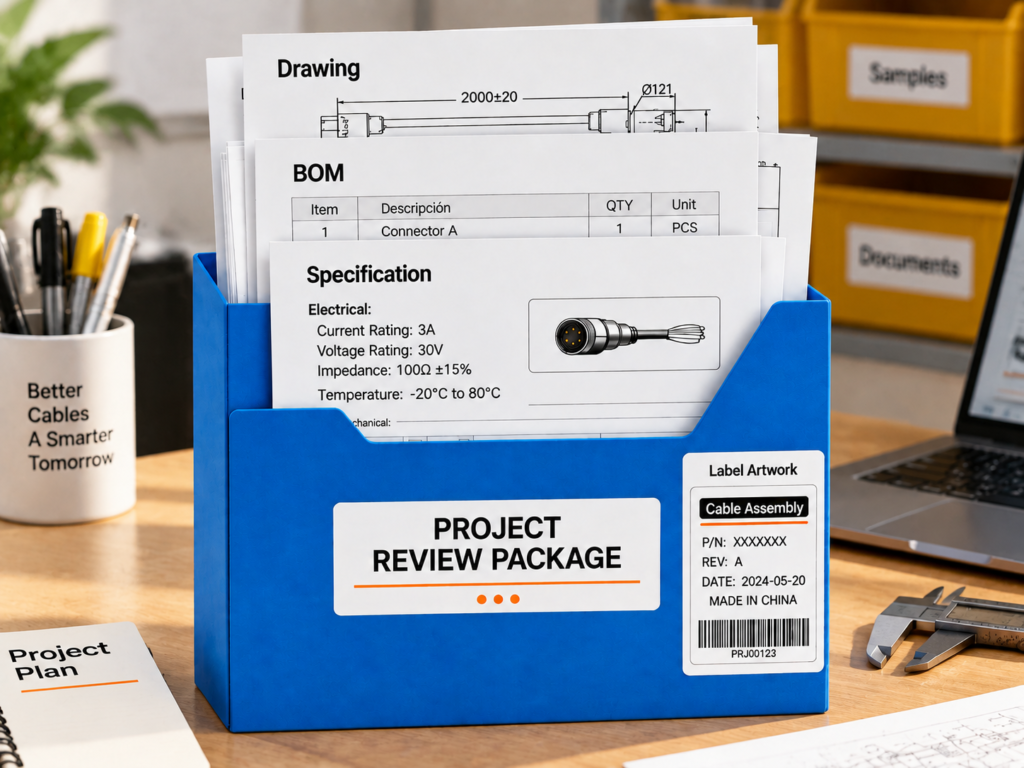
An accurate quote starts with enough information to define the assembly without major assumptions. Provide a drawing or sample reference, BOM where available, connector models, cable lengths, wire gauge, pinout, wire sequence, application, target quantity, testing, labeling, packaging, and delivery requirements. If some specifications remain open, identify them clearly so preliminary pricing is not mistaken for a final production quotation.
- Image Type: Project Documentation Composition
- Image Direction: Show a real multi-branch security camera harness with connector samples, terminals, cable pieces, BOM documents, technical drawings, labels, and protective packaging. The product remains dominant while the surrounding documents explain how the manufacturer reaches an accurate quotation.
- Image Prompt: Multi-branch security camera wire harness prepared for quotation review, surrounded by connector close-up samples, terminals, cable pieces, technical drawing sheets, BOM documents, label samples and protective packaging, organized engineering RFQ workspace, realistic product photography, professional industrial website style, clean background, natural lighting, 16:9 aspect ratio, high resolution, sharp product details, no text, no logo, no watermark
- Negative Prompt: text, logo, watermark, abstract concept image, fake 3D render, CGI look, wrong product structure, incorrect assembly, floating parts, distorted proportions, unrealistic materials, exaggerated lighting, low resolution, blurry details
- Alt Text: Custom camera wire harness prepared with engineering documents and component samples
A custom harness quotation is the commercial result of an engineering interpretation. The description “security camera wire harness” identifies an application but does not define the assembly. The manufacturer still needs to know whether the harness sits completely inside the camera, passes through the enclosure, connects a PCB to a power input, carries signal circuits, branches to sensors or motors, or combines several functions into one assembly. Each configuration produces a different material list and manufacturing route.
A complete RFQ does not necessarily mean sending hundreds of pages. It means supplying the information that can change fit, function, material selection, processing time, testing, or packaging. Connector model and pinout are normally more urgent than carton dimensions because the first two can make the harness unusable, while packaging details can often be finalized later. Organizing information by technical importance makes the quotation process faster and reduces repeated clarification.
Documents should also agree with one another. A drawing may show one connector orientation while a photograph shows another. A BOM may contain an older terminal number. Procurement may be working from Rev. A while engineering has already released Rev. B. The safest quotation process compares drawings, BOM data, samples, connector references, and pinout information rather than treating any single source as automatically correct.
It is equally useful to identify which requirements are fixed and which remain open. “Connector model ABC123 is mandatory because it mates with the existing camera PCB” has a very different commercial meaning from “a four-pin locking connector is preferred.” Mandatory parts restrict sourcing options, while open specifications may allow alternatives if engineering, availability, and project requirements permit them.
Is a Drawing Required?
A controlled drawing is the strongest starting point because it can bring dimensions, branches, connectors, pin assignments, wire identification, protective materials, labels, and revision status into one reference. For a multi-branch camera harness, the drawing should ideally identify overall length, each branch length, breakout locations, connector references, cable exit direction, critical dimensions, sleeve or heat-shrink positions, and any dimensional tolerances that affect installation.
A final drawing is not always required for the first engineering discussion. Early-stage projects may begin with a marked sketch, previous assembly, connector photographs, approximate dimensions, or a physical sample. That can be enough to determine whether the project is technically understandable and which information still needs confirmation. The quotation should then state which assumptions remain open so an early estimate is not confused with a production-ready price.
Revision control deserves particular attention. If the camera enclosure has changed, a branch may need to move even though the electrical circuit remains identical. A quotation linked to a drawing number and revision gives both engineering and procurement a common reference and makes later cost changes easier to trace.
What Should the BOM Include?
The BOM should identify the parts that determine material sourcing and assembly. Depending on the harness, this can include connector housings, contacts, terminals, secondary locks, seals, wires, multicore cable, shielding materials, heat-shrink tubing, protective sleeves, cable ties, grommets, labels, overmold materials, and customer-specified packaging components. Exact manufacturer part numbers are particularly helpful where mating compatibility or terminal selection is controlled by the camera design.
Connector families often contain several visually similar variants. The same housing family may support different terminals, wire ranges, plating options, seals, or keying arrangements. A photo can help identify the family but may not be enough to confirm the exact component. When the original part is mandatory, mark it accordingly. When an approved alternative may be considered, stating that clearly gives sourcing teams room to evaluate availability without making an unauthorized substitution.
A well-prepared BOM can also expose commercial issues before sampling. A connector with a high supplier MOQ, an uncommon terminal, a customer-controlled material, or a long procurement cycle may influence sample planning and production quantities. Discovering those conditions before the quote is approved is far easier than discovering them after tooling or sample work has begun.
Can Samples or Photos Be Used?
Existing samples and clear photographs are useful when the project is being transferred from another supplier, when legacy documentation is incomplete, or when the final drawing is still being developed. Useful images include the complete harness laid flat, mating-face and wire-entry views of each connector, locking features, branch points, labels, protective sleeves, molded sections, and packaging. Multiple angles are more useful than a single attractive product photograph because the purpose is engineering interpretation.
A physical sample can provide even more information because dimensions, connector fit, routing, flexibility, and construction details can be examined directly. However, neither photographs nor an external inspection can reliably identify every hidden specification. Conductor cross-section, internal shielding, copper construction, plating, internal splices, insulation composition, and electrical requirements may still need documents or testing.
The safest approach is to treat the sample as one part of the evidence package. Compare it with the drawing, BOM, connector information, and known functional requirements. When discrepancies appear, they should be resolved before the approved specification becomes the basis for production.
Which RFQ Inputs Need Priority?
Not every missing detail creates the same level of risk. A missing shipping carton size may cause a later packaging adjustment, but a missing connector model, pinout, or wire gauge can completely change the assembly. Prioritizing information according to its effect on fit, electrical function, material selection, manufacturing steps, and test requirements makes the RFQ easier for both engineering and procurement teams to manage.
| RFQ Item | Minimum Useful Information | Effect on Quotation | Risk if Missing | Priority |
| Drawing | Layout, dimensions, connectors, revision | Defines physical construction | Wrong dimensions or structure | Critical |
| BOM | Connector, terminal, wire, protection parts | Defines material sourcing | Component mismatch | Critical |
| Connector | Exact model or mating interface | Affects sourcing and termination | Cannot mate with device | Critical |
| Pinout | Pin-to-pin mapping | Defines assembly and testing | Functional failure | Critical |
| Wire Gauge | AWG or mm² by circuit | Affects wire and terminal choice | Electrical or mechanical mismatch | Critical |
| Cable Length | Overall and branch lengths | Affects material and cutting | Installation failure | High |
| Application | Indoor/outdoor, fixed/moving, installation location | Guides material review | Wrong construction choice | High |
| Testing | Required tests and criteria | Affects fixtures and labor | Test cost omitted | High |
| Quantity | Prototype and production volume | Affects purchasing and setup | Unrealistic unit pricing | High |
| Labeling | Content, position, format | Adds processing and inspection | Rework before shipment | Medium |
| Packaging | Protection and packing method | Adds materials and labor | Late cost changes | Medium |
| Destination | Country or delivery point | Supports shipment planning | Incomplete delivery planning | Medium |
The table is best used as a preparation check rather than a rigid rule. A simple internal PCB harness may need fewer environmental details than an externally exposed camera assembly, while a branched outdoor harness may require substantially more mechanical and sealing information. The goal is to send enough evidence for the manufacturer to understand what must be priced and what still requires confirmation.
Which Electrical Details Must Be Confirmed?
Electrical definition should show exactly how every conductor is connected and what each circuit is expected to do. Confirm connector models, mating interfaces, pin assignments, wire sequence, conductor size, circuit function, shielding, grounding, and any signal-specific requirements. A harness can look perfect during visual inspection and still fail immediately if one terminal position, conductor, or shield termination is incorrect.
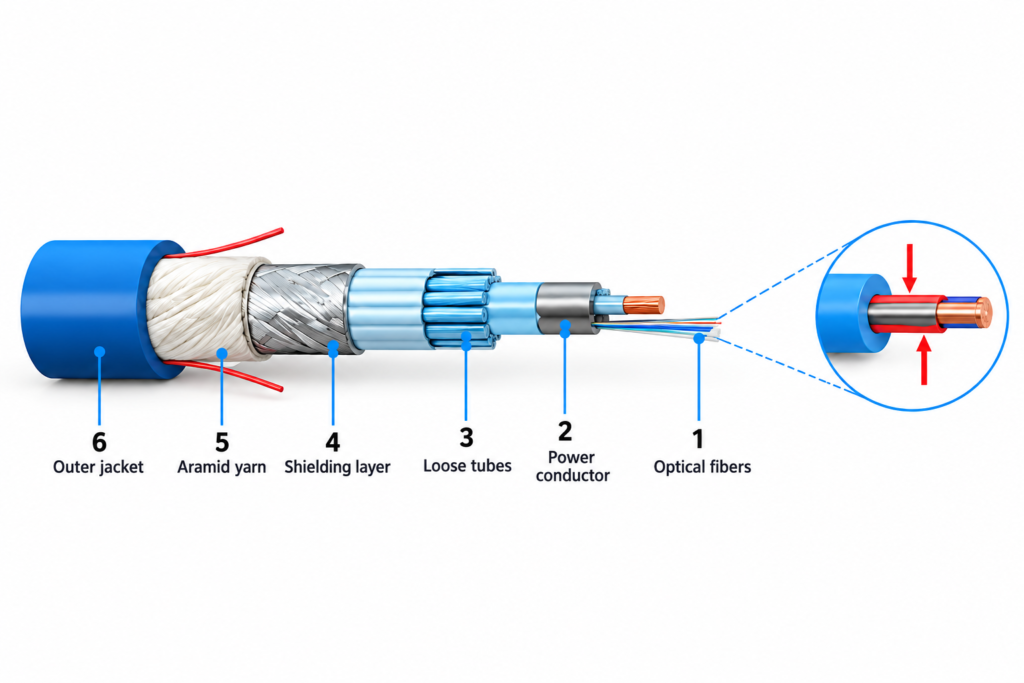
Security camera assemblies can place several electrical functions in a very small enclosure. Depending on the camera architecture, a harness may connect power, data, audio, sensors, infrared modules, alarm contacts, motors, or other internal components. The wire harness manufacturer does not need the complete confidential system design, but it does need enough circuit information to select compatible terminals, conductor sizes, shielding structures, termination methods, and test programs.
Pinout errors are especially serious because they are not always visible. A connector can be fully seated, the crimp can look clean, and the harness can match the correct dimensions while one conductor ends in the wrong cavity. For this reason, pin mapping should be documented independently of wire color. Color helps operators identify conductors, but the approved pin-to-pin relationship is the actual electrical definition.
Wire gauge also influences more than current capacity. It affects terminal compatibility, stripping settings, crimp geometry, bundle diameter, flexibility, routing space, and the range of connector contacts that can be used. A thicker wire may create packaging problems inside a compact camera housing, while an undersized conductor may fail the electrical requirement. The selected gauge should therefore be connected to both circuit function and physical design.
Signal-related conductors deserve separate review. Shielding, twisted pairs, drain wires, or specific cable constructions should be used because the electrical design requires them, not simply because the final application is a security camera. When a shield is required, the termination method also needs to be defined because grounding at one end, both ends, through a drain wire, or to a connector shell represents different manufacturing instructions.
What Connector and Pinout Data Is Needed?
Provide the exact connector model whenever it is already fixed by the device design. If the model is unknown, useful alternatives include connector photographs, mating PCB header information, pin count, approximate pitch, orientation, locking method, and any supplier reference visible in existing engineering records. The mating part is particularly important because two housings that look similar may differ in keying, polarization, cavity shape, terminal system, or locking geometry.
A clear pinout should identify the source connector, source cavity, destination connector, destination cavity, wire identification, gauge, and circuit function. Branched assemblies should use consistent connector names such as J1, J2, J3 or A, B, C rather than descriptions such as “small plug” or “left connector,” which can become ambiguous when the harness is rotated during manufacturing.
If a connector includes seals, secondary locks, backshells, or terminals purchased separately from the housing, include those components in the BOM. Connector availability should also be checked before sampling because a technically correct part can still affect project timing and cost if sourcing conditions are difficult.
Which Wire Gauge and Conductor Specs Matter?
Wire gauge should follow the electrical load, terminal system, routing space, temperature conditions, and approved design rather than a generic assumption about camera products. Common small electronic harnesses may use conductors such as 26, 24, 22, 20, or 18 AWG, but the correct value depends on the circuit and connector rather than the industry label alone.
| AWG | Nominal Conductor Area | Approximate Design Implication |
| 26 AWG | 0.129 mm² | Small diameter, useful where routing space is limited |
| 24 AWG | 0.205 mm² | Common range for many small signal or low-current circuits |
| 22 AWG | 0.326 mm² | Larger conductor requiring compatible terminal range |
| 20 AWG | 0.518 mm² | Increased bundle diameter and conductor capacity |
| 18 AWG | 0.823 mm² | Larger construction often associated with power-oriented circuits |
The nominal area values provide a useful size comparison, but they should not be treated as a complete current-rating table. Allowable current depends on conductor construction, insulation temperature rating, bundling, ambient temperature, connector contacts, duty cycle, and the equipment design. If the customer controls conductor material, stranding, insulation thickness, or a specific cable manufacturer part number, those details should accompany the gauge.
Where specifications remain open, describe the requirement instead of forcing an arbitrary material selection. Telling the manufacturer that a branch must remain flexible inside a compact moving assembly provides useful engineering context; simply asking for a “high-quality wire” does not.
How Should Power and Signal Circuits Be Defined?
Each conductor should have a functional identity where possible. Simple labels such as PWR, GND, DATA, AUDIO, SENSOR, MOTOR, ALARM, or CONTROL can help the manufacturer understand which circuits may require different gauges, terminal types, shielding, or test conditions. The objective is not to disclose more system information than necessary, but to remove ambiguity about what the harness must carry.
Power circuits may require larger conductors or different terminal choices. Signal circuits may require shielding, paired structures, drain wires, or routing separation according to the electronics design. A generic statement such as “shielded cable required” is less useful than a drawing that shows which conductors are shielded and how the shield terminates.
Shield termination also needs to be part of the assembly specification. A foil shield with a drain wire terminated at one end is manufactured differently from a braid bonded to a connector shell. The difference influences labor, materials, inspection, and potentially system performance, so it belongs in the RFQ rather than being decided during production.
How Can Electrical Errors Be Prevented Before Production?
The most effective prevention starts before the production line. Drawing, BOM, connector references, sample information, and pinout tables should be compared during engineering review to ensure that they describe the same assembly. Where inconsistencies appear, the specification should be corrected rather than asking operators to choose which document is probably right.
A prototype or first sample then provides a physical reference for connector mating, wire routing, branch orientation, terminal seating, cable handling, and electrical mapping. Sample approval becomes more valuable when feedback is recorded as controlled changes rather than scattered messages. If one branch is shortened, the drawing should change. If a pin moves from cavity three to cavity four, the pinout and electrical test definition should change together.
Production testing should then verify the approved map. A dedicated fixture for a multi-pin harness can check continuity, wrong wiring, and certain short circuits far more consistently than manual probing. The fixture does not replace correct documentation; it gives production another layer of protection against deviations from that documentation.
How Should Mechanical and Environmental Requirements Be Defined?
Mechanical and environmental requirements should describe where the harness is installed, how it is routed, whether it moves, and what it is exposed to. Confirm overall length, branch dimensions, bend space, connector direction, jacket construction, abrasion protection, shielding, sealing, overmolding, and environmental conditions. Terms such as “outdoor” and “waterproof” are too broad unless the actual exposure and performance target are defined.
Mechanical fit can be as important as electrical function. A harness may pass every continuity check and still be unusable because the branch is too short, the breakout occurs behind a mounting bracket, the connector exits in the wrong direction, or the cable cannot make the required bend inside the enclosure. This is especially relevant for compact cameras where a few millimeters can influence assembly efficiency or create stress at the connector.
Security cameras also operate in very different environments. An indoor fixed camera mounted above a ceiling does not face the same conditions as an outdoor PTZ camera, roadside surveillance unit, industrial monitoring system, or camera installed near salt air, machinery, dust, moisture, or large temperature changes. The RFQ should describe the actual installation rather than asking for the strongest possible material without explaining the need.
Environmental information becomes useful when it leads to a real material, structure, or validation decision. A cable exposed to repeated motion may need a different flexibility approach from one permanently fixed inside a housing. A connector exposed outside the enclosure may need a sealing system that an internal connector does not. A cable near moving metal parts may need abrasion protection even if water resistance is irrelevant.
More protection is not always better. A thick jacket, heavy braid, large protective sleeve, or stiff overmold can make routing harder inside a compact camera. Engineering therefore needs to balance durability, diameter, flexibility, sealing, installation space, and cost rather than maximizing one property in isolation.
What Length and Routing Details Matter?
Length should always be tied to clear measurement points. “500 mm long” is ambiguous if one team measures connector face to connector face while another measures from cable exit to cable exit. The drawing should show the reference points used for the dimension so the cutting and finished-harness inspection methods follow the same definition.
Branched harnesses normally need more than one dimension. Overall trunk length, individual branch lengths, breakout position, exposed conductor length, protective sleeve position, label location, connector orientation, and cable exit direction may all influence installation. Where the harness passes around a PCB, bracket, fan, motor, lens assembly, or rotating mechanism, routing photographs or a simple installation sketch can add useful context.
Tolerance should reflect actual assembly needs. Applying an unnecessarily tight tolerance to every length increases inspection effort without necessarily improving the camera. If only the breakout location is critical because it must clear a bracket, identify that dimension as critical while allowing reasonable production tolerance elsewhere.
Do Shielding and Jacket Materials Affect the Quote?
Yes. Jacket and shielding choices can change raw-material cost, outside diameter, flexibility, stripping operations, termination method, and assembly time. PVC, TPE, TPU, PUR, silicone, PE, and other constructions may suit different projects, but none should be treated as universally superior for every security camera harness.
Material selection is easier when the application is described clearly. Useful questions include whether the harness is inside or outside the enclosure, whether it bends repeatedly, whether abrasion is expected, whether sunlight or changing temperature is relevant, whether chemicals or oils are present, and whether the customer specification controls flame performance or another material property.
Shielding requires the same discipline. Foil and braided structures have different construction, flexibility, termination, and coverage characteristics. A signal circuit may require shielding while a neighboring power branch does not. Where shielding is necessary, the RFQ should define which circuits are protected and how the shield is terminated rather than applying an expensive structure to the entire harness by default.
Is Waterproofing or Overmolding Required?
Waterproofing should be considered a system requirement rather than a visual feature. A molded connector is not automatically waterproof, and the presence of an overmold does not establish an IP rating. Sealing performance can depend on the connector design, terminal seals, mating condition, cable-entry geometry, jacket, gaskets, overmold, assembly method, and test definition.
If the camera project has a controlled IP target, include the actual requirement and the relevant test expectation. That allows the connector and sealing structure to be evaluated against a defined objective. If the requirement has not yet been established, describe the exposure conditions rather than inventing a rating during the quotation stage.
Overmolding can still provide value where formal waterproofing is not required. It may improve strain relief, connector protection, cable exit control, appearance consistency, and repeatability after the sample is approved. A custom molded geometry may require tooling, so drawings or reference samples should identify shape, dimensions, exit direction, and functional expectations before the tooling cost is finalized.
Which Environmental Details Change the Design?
The following examples show how installation conditions can translate into real harness decisions. They are not universal product specifications; they are checkpoints for engineering review. The final material, protection method, sealing structure, and validation plan should follow the camera design and its actual operating environment.
| Application Condition | Information to Provide | Possible Harness Consideration | Quotation Impact |
| Indoor fixed camera | Normal operating environment | Standard flexible construction may be sufficient | Lower complexity |
| Outdoor camera | Rain, sunlight, temperature exposure | Jacket and sealing review | Material/testing may increase |
| PTZ camera | Repeated movement and bend area | Flexibility and bend durability | Cable construction/testing |
| Coastal installation | Salt-air exposure | Connector and metal corrosion review | Material or corrosion testing |
| Industrial site | Oil, abrasion, vibration, machinery | Protective sleeve or jacket review | Protection and validation |
| Compact enclosure | Tight routing and limited bend space | Smaller diameter and controlled breakout | Engineering complexity |
| External connector | Moisture or dust exposure | Seals, overmold, protective cap | Connector/tooling cost |
| Noise-sensitive circuit | Nearby motors or switching electronics | Shielding and grounding review | Material/termination labor |
The table helps turn broad phrases such as “industrial camera cable” into information the manufacturer can evaluate. When the application is accurately described, engineers can discuss the construction that addresses the real risk rather than adding features that make the harness larger, stiffer, or more expensive without improving its intended use.
What Testing Requirements Affect the Quote?
Testing requirements should be defined during the RFQ rather than added after the price is approved. Clarify whether the harness needs continuity, pinout verification, short-circuit checking, insulation or Hi-Pot testing, pull-force evaluation, repeated bending, connector-life testing, environmental validation, or application-specific functional checks. Test parameters, frequency, sample quantity, acceptance criteria, and required records can all influence cost.

The phrase “100% tested” sounds reassuring but does not tell engineering what has actually been verified. A finished harness might be checked for continuity, wrong wiring, shorts, insulation performance, connector fit, pull force, sealing, or system function, and each test addresses a different failure mode. A professional RFQ should therefore specify the characteristic being checked rather than relying on a general quality statement.
Testing also serves two different purposes. Some tests are suitable for production screening and can be performed rapidly on every finished harness. Others are qualification or reliability tests that may require long cycle times, destructive loading, special environmental conditions, or a limited number of samples. Treating those categories separately makes the quotation more realistic and prevents expensive qualification work from being unintentionally priced as a routine production test.
The appropriate test plan depends on the actual security camera design. A simple internal low-voltage harness may require a different level of verification from a harness containing several circuits, an exposed connector, repeated movement, or a customer-controlled reliability requirement. More tests are not automatically better; the useful question is which failure modes matter and how they should be detected.
Documentation can also affect the quotation. Some projects require only an internal pass/fail check, while others need measured values, inspection records, test reports, first-article information, or lot traceability. If a report must accompany every lot, that work should be known before pricing rather than added after production begins.
Which Electrical Tests Are Required?
Continuity testing is a common starting point for wire harnesses because it confirms that the intended electrical paths exist. When a dedicated test fixture is programmed according to the approved pinout, it can also identify certain miswires and short circuits. The fixture should be based on the controlled electrical map rather than a generic wire-color pattern.
Hi-Pot or insulation-related testing is relevant only when the product specification calls for it. If required, the RFQ should define the voltage, duration, leakage or acceptance criterion, and applicable standard or project requirement. A request that simply says “Hi-Pot required” leaves enough uncertainty for suppliers to price different test conditions.
Continuity also does not prove every form of signal performance. If impedance, frequency behavior, insertion loss, communication integrity, or another electrical characteristic matters to the camera system, include the actual performance requirement. That allows the manufacturer to determine whether dedicated equipment, fixtures, or external validation is necessary.
Are Pull Force or Durability Tests Needed?
Pull-force testing is useful for evaluating the mechanical strength of a crimped terminal or another controlled connection. The required value should come from the terminal specification, customer requirement, or approved control plan rather than being invented after manufacturing. Because pull testing can be destructive, it is frequently used on selected samples instead of every finished harness.
Repeated bending serves a different purpose. A harness used in a moving camera mechanism may experience flexing throughout service, making bend radius, angle, speed, load, and cycle count relevant qualification parameters. A fixed internal harness may have no reason to undergo the same test.
Connector insertion and withdrawal testing evaluates repeated mating behavior and can matter where installers or service technicians are expected to disconnect the harness repeatedly. Again, the cycle requirement and acceptance criteria should come from the product specification. A meaningful RFQ states the test objective rather than simply requesting “durability testing.”
How Should Environmental Tests Be Specified?
Environmental validation should reproduce a relevant application risk. Temperature and humidity testing may be appropriate where the camera operates through large environmental changes. Salt-spray testing may be relevant for exposed metallic components in corrosive environments. Waterproof-related validation may be necessary where a connector or cable entry has a controlled ingress-protection requirement.
A useful environmental test specification identifies the test method, condition, duration, sample quantity, preconditioning, pass/fail criteria, inspection after exposure, and report format if required. Without those elements, two suppliers can interpret the same phrase very differently. “Waterproof test,” for example, could mean a simple production leak check or a formal ingress-protection validation; the time, equipment, and evidence involved are not comparable.
The test should also match the component being validated. If only an external connector faces water exposure, it may be unnecessary to treat the entire internal harness as though every component has the same environmental requirement. Defining the exposure accurately helps control both engineering effort and cost.
Which Tests Belong in Production and Which Belong in Validation?
Production and validation tests are easier to plan when their purpose is separated. The frequency below is illustrative rather than universal because the final control plan should follow the approved drawing, product specification, applicable standards, customer requirements, and manufacturing risk assessment.
| Test | Typical Purpose | Typical Application | Key RFQ Information |
| Continuity | Verify correct electrical path | Often suitable for every unit | Approved pinout |
| Miswire / Short Check | Detect incorrect connections | Often suitable for every unit | Test program |
| Connector Fit | Confirm mechanical mating | Process or sample-based | Mating part |
| Pull Force | Check crimp strength | Usually sample-based/destructive | Force criterion |
| Hi-Pot / Insulation | Verify insulation performance | Project-dependent | Voltage, time, limit |
| Bend Test | Evaluate repeated movement | Usually validation/sample-based | Radius, load, cycles |
| Connector Life | Evaluate repeated mating | Usually validation/sample-based | Cycle count |
| Temperature/Humidity | Environmental reliability | Usually validation/sample-based | Conditions and duration |
| Salt Spray | Corrosion evaluation | Usually validation/sample-based | Duration and acceptance |
| Waterproof Test | Verify sealing requirement | Product/control-plan dependent | Rating and test method |
A well-defined test plan prevents two common problems: paying for tests that do not address a meaningful risk and discovering too late that a required test was never included in the original quotation. Connecting each test to a known failure mode, acceptance criterion, and inspection frequency gives both engineering and procurement a much clearer basis for comparing suppliers.
How Do Quantity and Project Conditions Affect Pricing?
Harness pricing depends on more than the component list. Prototype quantity, first production volume, expected repeat demand, connector availability, tooling, testing, labeling, packaging, controlled documentation, and shipping conditions can all change the commercial structure. Give the manufacturer both the immediate need and realistic future quantities so purchasing, setup, tooling, and production costs can be evaluated against the actual project stage.
A quotation for a handful of engineering samples cannot be interpreted in the same way as a quotation for a recurring production program. Even when the physical harness is identical, material purchasing, machine setup, tooling allocation, inspection, documentation, and packaging costs are distributed across very different quantities. A useful RFQ therefore separates prototype needs from expected production rather than asking for one quantity that hides the actual project stage.
Component sourcing can have a similar effect. A camera design may use an exact connector because it already mates with the customer’s PCB or enclosure. If the connector supplier has a minimum purchase quantity greater than the first harness order, the commercial discussion may need to address excess material, customer-supplied components, future consumption, or an alternative only if the design permits one.
Tooling can also create a gap between sample price and production price. A custom overmold, grommet, protective structure, or dedicated test fixture may require one-time development cost. Those items should be separated from recurring unit cost where possible, making it easier for procurement teams to understand what will repeat on future orders.
Packaging is another area where apparently minor requirements can change labor and material usage. A bulk harness packed for an assembly line is different from a harness requiring an individual bag, protective caps, barcode label, serialized identification, controlled coiling, custom inner carton, or branded package. Packaging should therefore be discussed as part of the product rather than as an afterthought.
What Quantity Should Be Quoted?
Provide quantities that reflect the way the project is actually expected to develop. An RFQ may include a prototype requirement, a pilot or first production quantity, a normal order quantity, and an annual or program forecast where reasonably known. Forecasts do not need to be guarantees to provide value; they help sourcing and production teams understand the expected scale of the program.
If ten engineering samples are needed first and the anticipated production order is 1,000 pieces, state both. The sample quotation can then account for setup and development work while the production quotation considers material purchasing and repeatable assembly. Asking only for a 1,000-piece price may hide the fact that the project still needs prototype validation before the order can be released.
Avoid requesting extremely large price-break quantities that are unlikely to be purchased. An attractive price at 100,000 pieces has little decision-making value for a project expected to order 1,000 to 3,000 units at a time. Realistic volume information produces more useful comparisons between manufacturers.
Do Packaging and Labeling Requirements Matter?
Packaging and labeling matter because they are part of the delivered assembly. Camera manufacturers, contract assemblers, replacement-parts programs, distributors, and branded projects may all require different presentation and identification methods. A harness that is electrically correct can still create problems on the customer’s production line if the part number, orientation label, barcode, or pack quantity is wrong.
Useful RFQ details include individual or bulk packing, cable coiling method, cable ties, connector protective caps, terminal protection, part-number labels, barcode or QR requirements, serialization if used, customer artwork, quantity per inner carton, and quantity per master carton. Where a label must sit at a controlled distance from a connector, that location belongs on the drawing because it becomes a manufacturing dimension.
International transport can also influence protection. Exposed contacts, delicate locking tabs, molded connectors, and long branches may require packing that prevents bending, tangling, or impact during shipment. Defining that requirement early allows packaging labor and materials to be included in the quotation rather than appearing as a late surcharge.
What If the RFQ Is Incomplete?
An incomplete RFQ does not always need to stop the project. Early development often includes open specifications, and the useful approach is to make those open items visible. A note such as “Connector A fixed, Connector B alternative permitted, cable length approximately 600 mm pending enclosure review, pinout confirmed, final jacket material pending outdoor requirement” gives engineering a far clearer basis for discussion than presenting every preliminary value as final.
The manufacturer can then separate confirmed material and processes from assumptions. Critical open items—such as connector family, wire gauge, pinout, sealing requirement, or overmold geometry—should be closed before a production quotation is treated as firm. Less critical details may continue through sample development.
A physical sample is particularly useful at this stage because it allows connector fit, cable handling, branch positions, routing, molded appearance, labels, and assembly feasibility to be evaluated before the specification is frozen. Revisions should then be reflected in the drawing, BOM, or revision record so production teams do not have to reconstruct final requirements from email threads.
Which Commercial Conditions Should Be Included?
A good commercial RFQ provides enough context to distinguish recurring product cost from one-time project work and delivery-related requirements. The following categories help procurement teams compare quotations more accurately because each cost is tied to a clear project condition.
| Project Condition | Example RFQ Information | Why It Matters | Potential Cost Area |
| Prototype | Small sample quantity for engineering evaluation | Higher setup per piece | Engineering/setup |
| Pilot Run | Hundreds of pieces or project-specific trial quantity | Process stabilization | Setup + material MOQ |
| Production | 1,000+ pieces or actual expected volume | Purchasing efficiency changes | Unit material/labor |
| Connector MOQ | Supplier minimum exceeds harness quantity | May require excess purchase | Component inventory |
| Custom Overmold | New geometry required | Tooling may be required | Mold/tool cost |
| Testing | 100% electrical test plus sampled reliability test | Adds fixture and test labor | Testing |
| Labeling | Part number, barcode, controlled position | Requires printing and verification | Label/inspection |
| Packaging | Individual protection or custom carton | Adds material and handling | Packaging |
| Documentation | Test or inspection records | Adds record preparation | Quality/admin |
| Shipping | Destination and packing requirement | Influences carton and shipment planning | Logistics |
These conditions are easier to manage when the quotation clearly separates tooling, sample work, recurring material, production labor, testing, and packaging instead of hiding everything inside one unit price. That transparency makes later design changes easier to evaluate because the customer can see which part of the project the change actually affects.
How Does Sample Approval Affect the Final Price?
Sample approval is one of the most important transitions in a custom harness project because it converts an evolving set of requirements into a controlled production reference. Before approval, connector substitutions, cable length adjustments, branch changes, overmold revisions, label positions, or test requirements may still change. Each change can influence the commercial basis of the quotation.
Once the final configuration is approved, production planning should refer to the same drawing revision, BOM, connector specification, pinout, sample configuration, test plan, labeling, and packaging requirements. That common baseline does not mean future prices can never change; material availability, order quantity, market conditions, or new design revisions can still affect later orders. It means both sides can identify exactly what changed.
For procurement teams comparing manufacturers, this distinction matters. The lowest preliminary quotation is not necessarily the lowest production cost if it excludes tooling, testing, specified connectors, or packaging that another supplier has already included. A quotation becomes more valuable when it describes the same assembly that engineering intends to approve and production intends to build.
A practical project sequence is therefore straightforward: define the available requirements, review drawings and components, identify open specifications, develop the sample, record revisions, approve the final configuration, and prepare production from that approved baseline. This process reduces the risk of comparing prices for products that are technically different even though they carry the same project name.
A security camera wire harness quotation is accurate only when it reflects the harness that will actually be manufactured. Connector compatibility, pinout, conductor structure, branch dimensions, environmental exposure, test requirements, labeling, packaging, and order conditions all contribute to that definition. The goal is not to create unnecessary paperwork; it is to make sure engineering, procurement, and manufacturing are discussing the same product before money and production time are committed.
If you are preparing a custom security camera wire harness project, send Cablivo the information already available—drawing or sample photos, BOM, connector models, pinout, wire sequence, cable lengths, AWG, application environment, target quantity, testing requirements, and packaging plan. When some specifications are still open, mark them clearly so they can be reviewed before quotation, sampling, and production preparation. A well-defined RFQ gives both sides a stronger starting point for sample validation and a more reliable path toward repeatable mass production.