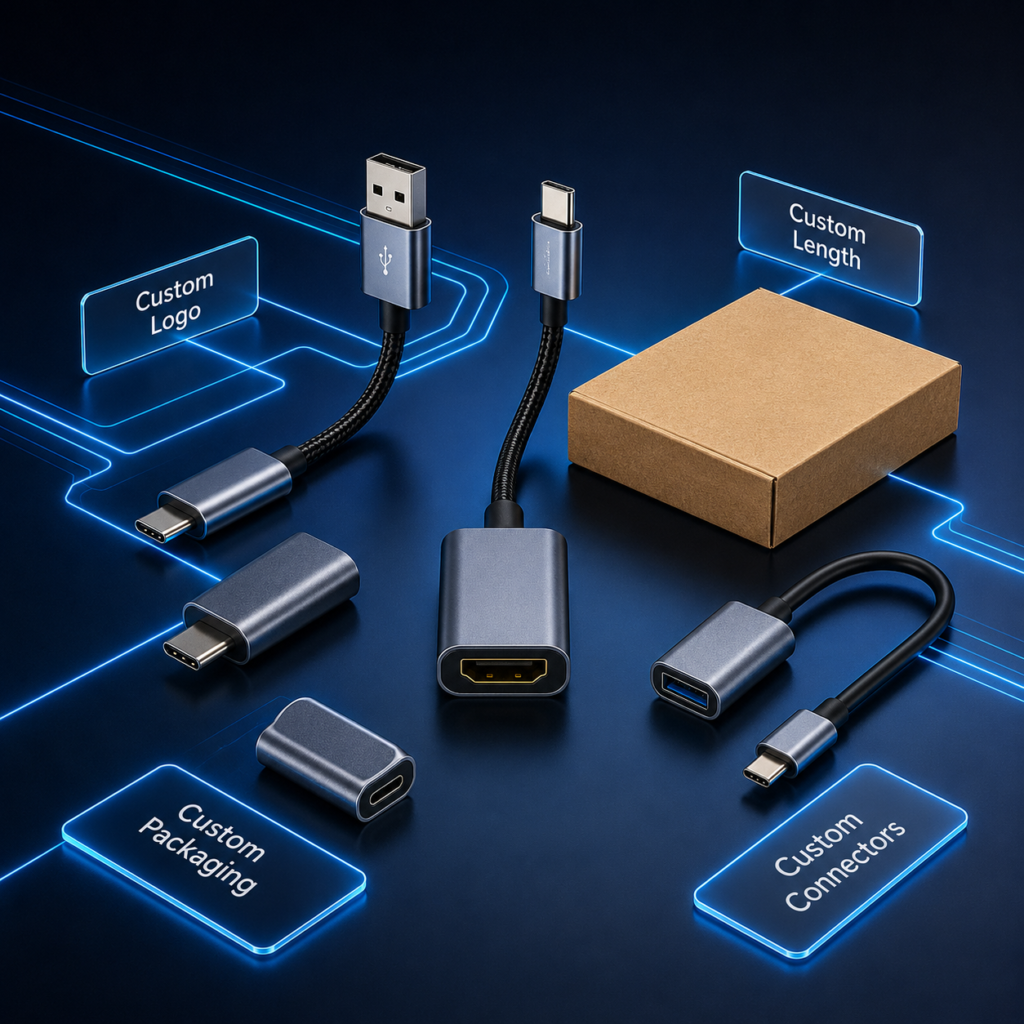
...

Custom USB Cable Factory

USB cable development for electronics brands, device manufacturers, engineering teams, procurement programs, distributors and long-term supply projects.

Cablivo supports custom USB cable projects from early specification review through sample development, bulk production preparation, testing, labeling and shipment coordination. Manufacturing resources cover conductor preparation, stranding, insulation and jacket extrusion, cutting, stripping, soldering, connector assembly, injection molding, overmolding, winding and packing. Project files may begin with drawings, an existing sample, connector photos, a BOM or an application brief. Specifications are reviewed before quotation so function, structure, materials, branding and delivery requirements remain aligned.

  • USB-A, USB-C, Micro USB and device-specific cable assemblies
  • Drawing, sample, connector, function and packaging review
  • Custom length, wire gauge, jacket, shielding, overmold, logo and labeling
  • Prototype development followed by approved-sample production control
  • Incoming inspection, process checks, finished-product testing and packing review

Why Established USB Programs Need Factory-Level Control

Strong USB cable programs depend on engineering clarity, repeatable manufacturing and file control. Six capabilities below address the risks most often discovered after a project has already entered sampling or production.

Engineering Review

A custom USB cable project starts with more than an interface name. Cablivo reviews the application, mating device, connector combination, charging function, data requirement, cable length, wire gauge, jacket, shielding, overmold, labeling and packing plan. Missing information is listed before quotation rather than hidden inside assumptions. The review helps reduce wrong connector selection, incomplete BOMs, power and data mismatches, unnecessary tooling, repeated sample revisions and late packaging changes. Engineering input remains tied to supplied files and approved project requirements.

Product Coverage

A broad USB cable range supports programs with more than one connector or SKU. Available development directions include USB-A to USB-C, USB-C to USB-C, USB-A to Micro USB, extension cables, charging cables, data cables, overmolded assemblies and device-specific combinations. Product selection is based on application and function, not appearance alone. A portfolio review also helps brands consolidate related cable items, packaging formats and label systems while keeping each SKU separately defined for quotation, sampling, testing and repeat production.

Manufacturing Depth

Cablivo manufacturing extends beyond final assembly. The equipment and production teams support conductor preparation, wire stranding, insulation extrusion, jacket extrusion, cutting, stripping, soldering, connector assembly, injection molding, overmolding, heat-shrink finishing, winding, testing and packing. Broader process coverage gives engineering and procurement teams clearer visibility into how structure, materials, process controls and packaging move from a sample into repeatable production. Each process used for a USB program is selected according to the final cable design.

Sample Validation

A prototype provides a physical reference for connector fit, cable length, flexibility, charging or data function, overmold appearance, logo position, color and packing layout. Cablivo records feedback, confirms revision points and prepares a revised sample when required. Approval is not treated as a casual message; the approved sample works together with final drawings, BOM data, labels and packing files. Sample validation lowers the risk of mass production following an outdated photo, incomplete specification or unapproved visual detail.

Production Consistency

Bulk preparation begins after sample approval and final file confirmation. Materials, connectors, cable specifications, color references, tooling details, label files, packing artwork and test requirements are reviewed before scheduling. During production, incoming checks, process inspection, functional checks, appearance review and outgoing inspection are arranged according to the product type. The goal is not an absolute zero-defect promise. The goal is a controlled path that reduces sample-to-production differences, mixed versions, wrong labels and avoidable shipment corrections.

Program Delivery

USB programs often include barcode labels, multiple lengths, regional packaging, mixed cartons or repeat-order versions. Cablivo coordinates production files with SKU lists, quantity breakdowns, packing methods, carton marks and shipment information. File control supports clearer receiving, warehouse identification and future replenishment. Lead time is confirmed after product structure, material availability, connector sourcing, tooling, order quantity, testing and packaging are reviewed. A documented program plan gives procurement teams a more dependable basis for launch and replenishment decisions.

USB Cable Manufacturing for Six Program Types

Different project owners evaluate a USB cable factory through different lenses. The following program profiles connect technical, commercial and packaging priorities to a more focused development path.

Electronics Brands

Brand programs need reliable function, recognizable design and retail-ready presentation. Typical requirements include custom colors, molded or printed logos, cable texture, connector finish, packaging artwork, barcode labels and multiple SKU versions. Cablivo links appearance files with cable specifications and approved samples so visual decisions do not become disconnected from production requirements. Brand teams can submit color references, logo artwork, packaging files, target quantity and launch market for a structured review.

Device Manufacturers

Device manufacturers often require a USB cable to fit a specific enclosure, port position, power input or data path. Important details include connector orientation, cable exit direction, length tolerance, wire gauge, shielding, mating fit and installation space. Cablivo reviews drawings, interface photos, connector data and application notes before sampling. Device-side validation remains essential because a connector may mate correctly while cable routing, bending radius or housing clearance still creates an installation problem.

Engineering Teams

Engineering teams need a supplier able to discuss drawings, BOMs, pinout, current, voltage, data function, mechanical constraints and test methods. Cablivo organizes technical questions before quotation, identifies missing inputs and prepares prototype details for review. Sensitive files can be discussed under NDA requirements when needed. The objective is a cable definition that can be sampled, tested, revised and transferred into production without relying on informal messages or untracked assumptions.

Procurement Programs

Procurement teams compare more than unit price. MOQ, tooling, connector sourcing, sample status, quality checkpoints, packaging, version control and production location all affect total project risk. Cablivo provides a project-based quotation after receiving enough technical and commercial information. Quantity per SKU, annual demand, packaging method, target market and expected schedule help determine a realistic production plan. Cost discussions remain linked to the approved specification rather than an incomplete image reference.

Distributors Importers

Distribution programs frequently combine several connector types, lengths, colors and package formats. Clear SKU labels, barcode files, packing quantities, carton marks and repeat-order references are essential. Cablivo reviews each SKU separately and can coordinate common packaging rules across a product family. Importers may provide destination, carton requirements, packing list needs and freight instructions. Customs clearance or delivery time is never guaranteed, while export documentation and shipment coordination can be discussed according to order requirements.

Long-Term Supply

Long-term programs benefit from final BOM control, approved samples, label versions, packaging artwork, carton marks and production records. Cablivo supports repeat orders by checking the requested version against the stored project reference before production preparation. Updates to connectors, materials, colors, labels or packaging should be identified before a reorder is released. A clear version path reduces the chance of old artwork, mixed specifications or unapproved substitutions entering a later batch.

Six Risks to Resolve Before USB Cable Sampling

Most expensive corrections begin with an assumption left unconfirmed. Resolving interface, function, construction, validation, testing and packing details early protects both technical performance and launch planning.

Connector Mismatch

USB connector names are not enough to define a build. Plug type, mating device, orientation, shell design, pin use, PCB or solder structure and overmold clearance can all affect fit. A photo may hide internal differences or left/right orientation. Cablivo asks for connector models, drawings, close-up photos or a physical reference when needed. Fit must be validated on the intended device. Careful confirmation reduces samples that plug in poorly, interfere with an enclosure or use the wrong internal connection method.

Power Data Conflict

A USB-C appearance does not confirm charging power, data speed, video support or cable construction. Programs should define whether the cable is charging-only, data-capable or expected to support combined functions. Voltage, current, target power, data requirement, cable length and device role influence conductor, shielding, electronics and testing decisions. Cablivo reviews supplied specifications before proposing a structure. Performance claims are not assigned until the cable design, components and validation requirements have been confirmed.

Unclear Structure

Jacket color and connector shape reveal little about conductor count, wire gauge, insulation, shielding, drain wire, filler, braid or overmold structure. Hidden construction directly affects flexibility, signal behavior, power delivery, diameter, durability and cost. Cablivo organizes the requested structure into a BOM and manufacturing route before sampling. Material options remain project-specific; no single PVC, TPE, TPU or silicone construction is suitable for every application, market or test requirement.

Sample Bulk Drift

A good-looking sample can still fail as a production reference when drawings, BOMs, color standards, tooling details, label files or test requirements remain unfinished. Cablivo uses the approved sample together with final files before bulk preparation. Changes after approval are reviewed as controlled revisions rather than casual production notes. The approach reduces material substitutions, connector changes, length variation, logo position errors, color deviation and packaging differences between the approved sample and later production.

Testing Gaps

Generic statements such as ‘strict quality’ do not define what a USB cable must pass. Required checks may include incoming material inspection, connector verification, continuity, polarity or pinout, charging function, data function, cable length, appearance, pull force, bending or packing review. Not every test applies to every cable. Cablivo confirms the test list according to product type, application and supplied standards. Third-party testing, cost and timing are discussed separately when a market or channel requires it.

SKU Packing Errors

A cable can meet technical requirements and still fail a retail or distribution program through wrong labels, mixed lengths, outdated artwork, incorrect barcodes or carton confusion. Cablivo links each SKU to its specification, sample, label version, packaging file and quantity breakdown. Packing checks can cover cable winding, bag or box style, barcode placement, inner quantity, export carton and carton mark. Clear file control helps receiving teams identify products and supports cleaner repeat orders.

Custom USB Cable Product Range

Eight development directions cover common brand, device and distribution programs. Each card shows the information needed to move from a familiar connector name toward a production-ready specification.

USB-A to USB-C

A common format for chargers, computers, hubs and legacy USB-A ports. Development begins with charging and data requirements, connector shell design, cable length, wire gauge, jacket and overmold. Options may include straight or angled exits, molded logos, braided exteriors and retail packaging. Provide the source device, target device, intended function, required current or power, data requirement and quantity. Final capability is based on the confirmed cable structure and components rather than connector appearance.

USB-C to USB-C

Suitable for modern power, data and device interconnection programs. A complete specification should define device roles, charging power, data requirement, video needs, cable length, passive or active design, E-Marker requirements and intended certification path. Cablivo can review connector, wire, shielding, overmold and packaging options before sampling. USB-C to USB-C products must be labeled and promoted according to verified capability; unsupported power or data claims should never be added for marketing convenience.

USB-A to Micro USB

Still used in monitoring equipment, accessories, controllers, lighting products and installed devices. Custom work may involve unusual lengths, thicker conductors, flexible jackets, right-angle connectors, locking features, panel routing, molded logos or equipment-specific packaging. Project files should clarify connector orientation, charging or data function, voltage and current, length, installation space and expected quantity. An old sample can be used as a reference, but internal structure and function must still be verified before production.

USB Extension Cables

Extension assemblies require careful review of connector type, male/female arrangement, cable length, data or power function, shielding and installation environment. Long cable runs can change performance, so length cannot be separated from the required function. Options may include panel-mount ends, screw-lock designs, custom overmolds, labels and equipment packaging. Provide device information, required extension length, expected data or charging function and mechanical mounting details. Testing is confirmed according to the final design.

USB Charging Cables

Charging-focused programs prioritize conductor design, voltage and current requirements, cable length, connector contact, temperature considerations, strain relief and charger-device compatibility. A charging cable may not require the same data structure as a full-function data cable, but the intended function must be stated before quotation. Cablivo can discuss soft-touch, braided, silicone, PVC, TPE or TPU jackets, custom colors, molded logos and retail packs. Final material and performance requirements depend on actual project specifications.

USB Data Cables

Data cable development requires the target USB generation or real application requirement, cable length, shielding, pair structure, connector build and test method. A simple 'high-speed' description is insufficient. Cablivo reviews the device, interface, data need, mechanical structure and packaging plan before sample development. Data validation can be discussed according to the final design and supplied standard. Claims such as USB4, 40Gbps or video support are used only when the cable architecture and verification support them.

Overmolded USB

Overmolding can add strain relief, connector protection, a controlled cable exit, sealing-related structure or a consistent branded appearance. Development may require tooling, color matching, logo placement and samples for fit and appearance. Key inputs include connector model, overmold drawing or reference, exit direction, cable diameter, material preference, device clearance and required tests. Cablivo uses approved tooling details and samples as references for production. Waterproof or environmental performance must be separately specified and tested.

Device-Specific USB

Device-specific assemblies combine USB connectors with custom housings, board interfaces, panel mounts, locks, special lengths, labels or equipment packaging. Such projects often begin with a drawing, sample, interface photo or BOM rather than a catalog item. Cablivo reviews connector availability, internal wiring, mechanical orientation, cable structure, overmold needs, testing and packaging before quotation. Prototype validation on the intended equipment is strongly recommended because fit, routing and function depend on the complete device environment.

USB Cable Specification Planning Matrix

A reliable quotation depends on connected decisions. The matrix below shows what can be discussed, what information is required and which project outcome may change when a specification is updated.

Specification Area

Options to Discuss

Required Input

Project Impact

Connector Combination

USB-A, USB-C, Micro USB, extension, panel or device-specific combinations

Connector model, gender, orientation, mating device

Fit, tooling and assembly method

Primary Function

Charging, data, combined function, device interconnect

Use case, source device, target device

Internal wiring, shielding and test plan

Power Requirement

Project-defined voltage, current and target power

Charger, device and required power information

Conductor, contacts, electronics and length

Data Requirement

USB generation or application-defined requirement

Required speed, video or device function

Pair structure, shielding, length and validation

Cable Length

Custom length with project-defined tolerance

Finished length, measurement method and routing

Voltage drop, data behavior, packaging and cost

Wire Gauge

Selected according to function and structure

AWG request or electrical requirement

Diameter, flexibility, heating and cost

Jacket Material

PVC, TPE, TPU, silicone or other reviewed options

Flexibility, feel, environment, color, target market

Appearance, handling, compliance and durability

Shielding

Foil, braid, combined or application-specific structure

Interference environment and data requirement

Cable diameter, signal behavior and assembly

Overmold

Shape, exit direction, color, logo and strain relief

Drawing, sample, device clearance and material preference

Tooling, fit, appearance and production repeatability

Branding

Molded logo, print, label, color and connector finish

Vector logo, placement, color reference

Sample approval and visual consistency

Packaging

Bulk pack, bag, retail box, insert, barcode and carton mark

Artwork, SKU list, packing quantity and destination

Quotation, warehouse identification and delivery

Compliance

Material documents, project tests or third-party testing discussion

Target market, channel requirement and document list

Material choice, sample design, cost and schedule

Nine USB Cable Customization Decisions

Customization becomes manageable when each decision connects to required input, manufacturing impact and approval evidence. The nine areas below form the core of most USB cable development discussions.

Connector Combination

Select the exact plug, receptacle, male/female arrangement and mating equipment. Connector naming should be supported by a model, drawing, close-up photo or physical reference whenever possible. Orientation, shell length, PCB or solder construction and device clearance can change the approved design. Cablivo reviews availability and alternatives before sampling. Branded connector relationships or guaranteed stock are not implied. Submit interface images, connector data, mating direction and expected function so the proposed combination can be checked against the intended equipment.

Cable Length

Finished cable length should include a clear measurement method: connector tip to connector tip, molded-body edge to edge or another defined reference. Length affects use, voltage drop, data behavior, winding size, carton volume and cost. Very short internal leads and multi-meter assemblies may require different construction and validation. State the nominal length, tolerance, routing path and whether coiling or fixed installation is expected. Cablivo confirms manufacturability and the related test plan after function and structure are known.

Wire Gauge

Wire gauge influences current handling, cable diameter, flexibility, soldering, overmold dimensions and material cost. A larger conductor is not automatically the best choice; the complete cable must still fit the connector, jacket and bending requirements. Provide target voltage, current or power, cable length, duty pattern and preferred outside diameter. Cablivo reviews the electrical requirement together with mechanical limits before preparing a proposal. Final gauge is documented in the approved BOM rather than left as an informal production preference.

Power and Data

Charging power and data capability must be defined separately. Specify whether data is needed, the intended USB generation or actual device function, target charging power, charger type, device role, cable length and any video requirement. USB-C projects may also involve E-Marker or active electronics. Cablivo does not assign high-speed or high-power labels without a supporting structure and validation plan. Technical claims used on products and packaging should match verified capability and any applicable certification or trademark requirements.

Jacket Material

PVC, TPE, TPU and silicone each offer different combinations of feel, flexibility, appearance, processing, cost and compliance considerations. Braided exteriors can add texture and protection but also change diameter, stiffness, winding and logo options. Material selection begins with the application environment, desired feel, color, bending, target market and test requirements. Cablivo can prepare material or color samples when needed. No material is presented as universally medical-grade, military-grade, flame-rated or compliant without supporting documents.

Cable Color

Color may be matched to a reference, approved sample, color code or packaging palette. Jacket, braid, connector housing, overmold and printed elements can show color differently because materials and surface finishes vary. Define which component must match and provide a physical reference when tight visual alignment matters. Cablivo discusses color sampling, production tolerance and repeat-order control before approval. Exact appearance should be confirmed under agreed lighting and sample conditions rather than assumed from a screen image.

Overmold Shape

Straight, left-angle, right-angle, 90-degree and custom shapes can improve routing, strain relief, connector protection and brand appearance. Shape decisions must account for connector insertion, device clearance, cable exit, bend path, logo location and tooling. Provide a drawing, 3D file, old sample or equipment photo with dimensions. Cablivo reviews tooling and sample needs before quotation. Overmold appearance, fit and any sealing-related requirement are validated through the approved sample and relevant project tests.

Logo and Label

Branding can involve molded logos, printing, heat transfer, cable labels, barcode labels or packaging artwork. Artwork quality, scale, placement, surface texture and color affect the result. Provide vector files, placement dimensions, color references, label content and any compliance marks that are legally authorized. Cablivo reviews the branding method with the material and production process. Unlicensed logos, certification marks or third-party brand assets are not added. Sample approval is required before bulk production.

Retail Packaging

Packaging may include bulk winding, poly bags, zip bags, insert cards, retail boxes, trays, barcode labels, SKU labels, inner cartons and export cartons. Packaging choices affect unit cost, sample approval, packing time, carton size and freight volume. Submit artwork, dielines, barcode data, quantity per package, SKU list, destination and carton mark requirements. Cablivo checks cable fit, winding method, label placement and packing sequence before production. Platform admission or customs clearance is not guaranteed, while document and packing coordination can be discussed.

USB Cable Structure From Conductor to Overmold

A cable that looks simple may contain several engineered layers. Four technical sections below explain how internal construction, shielding, jacket and connector molding work together in a finished USB assembly.

Conductor and Core Insulation

A USB cable begins with conductor and insulation choices rather than the outside jacket. Copper or tinned copper may be discussed according to the electrical, flexibility, soldering and cost requirements. Strand count and conductor formation influence flexibility and production consistency. Core insulation separates conductors, supports the electrical structure and prepares the cable for data pairs, power cores, shielding and jacket extrusion. A final design should define conductor material, gauge, strand structure, core count, insulation material and color code. Cablivo uses wire drawing, stranding and insulation extrusion resources to support project-specific structures. Exact current, resistance, temperature or compliance claims require a confirmed design and test method. Provide power, data, length, bending and target market information before material selection. For replacement projects, a cut-open sample, BOM or laboratory analysis may be needed because an exterior photo cannot reveal internal conductor and insulation details.

Data Pairs, Shielding and Structural Support

Data-capable USB cables may require controlled pair structures, foil shielding, braided shielding, drain wires, fillers or inner jackets. The correct arrangement depends on the intended USB function, cable length, interference environment, connector construction and validation requirement. Shielding is not a decorative feature and should not be added or removed only to reduce cost. Foil can support coverage around signal groups, while braid can add shielding or structural protection; some designs use both. Cablivo can discuss stranding, foil wrapping, braiding and inner structure preparation according to the approved cable design. The project brief should state data needs, nearby electrical noise, movement, cable diameter limits and any required test standard. Performance remains tied to the full assembly, including connectors, soldering, shielding termination and overmold. Claims such as high-speed, video-capable or interference-resistant should follow verified results rather than a generic material list.

Outer Jacket, Braid and Handling

The outer jacket protects the internal structure and defines much of the cable’s feel, color, flexibility and appearance. PVC, TPE, TPU and silicone may be discussed, while braided sleeves can add texture, protection and a premium visual finish. Material selection should consider routing, bending, abrasion, temperature, oil, outdoor exposure, odor, color, packaging and target-market documentation. Required performance levels must be specified and supported by actual material records or testing. Cablivo’s jacket extrusion, braiding and winding processes help move an approved material and geometry into repeat production. Outside diameter, wall thickness, surface finish and winding radius should be reviewed with connector and packaging dimensions. A soft cable is not always mechanically suitable, and a thick jacket may interfere with connector overmolding or enclosure clearance. Samples are used to confirm handling and appearance before production.

Connector Assembly and Overmold

Connector accuracy depends on the contact system, PCB or solder structure, shell, housing, strain relief and cable exit. Soldering, shielding termination and internal assembly must match the approved wiring and function. Injection molding or overmolding can protect the connection, form a strain-relief transition, define exit direction, support a branded appearance or create a sealing-related structure. Cablivo maintains several vertical injection molding formats and tooling support for molded cable projects. Before tooling or sampling, confirm connector model, cable diameter, overmold dimensions, logo, color, surface, device clearance and any pull, insertion or environmental test requirement. A molded shape should be approved physically because renderings do not fully show grip, insertion clearance, flash, sink marks or cable bending behavior. Final tooling details and the approved sample become production references.

USB-C Power Data and Certification Planning

USB-C projects need clear separation between connector shape, power capability, data function and certification. The planning table prevents unsupported claims from entering drawings, labels or retail artwork.

Project Question

Information to Provide

Review Focus

Approval Evidence

Charging only or data plus charging?

Device use, charger and data need

Core count, wiring, shielding and test plan

Functional sample and approved specification

What power is required?

Voltage, current, target power and cable length

Conductor, contacts, electronics and temperature considerations

Electrical test method and product marking review

What data function is required?

USB generation or actual device task

Pair structure, shielding, length and connector build

Verified data test or application validation

Is video output required?

Device, display mode and resolution expectation

Full-function design and validation path

Device-level validation and supported claim

assive or active cable?

Length, data target, power and system architecture

PCB, chipset, firmware and assembly complexity

Approved electronic design and test results

Is an E-Marker required?

Target power, cable capability and branding plan

Chip selection, programming and verification

Component record and functional validation

Is USB-IF certification required?

Target market, logo plan and certification scope

Product-specific test route, documents, cost and timing

Valid product listing or certification evidence

Are third-party reports required?

Market, channel and required document list

Material, test sample, laboratory and schedule

Actual report from the arranged test

What can be printed on packaging?

Verified capability and authorized marks

Claim review, symbol use and artwork control

Approved artwork tied to verified product data

Information Needed for a Custom USB Cable Quote

Clear project inputs shorten review cycles and improve quotation accuracy. Three sections below show how incomplete ideas, existing samples and formal RFQ files can enter the same engineering workflow.

Start With Available Files

A project can begin with a complete drawing, an existing cable, connector photos, a BOM, an interface datasheet or a short application brief. Perfect documentation is not required for the first discussion, but the available information should be shared openly. Useful inputs include connector type, mating device, charging power, data requirement, cable length, outside diameter limits, wire gauge, jacket preference, overmold shape, logo, target quantity, packaging, target market and expected schedule. For a replacement cable, send overall photos, connector close-ups, label photos and a dimension reference. Cablivo reviews what is known, identifies missing items and confirms whether a physical sample or additional technical data is needed. Sensitive files can be discussed under NDA requirements. A structured starting point produces a more accurate feasibility review and quotation than a single marketplace image or a request for the lowest price.

Convert Requirements Into a Review List

After receiving the initial files, Cablivo separates the project into technical, manufacturing, quality, commercial and packing sections. Technical review covers connector, wiring, function, power, data, length, gauge and mechanical constraints. Manufacturing review covers material availability, soldering, assembly, tooling, overmold and production route. Quality review identifies incoming checks, functional tests, dimensional checks and any third-party requirements. Commercial review covers MOQ, quantity per SKU, sample needs, tooling, packaging and schedule factors. Packing review covers cable winding, bag or box, barcode, SKU label, carton mark and destination. Missing inputs are returned as focused questions. The result is a clearer path toward quotation and sampling, while unconfirmed details remain marked for review rather than silently assumed.

Recommended RFQ Attachment Set

For a mature RFQ, include a drawing or dimensioned sketch, BOM if available, connector model, pinout or wiring definition, power and data requirements, cable length list, quantity by SKU, color references, logo files, packaging artwork, barcode data, target market, test requirements and expected project schedule. A sample photo set should show the complete cable, both connectors, label, packaging and any damage or problem that the replacement must solve. Procurement teams may also share annual demand, preferred production location, supplier forms and document needs. Cablivo uses the attachment set to prepare a project-specific review. Files do not guarantee feasibility or a fixed price, but they reduce clarification cycles and help reveal sourcing, tooling, compliance or schedule risks before a sample is ordered.

Engineering Review Before Quotation and Sampling

Six review stages transform a connector request into a controlled project definition. Each stage closes a different group of assumptions before material preparation or tooling begins.

Application Review

Cablivo begins with the equipment, charger, computer, accessory or retail use case. Application review clarifies whether the cable is internal, external, frequently moved, fixed, bundled, sold alone or packed with a device. Environment, routing, target market and expected lifecycle help shape later decisions. The review does not replace device validation. It provides the context needed to interpret connector, function, material, mechanical and packaging requirements.

Connector Confirmation

Connector type, gender, orientation, shell, mating direction and availability are checked against drawings, photos or samples. Device clearance and cable exit direction are discussed before tooling. Projects involving branded or specialized connectors require source and availability confirmation. Alternatives may be discussed but are not assumed equivalent. Exact connector information protects fit, soldering, overmolding, pinout and repeat-order control.

Electrical Definition

Voltage, current, target power, charging protocol, data function and cable length are collected before gauge and structure are proposed. USB-C projects may need E-Marker or active electronics review. A cable’s outside appearance does not prove capability. Electrical requirements are linked to the BOM and test plan so quotation, sample labeling and marketing claims use the same approved definition.

Mechanical Definition

Finished length, diameter, flexibility, bend path, overmold dimensions, exit direction, insertion clearance and strain relief are reviewed together. Device interface photos and enclosure drawings help reveal conflicts that connector catalogs cannot show. Molded components may require 2D or 3D files and a physical fit check. Mechanical approval reduces samples that function electrically but fail during installation or everyday handling.

Manufacturing Review

Engineering and production teams assess material availability, extrusion, shielding, soldering, connector assembly, tooling, injection molding, winding, inspection and packaging steps. New processes or special materials may add sample stages, cost or lead time. Manufacturing review also identifies where a production fixture, mold, test jig or approved visual reference is needed. The proposed route is confirmed before bulk scheduling.

Test Packing Review

Functional, dimensional, appearance and packing requirements are gathered before sample approval. Test items may include continuity, polarity, charging, data, pull, bending, length, connector fit and OQC according to the project. Packaging review covers winding, label, bag or box, barcode, inner quantity and carton mark. A combined review prevents quality criteria and packing files from arriving after production has started.

Custom USB Cable Prototype Development Process

Prototype work verifies electrical, mechanical and visual decisions before volume production. Six controlled stages keep files, materials, tooling, testing and feedback connected.

Project File Intake

Drawings, sample photos, connector information, function, cable length, quantity and packaging direction are organized into a review file. Missing details are listed. When no drawing exists, a sample or interface photo can help start the discussion, while measurements and internal construction may still require confirmation.

Specification Freeze

Connector, wiring, power, data, gauge, length, material, shielding, overmold, color, logo, test and packaging inputs are consolidated into a sample specification. Items that remain open are clearly marked. A sample should not be built from conflicting emails or unapproved artwork.

Material Tooling Prep

Connectors, cable materials, housings, labels and packaging samples are prepared according to the reviewed specification. New overmold shapes may require tooling discussion. Availability, minimum purchase quantities and color preparation can affect the sample plan. Exact timing is issued only after the required materials and tooling route are confirmed.

Prototype Production

The prototype follows the selected manufacturing route, which may include cutting, stripping, soldering, connector assembly, overmolding, heat-shrink finishing, winding and preliminary packing. Process notes and visual references are recorded where relevant. A prototype is a validation tool, not a guarantee that every first build will require no revision.

Sample Verification

The sample is checked against the agreed specification. Review may include connector fit, continuity, polarity, charging, data function, length, appearance, color, overmold, logo and packaging according to the project. Device-level validation remains the responsibility of the project owner, with feedback returned in a clear revision list.

Approval Revision

Approved points and requested changes are documented. A revised sample can be discussed when feedback affects materials, dimensions, function, tooling, branding or packaging. Revision cost and timing depend on the change. Final approval works with the drawing, BOM, test requirement and packaging files to prepare for production.

From Approved Sample to Controlled USB Cable Production

The transition into volume production is a file-and-process handover, not a simple quantity increase. Three stages protect specification, material, production and packing consistency.

Lock the Production Reference

Bulk production should not begin from an isolated sample photo or verbal approval. Cablivo prepares the production reference from the approved sample, final drawing, final BOM, connector definition, cable length, gauge, material, color, tooling detail, label file, packaging artwork and test requirements. Quantity by SKU and carton instructions are added before scheduling. Any change after approval is treated as a revision and reviewed for cost, timing, material and sample impact. A locked reference protects the program from outdated artwork, substituted connectors, mixed label versions and undocumented construction changes. Procurement and engineering teams should approve the same revision so technical and commercial files do not diverge.

Prepare Materials and Process Controls

Material preparation covers conductors, cable cores, connectors, housings, overmold resin, labels and packaging items. Incoming inspection and source checks are arranged according to the project. Production preparation may include cutting parameters, stripping dimensions, soldering method, connector assembly, injection molding setup, color reference, fixtures, test settings and packing instructions. Process checkpoints are placed where an error would be difficult or expensive to correct later. Cablivo’s factory base, 1,500+ person team and three manufacturing bases support multi-process cable programs, while exact capacity and schedule are confirmed for the specific order rather than promoted as a universal daily output.

Inspect, Pack and Release

During production, in-process inspection checks the approved specification and process requirements. Finished-product review may include function, length, appearance, connector fit, overmold, logo and label according to the product. Packing follows the approved winding method, bag or box, barcode, SKU quantity and carton mark. OQC and pre-shipment review help identify version, quantity or packing issues before release. Shipment coordination can include packing list, commercial invoice and freight information according to the order. Delivery dates depend on material, connector sourcing, tooling, order quantity, testing, packaging and logistics, so the final schedule is issued after order details are confirmed.

Production Process for Power Cable Assemblies

Power cable production may include cutting, stripping, crimping, soldering, overmolding, assembly, testing, labeling and packaging, depending on cable structure.

Typical production flow:

Material and connector preparation
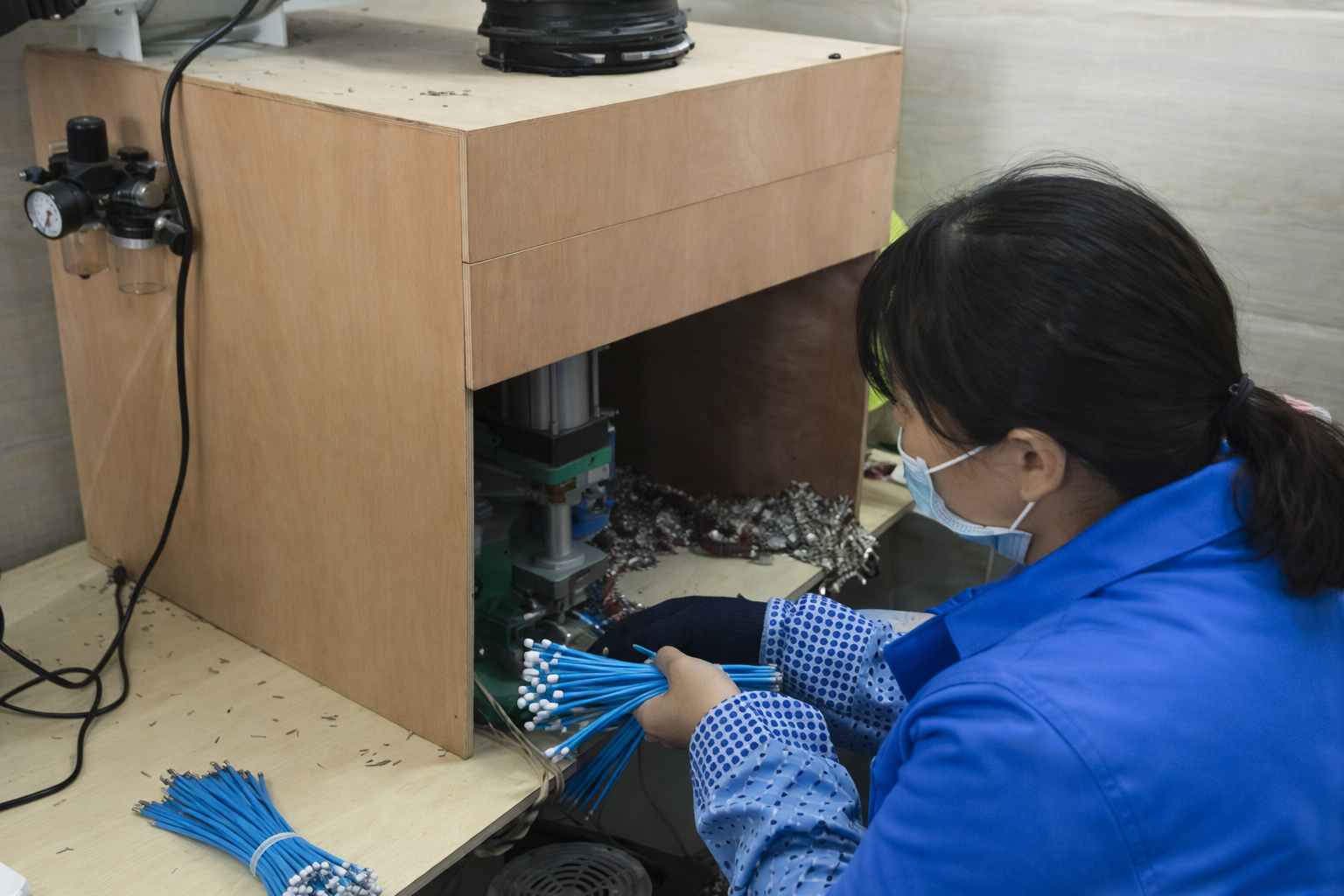
Cable cutting and stripping
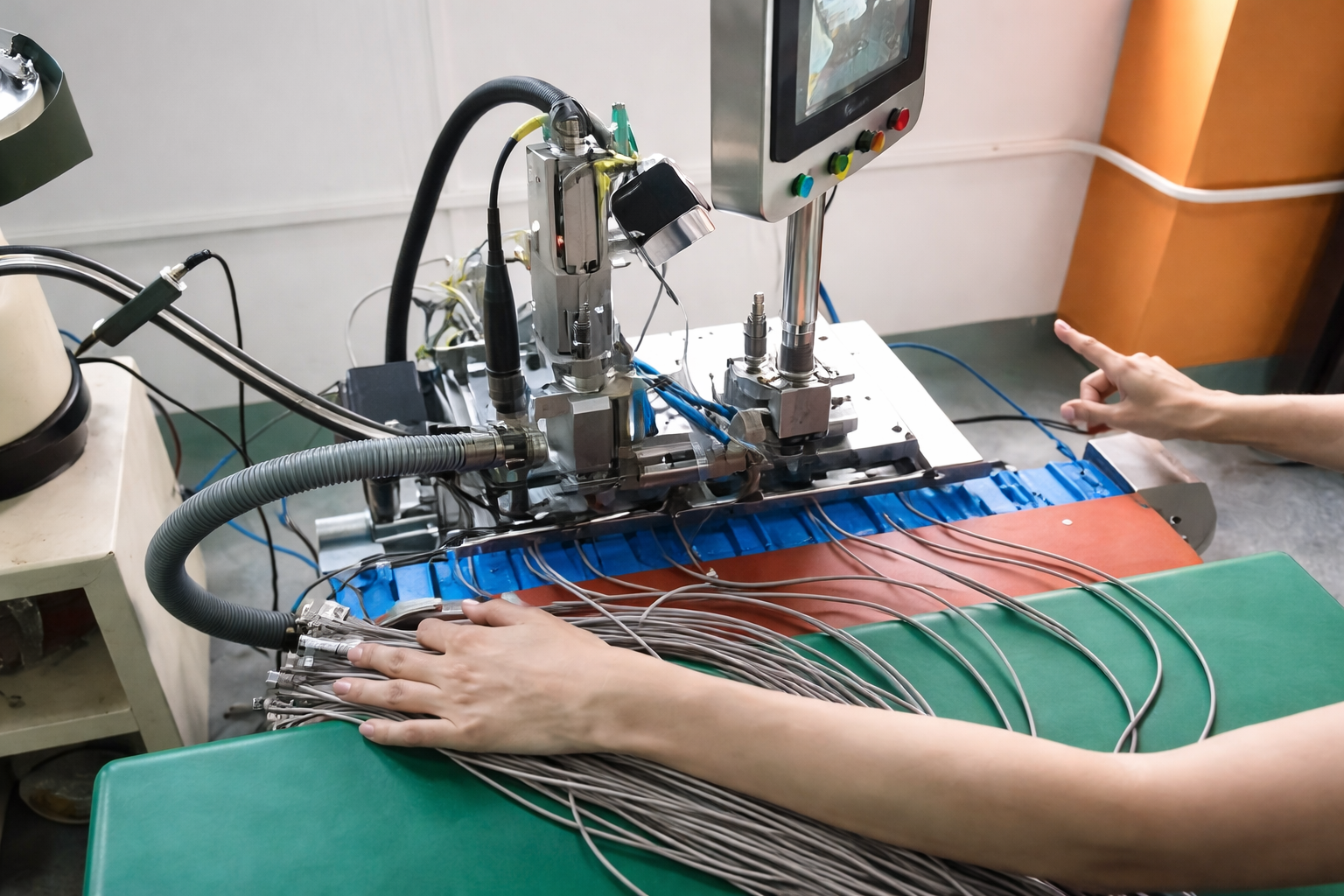
Terminal crimping or soldering

Injection Molding / Connector Assembly
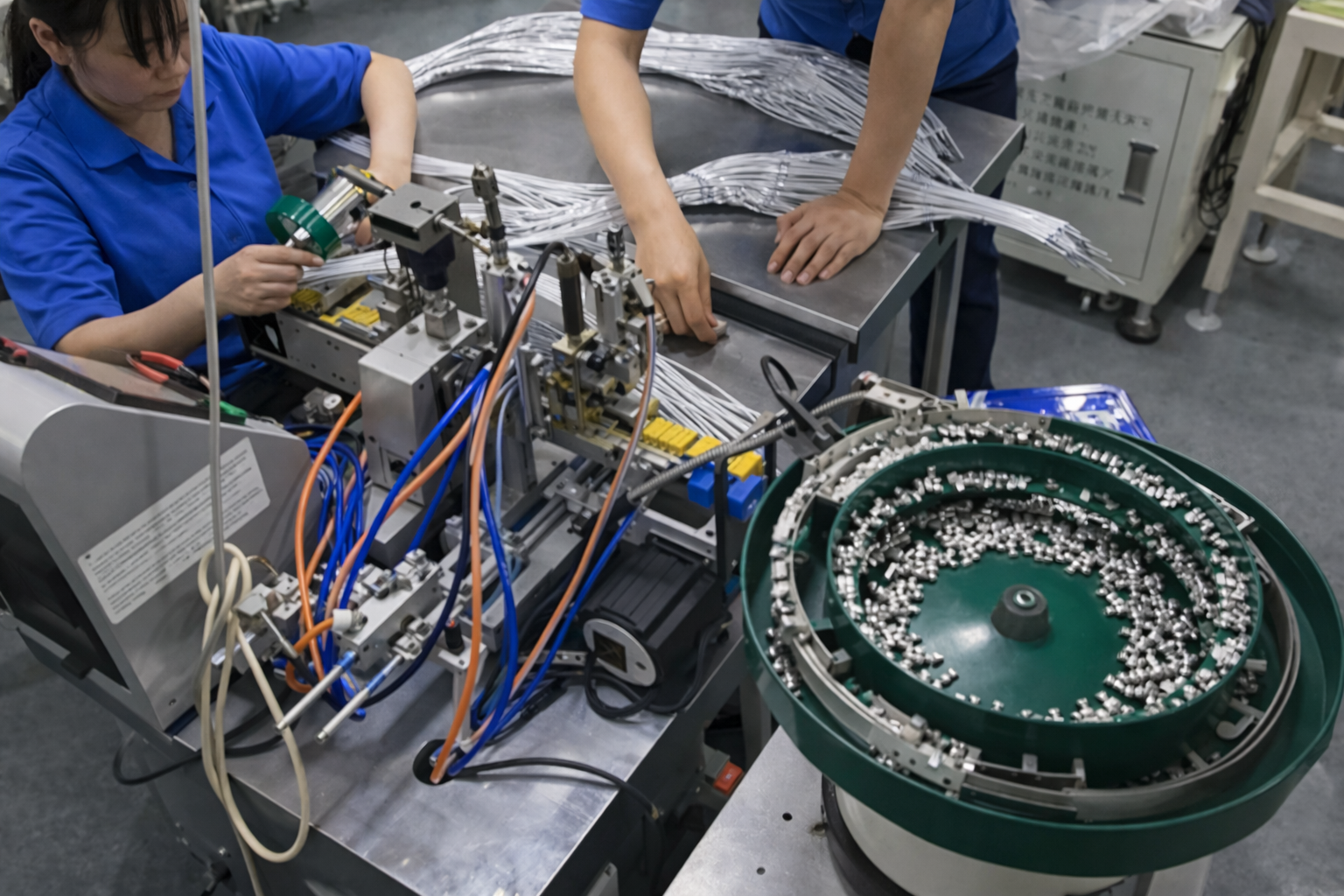
Connector assembly
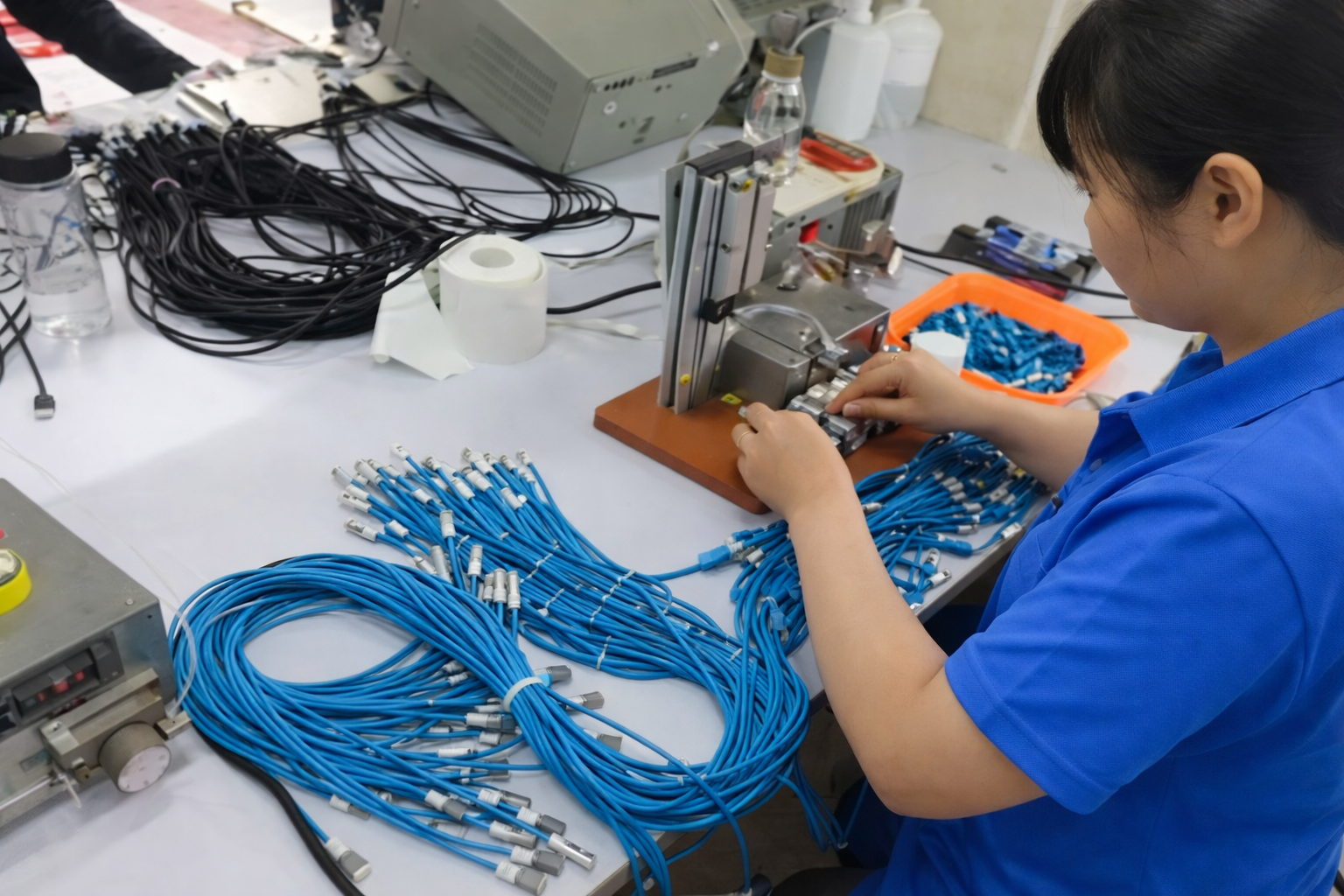
Sleeve, heat shrink or overmold processing

Continuity, polarity or fit check
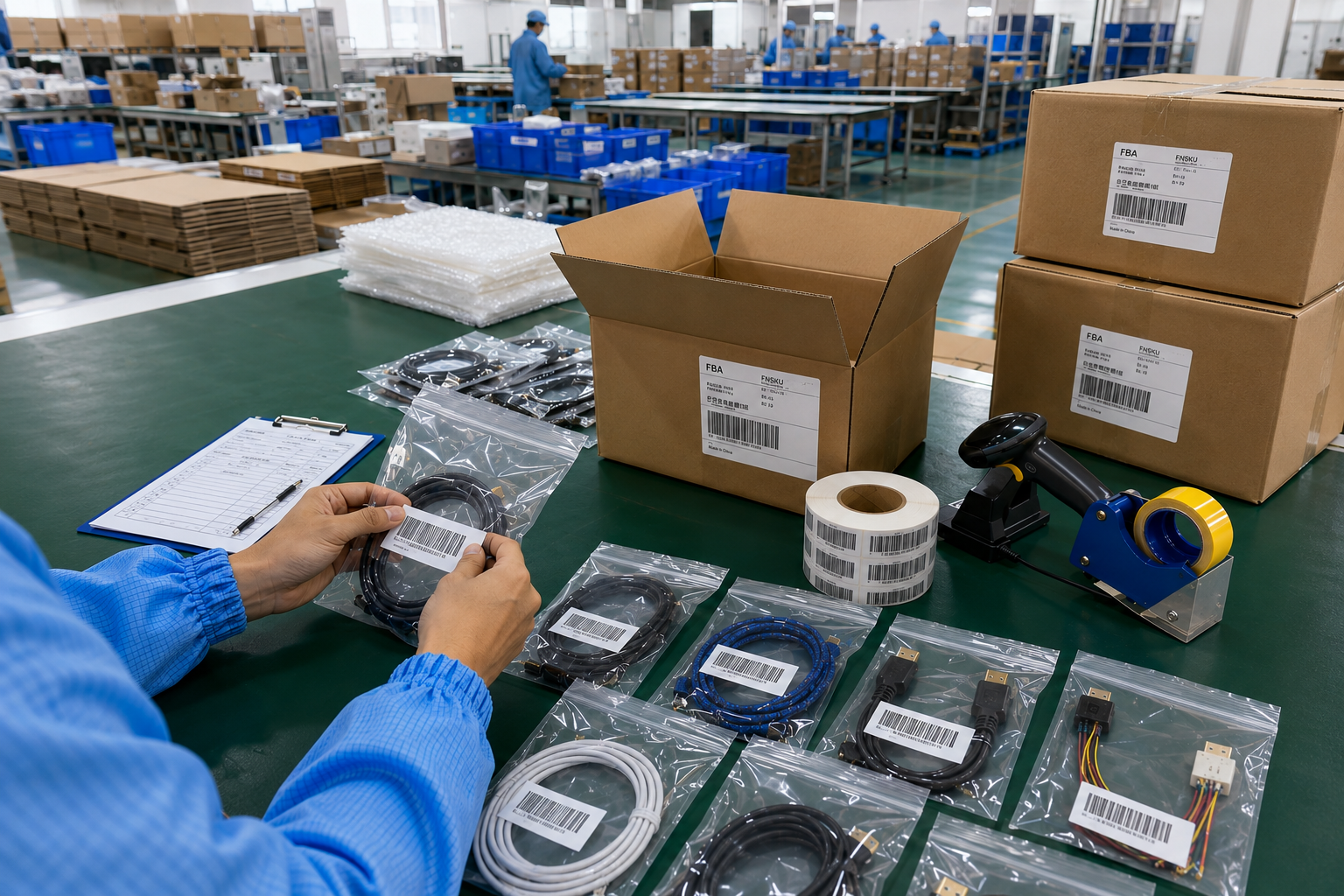
Appearance and label inspection

Packing, carton mark and shipment preparation

Custom USB Connector Overmolding and Tooling Support

Overmolding adds functional and visual value when geometry is engineered around the connector, device and cable. Four areas below explain the decisions required before tooling and sample approval.

Logo Details

Overmolding surrounds the connector-to-cable transition and protects solder joints, shielding termination and internal assembly from handling stress. Shape and material must fit the connector shell and device clearance. The design should define overmold length, width, thickness, surface, cable entry and any exposed metal. Cablivo reviews connector orientation and molding feasibility before tooling. A physical sample is used to confirm insertion, grip, appearance and interaction with the equipment. Protection performance depends on the complete structure and any agreed pull or bending test.

Strain Relief Design

Strain relief controls how the cable bends near the connector, where repeated movement often concentrates stress. Rib pattern, flexible length, resin, cable diameter and exit direction influence the result. A long flexible transition may improve bending but can interfere with a compact enclosure; a short rigid shape may fit but transfer stress to the cable. Cablivo discusses geometry through drawings, samples or 3D files and validates the molded result. Lifecycle claims require a defined test method and sample approval rather than visual judgment alone.

Custom Exit Direction

Straight, left-angle, right-angle and 90-degree cable exits can solve routing, clearance and presentation issues. Direction must be defined from a clear viewing reference because left and right can be interpreted differently. Device photos, mating direction and enclosure dimensions help prevent a mirrored or obstructed design. Cablivo reviews mold split, cable position, logo orientation and pull direction before tooling. Fit validation on the intended equipment is recommended. A cable that electrically connects may still be unsuitable when the molded exit blocks nearby ports or forces a tight bend.

Brand Molded Appearance

A molded logo, texture, color and connector profile can create a recognizable product while protecting the interface. Branding files should include vector artwork, placement, depth, surface and color references. Very small details may not mold cleanly, and different resins show texture and color differently. Cablivo reviews the artwork with tooling and sample requirements, then uses the approved sample as the visual reference. Only authorized brand assets and compliance marks are used. Retail artwork should match the verified cable function and approved product description.

USB Cable Testing and Quality Control

Quality control follows the cable from incoming materials through electrical, mechanical, visual and packing checks. Nine review areas below replace vague quality claims with defined inspection subjects.

Incoming Inspection

Incoming inspection verifies the materials and components selected for the project before production. Review may cover cable cores, connectors, housings, resin, labels and packaging items against approved references and supplier documents. Requirements vary by product. Inspection reduces the risk of wrong materials or versions entering production, while material compliance claims remain based on actual records and any arranged testing.

Connector Verification

Connector model, orientation, dimensions, shell, housing and mating fit are checked against the approved sample or drawing. Specialized connectors may also require source and lot identification. Fit checks should use the intended mating component when possible. Connector verification protects assembly, overmolding and device installation. Availability and alternatives are confirmed before sampling or production rather than assumed from a similar-looking part.

Continuity Pinout

Continuity, polarity or pinout checks confirm electrical paths according to the cable definition. The exact test depends on charging, data or device-specific wiring. A simple continuity pass does not prove every performance claim, but it helps identify opens, shorts and wrong connections. Test fixtures and limits are prepared from the approved wiring information. Project owners should provide pinout or functional requirements when standard USB wiring is not sufficient.

Charging Function

Charging checks are arranged according to the approved voltage, current, target power, cable length and device setup. The method may include resistance, voltage drop, current or functional charging review depending on the project. No universal charging result is promised for every charger and device combination. The product specification, component selection and validation plan must support any power claim placed on labels or packaging.

Data Function

Data verification is based on the intended USB function, cable length, shielding, connectors and test method. Continuity alone does not prove data rate or video capability. Projects requiring a named USB generation or application-specific performance should define the validation equipment and acceptance criteria. Cablivo can discuss internal and third-party testing arrangements. Marketing claims remain limited to verified capability for the approved product.

Mechanical Tests

Pull force, bending, swing, insertion or other mechanical tests may be discussed according to connector, overmold, application and program requirements. Test force, cycle count, angle, speed and acceptance criteria must be defined before results have meaning. Equipment availability does not imply every cable passes every test. Mechanical validation helps compare sample revisions and identify weaknesses before shipment when the relevant method is agreed.

Dimension Appearance

Finished length, connector dimensions, cable diameter, overmold, color, logo and surface appearance are reviewed against approved references. Measurement points and tolerances should be defined in the drawing. Visual inspection can identify flash, sink marks, scratches, printing errors or color differences, while lighting and sample conditions affect perception. The approved physical sample provides a clearer reference than screen images alone.

Packaging Check

Packing inspection verifies winding, ties, labels, barcodes, bags, boxes, inserts, quantity, inner cartons and carton marks according to approved files. Each SKU should be distinguishable during packing and receiving. Checks reduce mixed versions, wrong barcode placement and carton errors. Unapproved artwork or late label changes are held for confirmation. Packaging requirements are part of production control, not a separate afterthought.

OQC Release

Outgoing quality control reviews the finished order according to the project inspection plan before shipment release. OQC may include function, dimensions, appearance, labeling, packing and quantity checks. The exact sampling plan and records depend on order and program requirements. OQC supports risk reduction but is not expressed as a 100% zero-defect guarantee. Any requested report must reflect actual inspection data.

ivate Label Packaging and Multi-SKU Control

Packaging translates an approved cable into a product that can be identified, sold, installed and reordered. Six formats cover branding, labels, bulk handling, retail packs, SKU separation and export cartons.

Cable Branding

Brand identity can appear through molded logos, printing, cable labels, connector colors or approved surface details. Vector artwork, size, position and color references are reviewed before sampling. The method must suit the selected jacket or overmold material. Only authorized assets are accepted. Branding approval should be linked to the same sample and specification used for production so visual changes do not bypass technical review.

Barcode SKU Labels

Barcode and SKU labels support retail scanning, warehouse identification and repeat ordering. Provide code type, data, dimensions, material, placement and quantity per package. Multiple lengths or colors require separate SKU mapping. Cablivo reviews label samples and ties each version to the product and carton plan. Barcode readability and data accuracy should be checked before volume printing. Late file changes may affect packing and schedule.

Bulk Industrial Pack

Bulk packing may use controlled winding, ties, sleeves, bags, dividers or trays for equipment assembly and internal distribution. The pack should protect connectors, prevent tangling and match the line-side handling method. Provide quantity per bag or tray, label content and carton requirements. Cablivo checks cable bend, winding diameter and connector protection before approval. Bulk packing can reduce packaging material but must still preserve identification and transport protection.

Retail Box Program

Retail boxes may include a dieline, insert card, tray, barcode, specifications, authorized claims and regional language. Cable winding and connector position must fit the box without excessive bending or pressure. Provide print-ready artwork, color standard, package dimensions and required marks. Cablivo prepares a packaging sample or layout review before mass printing. Product claims on the box should match verified cable function and applicable certification evidence.

Multi-SKU Packing

Programs with several connector types, lengths, colors or markets need a SKU matrix. The matrix should list product specification, quantity, barcode, package version, inner quantity and carton mark for each item. Cablivo uses separate labels and packing references to reduce mixing. Mixed-carton arrangements can be discussed when receiving teams can identify each SKU. Version updates should be approved before repeat orders to avoid old artwork or labels.

Export Carton Control

Export carton planning covers carton size, quantity, weight, carton mark, packing list and freight coordination according to the order. Connector protection and package strength are reviewed with the chosen packing method. Cablivo can coordinate commercial invoice, packing list and shipment information where applicable. Clearance, platform admission and final transit time are not guaranteed. Destination, freight instructions and required shipping documents should be shared before packing is finalized.

MOQ Quotation Sample and Delivery Planning

Commercial decisions become clearer after technical and packaging inputs are organized. The table gives transparent planning rules without presenting one fixed price or schedule for every USB cable design.

Commercial Item

Cablivo Planning Position

Information Needed

Important Boundary

MOQ

Starts from 500 pcs for many custom cable projects

Quantity per SKU, connector, color, material and packaging

Final MOQ depends on structure, sourcing, tooling and packing

Prototype

Quoted after specification, material and tooling review

Drawing, sample, connector, function, length and packaging

First sample perfection and unlimited free revisions are not promised

Sample Timing

Issued after material, connector and tooling route are confirmed

Complete files, availability, revision scope and test needs

No single fixed sample time applies to every USB project

Unit Price

Based on approved technical and commercial inputs

BOM, length, gauge, power/data, quantity, branding and packing

An image-only estimate is preliminary and may change

Tooling NRE

Discussed for new overmold, fixture or special structure

2D/3D file, sample, material, logo and expected volume

Tooling cost and ownership terms are confirmed per project

Bulk Lead Time

Confirmed after approved sample and final order files

Material, connector sourcing, quantity, tests, packing and schedule

No universal 7-day, 15-day or guaranteed shipment promise

Third-Party Testing

Discussed when market, channel or brand rules require it

Required standard, laboratory, samples, document and timing

Cost, result and timing are handled case by case

Payment Shipping

Confirmed in quotation and order discussion

Incoterm, destination, freight route and document needs

Customs clearance and transit time are not guaranteed

Repeat Orders

Checked against approved specification and version files

Previous order, SKU version, updates, quantity and packing

Material or pricing may change and should be reconfirmed

Custom USB Cable Project Examples

Three anonymous project patterns show how brand, equipment and distribution requirements move through engineering review, sample confirmation, production files and packing control.

North American Brand

A North American electronics brand needed a private-label USB-C cable for a retail accessory program. The project included connector function, cable length, jacket feel, brand color, molded logo, barcode label, retail box and export carton. Cablivo reviewed the technical and packaging files together before sampling. Cable and packaging samples were confirmed before production preparation. Final SKU, barcode and carton-mark files were linked to the approved sample. The structured approval path reduced the risk of visually correct cables entering the wrong package version.

Device Integration

An equipment manufacturer needed a USB cable assembly for a compact device with limited port clearance. The available inputs included an interface photo, connector reference, cable length and enclosure dimensions. Cablivo reviewed connector orientation, cable exit, wire gauge, function and overmold geometry before prototype production. The first sample was used for device fit and routing validation. Feedback on the molded exit was documented and a revision was discussed. After approval, the final drawing and sample became references for production preparation and inspection.

Multi-SKU Distributor

A distributor planned several USB cable SKUs with different connectors, lengths and packing formats. The main risk was version confusion during production, warehousing and repeat ordering. Cablivo organized the specification, quantity, barcode, package and carton mark for each SKU. Separate label references and packing samples were confirmed before bulk preparation. OQC included product and packing checks according to the order details. The resulting file structure gave the distributor clearer receiving information and a stronger reference for future reorders without exposing any real brand name or confidential order data.

Custom USB Cable Frequently Asked Questions

Answers below cover product range, RFQ files, engineering, specifications, overmolding, MOQ, testing, packaging and scheduling before a USB cable project enters sampling.

What USB cable types can Cablivo manufacture?

Cablivo supports USB-A to USB-C, USB-C to USB-C, USB-A to Micro USB, extension cables, charging cables, data cables, overmolded cables and device-specific assemblies. Exact connector availability, function, construction and certification needs are reviewed before quotation. Drawings, samples or connector photos help confirm unusual combinations.

Yes. A discussion can begin with an existing sample, connector photos, interface images, cable length, application, function and target quantity. Cablivo identifies missing details and confirms whether a physical sample, connector datasheet, BOM or additional measurements are needed before quotation or prototype production.

Provide connector combination, application, charging power, data requirement, cable length, wire gauge if known, jacket, shielding, overmold, logo, quantity per SKU, packaging, target market and testing needs. Drawings, BOMs, samples and packaging artwork improve accuracy. Incomplete requests may receive a preliminary discussion rather than a final quote.

Yes, subject to function, connector, outside diameter and manufacturing review. Length and gauge influence voltage drop, data behavior, flexibility, overmold size, winding and cost. Provide nominal length, measurement points, tolerance, voltage, current, target power and routing information. Final values are recorded in the approved specification.

The review separates power and data requirements. Cablivo checks voltage, current, target power, USB function, cable length, conductor, shielding, connector and any E-Marker or active electronics. Claims used on products or packaging should match the approved structure and validation results. Connector shape alone does not prove capability.

Yes. Tooling discussions can cover overmold shape, strain relief, cable exit, color, logo, surface and connector protection. Submit a drawing, 3D file, sample or device photo with dimensions. Tooling, sample, fit and any mechanical or environmental tests are confirmed before production.

MOQ starts from 500 pcs for many projects. Final MOQ depends on connector sourcing, cable structure, color, material, tooling, packaging and quantity per SKU. Multi-SKU programs should provide a quantity breakdown. Small pilot production can be discussed when the technical and commercial setup is workable.

Testing may include incoming inspection, connector verification, continuity, polarity or pinout, charging, data function, length, appearance, pull, bending, packaging and OQC according to the project. Third-party testing can be discussed based on target market and required standards. No single test list applies to every cable.

Yes. Options may include molded or printed logos, cable labels, barcode labels, bags, inserts, retail boxes, SKU labels, inner cartons and export cartons. Provide authorized artwork, dielines, barcode data, pack quantity and carton marks. Packaging samples or layouts should be approved before bulk printing and packing.

Timing depends on file completeness, connector and material availability, new tooling, sample revisions, testing, order quantity, packaging artwork and production scheduling. Sample and bulk schedules are confirmed after the relevant inputs are reviewed. A single fixed timeline is not applied to every USB cable project.

Start Your Custom USB Cable Project

Send the available drawings, sample photos, connector model, cable length, charging power, data requirement, quantity and packaging files. Cablivo will review the project scope before quotation and confirm which information is still required for sampling or production planning. For USB-C programs, include the intended power, data, video and certification requirements rather than relying on the connector name alone. For replacement projects, add close-up photos of both connectors, the full cable, labels and current packaging. MOQ starts from 500 pcs for many custom cable projects, while final MOQ, sample planning and production timing depend on structure, material, connector sourcing, tooling, testing, quantity and packaging. Sensitive project files and NDA requirements can be discussed before detailed engineering information is exchanged. Contact Emily Cao at cablivo@cablivo.com or WhatsApp / WeChat +86 18318871106 for project coordination.

Send inquiry

Send your drawing / sample photos for a quick quote

Seraphinite AcceleratorOptimized by Seraphinite Accelerator
Turns on site high speed to be attractive for people and search engines.