Custom Ethernet Cable Factory
Custom network cable manufacturing for equipment brands, engineering teams, distributors, system integrators and long-term supply programs worldwide.
- Custom cable category, length, conductor, shielding, jacket, color, connector, boot, labeling and packaging can be reviewed around your application.
- Engineering support starts with drawings, existing samples, connector details, target quantity and testing requirements.
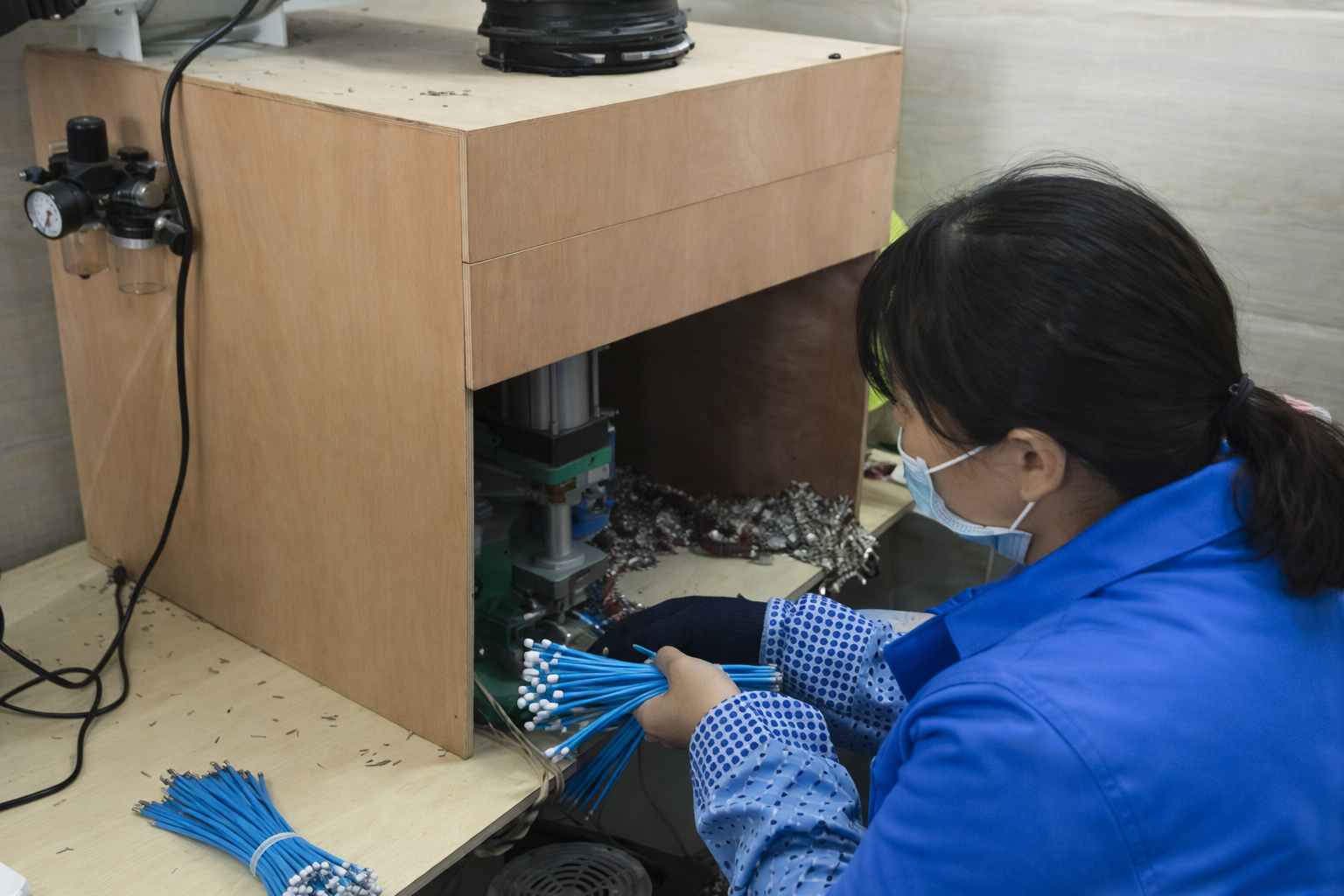
- Production support covers material preparation, cable processing, termination, molding, inspection, labeling, packing and shipment coordination.
- Final performance requirements are confirmed against the approved specification and agreed testing plan before bulk production.
Manufacturing Capacity Built for Long-Term Ethernet Cable Programs
Cablivo combines factory scale, multi-site production, cable processing equipment and project coordination to support customized Ethernet cable development, repeat orders and multi-SKU supply programs.
18 +Years Experience
Eighteen years in cable manufacturing provide a strong foundation for projects involving specification review, material selection, prototype development, production preparation, inspection and export coordination. Experience matters when a network cable requires more than a standard length change. Connector compatibility, shielding structure, jacket selection, cable marking, packaging files and repeat-order consistency must be managed together. Cablivo supports each stage through documented project communication rather than treating Ethernet cable production as a simple stock-product transaction.
20,000+ Square Meters
More than 20,000 square meters of factory space support cable processing, extrusion, shielding, cutting, termination, molding, testing, assembly, packing and warehousing activities. A larger production environment allows different cable programs, materials, connector types and packaging versions to move through separate working areas. The available space also supports multi-SKU planning and production coordination when one order contains several lengths, colors, labels or package formats requiring controlled identification.
1,500+ Person Team
A team of more than 1,500 people supports engineering, sourcing, quality control, production, warehousing, sales coordination, documentation and shipment preparation. Large cable programs depend on cooperation across many functions. Engineers review specifications, sourcing teams confirm materials and connectors, production teams follow approved files, quality teams check finished goods, and packaging teams manage labels, quantities and carton identification. Coordinated responsibilities help reduce communication gaps between sampling, production and repeat orders.
Three Manufacturing Bases
Three manufacturing bases provide a broader foundation for production scheduling, equipment coordination and multiple project execution. Large or recurring Ethernet cable programs may involve cable preparation, connector assembly, molding, labeling and packaging across several work areas. Multi-base manufacturing gives Cablivo greater flexibility when planning material flow and production resources. Final allocation depends on product structure, process requirements, order volume, testing needs and packaging arrangements agreed before production.
Ethernet Cable Manufacturing for Diverse Commercial and Engineering Programs
Different organizations evaluate network cables from different angles. Cablivo adjusts specification review, sampling, production control and packaging support around the role, application and supply model involved.
Network Equipment Brands
Network equipment brands often require Ethernet cables supplied with routers, switches, access points, gateways or related hardware. Cable dimensions, color, connector appearance, logo position, labels and packaging must align with the equipment program. Cablivo can review product specifications, assembly requirements and package files together, helping the cable become a controlled component of the finished equipment rather than an unrelated accessory purchased separately.
Engineering Teams
Engineering teams usually begin with application details, connector information, cable routing limitations or an existing sample. Their main concerns include fit, length, shielding, cable diameter, termination and test requirements. Cablivo can review available files, identify missing information and prepare a clearer sampling basis. Early specification confirmation helps reduce repeated revisions and avoids transferring an incomplete concept directly into production.
Procurement Teams
Procurement teams need comparable quotations, clear MOQ conditions, realistic production planning and stable repeat-order specifications. Cablivo organizes quotation inputs around cable category, structure, connector, length, material, quantity, testing and packaging. A defined requirement set makes supplier comparison more meaningful and limits later cost changes caused by missing technical or packaging details.
System Integrators
System integrators may require several cable lengths, installation labels, port identification or project-specific packaging. Accurate SKU control becomes important when cables are prepared for racks, cabinets, security systems or communication equipment. Cablivo can review length lists, label files, packing quantities and carton marks before production, helping installation teams receive products organized around the deployment plan.
Industrial Manufacturers
Industrial manufacturers often require network cables installed inside equipment, control cabinets, production lines or automation systems. Cable routing, movement, interference, environmental conditions and connector protection may influence the design. Cablivo reviews application information before recommending a production direction. Industrial claims, cable categories and performance levels remain subject to confirmed construction and testing requirements.
Distributors and Importers
Distributors and importers often manage several categories, lengths, colors and packaging versions under one supply program. They need accurate barcodes, SKU labels, inner-pack quantities, carton marks and repeat-order records. Cablivo can coordinate cable manufacturing and sales-ready packaging from approved files, supporting private-label ranges without mixing different variants during inspection, packing or shipment preparation.
What Serious Ethernet Cable Programs Need from a Factory
A reliable manufacturing program depends on more than cable availability. Specifications, sample approval, production files, inspection records, packaging instructions and revision control must work together.
Accurate Specifications
A usable production specification should identify cable category, length, conductor structure, shielding, jacket, connector, boot, color, markings, labels, packaging and testing requirements. Missing information often creates quotation differences or sample revisions.
- Target application and connected equipment
- Required cable length and tolerance
- Connector and boot construction
- Shielding and jacket requirements
- Label, barcode and packaging files
- Agreed inspection and test items
Verifiable Samples
A prototype should provide more than a visual impression. Length, connector fit, wire sequence, cable structure, appearance, label position and packaging details should be checked against the approved requirement. Sample feedback must be recorded clearly before revision.
- Initial specification review
- Material and connector confirmation
- Prototype preparation
- Functional and dimensional checks
- Written revision comments
- Final sample approval
Stable Bulk Production
Bulk production should follow approved files rather than memory, chat history or an early quotation. Final drawings, specifications, BOM details, label artwork and packaging instructions need controlled versions before scheduling begins.
- Approved material and connector sources
- Cable length and termination requirements
- Process instructions and inspection points
- SKU identification
- Packaging quantity and carton marks
- OQC records before shipment
Defined Testing Scope
Ethernet cable testing must match the agreed construction, category and application. Basic checks may include continuity, wire sequence, RJ45 fit, cable length, shielding structure, appearance, labels and packaging. Transmission-related testing requires an agreed method and applicable specification.
- Required cable category
- Test equipment or method
- Sample test requirements
- Bulk inspection frequency
- Acceptance criteria
- Required reports or records
Controlled Packaging
Packaging can influence product protection, warehouse handling, retail presentation, MOQ, cost and shipping volume. Cable ties, bags, labels, boxes, inserts and cartons require confirmed dimensions and files.
- Individual packing method
- Cable winding and tie method
- Barcode and SKU location
- Inner quantity
- Master carton quantity
- Carton mark and shipping information
Repeat-Order Consistency
A long-term Ethernet cable program needs revision control across materials, construction, labels and packaging. Repeat orders should refer to the latest approved sample and document version rather than relying on a product name alone.
- Final specification number
- Approved sample reference
- BOM and material revisions
- Artwork version
- Packing instruction version
- Previous order feedback
Custom Ethernet Cable Formats for Equipment and Network Applications
Cablivo supports multiple Ethernet cable formats around confirmed construction, connector, shielding, application and packaging requirements. Final category and performance depend on the approved specification and testing plan.

RJ45 Patch Cables
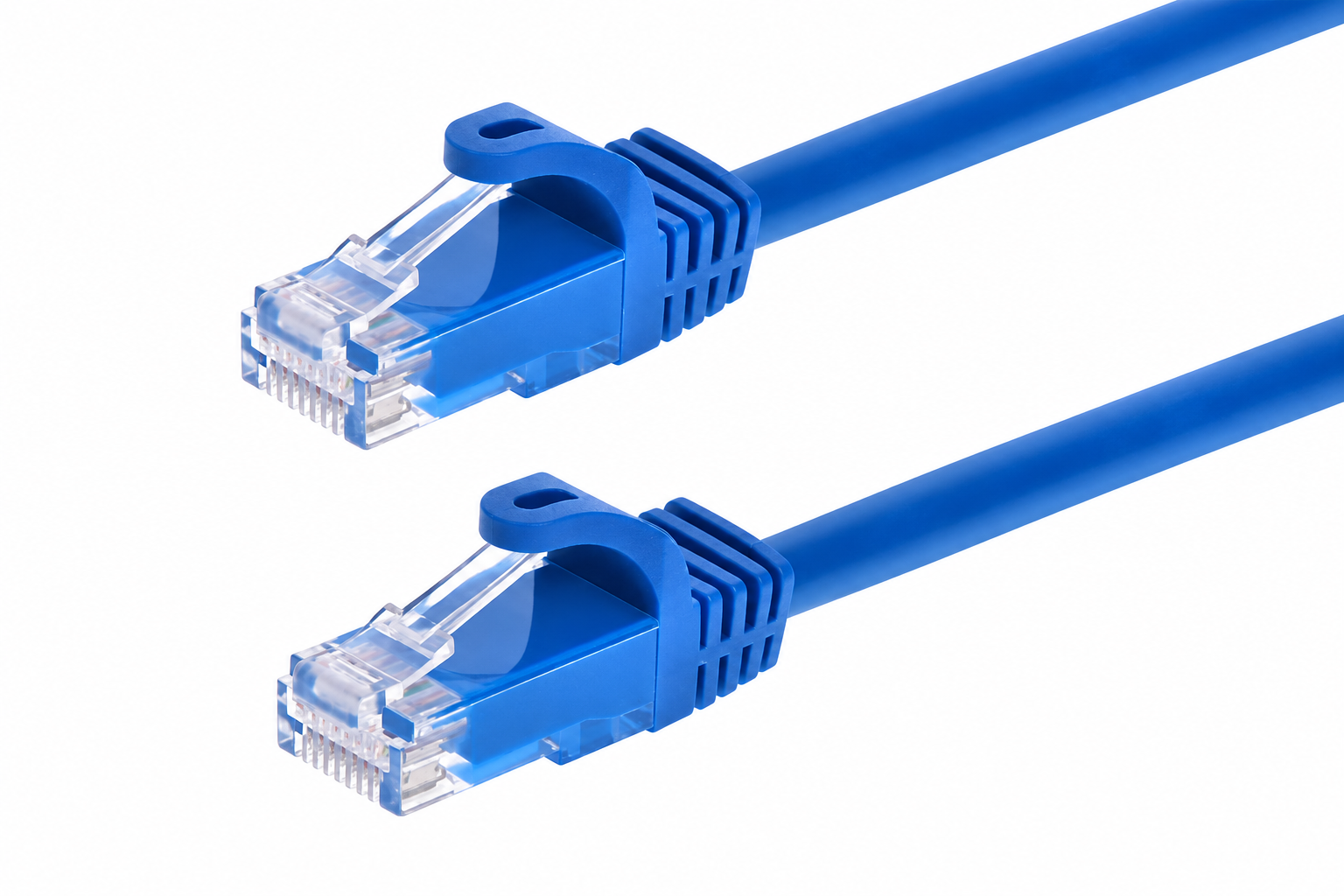
RJ45 patch cables can be prepared for equipment connection, racks, network cabinets, office systems, security devices and packaged accessory programs. Available project discussions may cover cable category, length, conductor structure, shielding, jacket, color, connector shell, latch protection, boot style, marking, labeling and packing. Final electrical and transmission requirements should be confirmed before sampling so connector assembly, cable construction and testing criteria follow one agreed specification.

Shielded Network Cables
Shielded Ethernet cables are considered when interference control, grounding design or application conditions require additional protection. Project review may include foil shielding, braided shielding, drain wire, connector shielding and jacket construction. A shielded appearance alone does not confirm performance. Cablivo reviews the intended environment, termination method and test requirement before preparing a sample. Shielding continuity and connector construction must be aligned with the approved design.

Custom-Length Cables
Custom lengths can support equipment kits, network cabinets, installation projects and organized SKU ranges. Length should be stated in millimeters, meters, feet or inches together with an acceptable tolerance. Connector-to-connector measurement points also need confirmation. For multi-length orders, Cablivo can organize SKU codes, cable labels, individual packaging and carton identification. Accurate length lists reduce installation waste and prevent different variants from being mixed during delivery.

Molded RJ45 Cables
Molded RJ45 cable assemblies can add strain relief, connector protection and a consistent finished appearance. A custom molded structure may require mold review or new tooling depending on connector geometry, cable diameter, boot design and logo requirements. Cablivo has injection molding resources for molded and overmolded cable projects. Sample timing and production planning are confirmed after structure, tooling, material and appearance requirements have been reviewed.

Industrial Network Cables
Industrial network cable projects may involve equipment routing, control cabinets, repeated movement, interference exposure, oil contact, temperature conditions or protected connectors. The application environment must be described before material and structure discussions begin. Cablivo can review shielding, jacket, flexibility, connector protection and installation needs. Terms such as industrial grade, oil resistant or high-flex should only be used when supported by confirmed materials and agreed verification methods.

Flat Ethernet Cables
Flat cable construction may suit space-limited routing, selected equipment layouts or retail accessory ranges. Cable thickness, conductor arrangement, flexibility, connector termination and bending direction should be evaluated together. A flat shape does not automatically provide the same mechanical behavior as a round cable. Cablivo can discuss color, length, connector, marking and packaging after confirming whether the proposed construction matches the installation and transmission requirements.

Round Ethernet Cables
Round Ethernet cables remain suitable for many equipment, network, security and distribution applications. Project choices may include conductor structure, cable diameter, shielding, jacket material, connector, boot and package format. Round construction can provide more room for twisted pairs, shielding and mechanical protection, but final design must follow the target category and installation conditions. Cablivo prepares quotations after reviewing the complete specification rather than using cable diameter alone.

Device Cable Assemblies
Equipment cable assemblies may connect a network port to an internal interface, panel connector, protected RJ45 assembly or another project-specific termination. Such projects require connector drawings, pin assignments, cable routing information and installation dimensions. Cablivo can begin with drawings, connector photographs, existing samples or device interface details. Engineering review focuses on fit, wire sequence, length, structure, molding and production repeatability before a prototype is prepared.

Private-Label Cable Series
Private-label Ethernet cable ranges may include several categories, lengths, colors, package types and market-specific labels. Successful production requires more than printing a logo. Each SKU needs an approved specification, artwork, barcode, packing quantity and carton mark. Cablivo can coordinate product manufacturing with labels, retail boxes, bags, inserts and export cartons. Final packaging choices depend on order volume, product dimensions, printing requirements and destination needs.
Build a Clear Ethernet Cable Specification Before Quotation
A complete specification allows engineering, sourcing, production and quality teams to evaluate the same requirement. Use the following fields when preparing an RFQ or sample request.
Specification Field
Information to Provide
Why It Matters
Cable Category
Required Cat level and applicable standard
Defines construction and testing direction
Application
Router, switch, equipment, cabinet, industrial network or other use
Helps evaluate structure and environment
Cable Length
Exact length, unit and tolerance
Controls installation fit and SKU planning
Conductor
Solid or stranded requirement, material and AWG if known
Influences flexibility, diameter and electrical design
Shielding
UTP, foil, braid or combined structure if specified
Affects interference control and termination
Jacket
Material, color, diameter and environmental requirement
Affects handling, protection and appearance
Connector
RJ45 or project-specific connector model
Controls fit, termination and tooling
Boot Style
Standard, snagless, molded or custom structure
Affects protection and appearance
Wire Sequence
Required wiring scheme or pinout
Prevents functional mismatch
Marking
Cable print, length mark, logo or model number
Supports identification and branding
Labeling
Barcode, SKU, serial or installation label
Supports warehouse and project control
Packaging
Bulk, bag, box, kit or private-label packaging
Influences cost, MOQ and shipping volume
Quantity
Total quantity and quantity per SKU
Supports quotation and scheduling
Testing
Continuity, wire sequence, fit, transmission or other requirements
Defines verification scope
Destination
Country, delivery location or forwarder information
Supports export packing discussion
Nine Customization Areas for a Controlled Ethernet Cable Program
Each customization decision can affect quotation, sampling, production, testing or packaging. Confirming the following areas early creates a stronger foundation for sample approval and repeat orders.
Cable Category
Cable category should be selected around the network requirement, cable construction and agreed verification method. Cat5e, Cat6, Cat6A, Cat7 and Cat8 cannot be treated as interchangeable marketing labels.
- Intended data system
- Cable length and installation
- Shielding requirement
- Connector construction
- Applicable test standard
- Required report or record
Custom Length
Length affects equipment fit, installation routing, material usage, packing size and SKU management. Provide the exact finished measurement and measurement reference point.
- Length unit
- Connector-to-connector reference
- Allowed tolerance
- Quantity by length
- Cable label or color code
- Packing method
Conductor Structure
Conductor selection may influence flexibility, cable diameter, termination method and electrical behavior. A stranded design may suit movable or flexible assemblies, while other constructions may suit fixed installation requirements.
- Conductor material
- Solid or stranded design
- Wire gauge or AWG
- Flexibility requirement
- Cable diameter limit
- Applicable performance test
Shielding Design
Shielding should be considered as a complete structure involving cable pairs, foil, braid, drain wire, connector shell and termination. Adding shielding without a correct termination plan may not achieve the intended result.
- Interference environment
- Grounding design
- Foil or braid requirement
- Shielded connector
- Shield continuity
- Jacket and cable diameter
Jacket Material
Jacket selection affects flexibility, touch, abrasion resistance, appearance, processing and suitability for the intended environment. Material names alone are not enough; the required property must also be defined.
- Indoor or equipment use
- Flexibility
- Surface finish
- Temperature conditions
- Oil or abrasion exposure
- Regulatory requirement
Cable Color
Cable color may support brand identity, installation management, port classification or SKU separation. Standard color names can vary between materials and production batches, so a reference sample or color value may be needed.
- Required color
- Pantone or approved sample
- Jacket material
- Connector and boot color
- Logo contrast
- Acceptable color tolerance
Connector and Boot
RJ45 plug, shield shell, contact design, latch protection and boot structure influence fit, appearance and durability. Equipment clearance must be considered when a custom boot or molded shell is required.
- Connector model
- Shielded or unshielded plug
- Contact requirement
- Boot dimensions
- Latch protection
- Mold or tooling need
Marking and Labels
Cable printing and labels help identify model, length, SKU, installation position or brand. All artwork and wording should come from approved files.
- Cable print content
- Print position and interval
- Product label
- Barcode and SKU
- Serial information
- Destination language
Packaging Program
Packaging may range from bulk packing to branded retail presentation. Structure, printing, inner quantity and carton dimensions can affect cost, MOQ, lead time and shipping volume.
- Cable winding method
- Tie or sleeve
- Bag or box
- Insert card
- Barcode position
- Master carton plan
Ethernet Cable Solutions for Connected Equipment and Network Systems
Application details guide cable construction, connector selection, length planning, labeling and test requirements. Share the installation environment before finalizing a network cable specification.

Routers and Gateways
Router and gateway programs often require a network cable included in the retail package or equipment carton. Cable length, color, connector appearance, winding method and labeling should match the product presentation. Cablivo can coordinate the cable assembly with private-label packaging, inserts, barcodes and carton packing. The equipment interface and target category should be confirmed before the cable becomes part of the approved accessory list.

Network Switches
Switch manufacturers and system suppliers may need several cable lengths for equipment kits, demonstration units, rack deployment or bundled solutions. Port density and installation layout can influence boot dimensions and cable routing. Cablivo can review connector clearance, length, labeling and packing by SKU. Transmission requirements and cable category remain linked to the approved specification and agreed test method.

Network Cabinets
Cabinet installations benefit from controlled cable lengths, clear labels and organized packing. Excess length can create congestion, while short cables can interrupt installation. A project list may include port labels, color groups, rack positions and cable quantities. Cablivo can manufacture and pack cables according to a structured SKU file, helping installers identify each cable without reopening mixed cartons or measuring products on site.

Communication Equipment
Communication equipment projects may involve custom routing, shielded structures, protected connectors or cables supplied as part of a larger assembly. Engineering teams can submit drawings, interface photographs, connector details and installation dimensions. Cablivo reviews cable construction, termination, molding, labels and tests before sampling. Final performance claims require a defined standard and project-specific validation.

Security Systems
Security systems may connect cameras, recorders, switches, access control devices and monitoring equipment. Installation locations can vary from indoor cabinets to exposed routing areas. Cable length, jacket, connector protection, labeling and packaging should follow the installation plan. Cablivo can prepare multiple variants under one order, with separate SKU labels and carton identification for easier distribution across project locations.

IoT Devices
IoT equipment may require compact connectors, limited routing space, short cable lengths or a cable supplied with the device package. Interface fit and strain relief can be as important as the cable category. Cablivo can review equipment photographs, housing dimensions, connector position and target quantity before preparing a prototype. Molded or project-specific structures are evaluated for tooling and production repeatability.

Automation Systems
Automation systems may expose Ethernet cables to motion, interference, machinery, control cabinets or restricted routing. Material and shielding discussions should begin with movement, temperature, chemical exposure and installation information. Cablivo can evaluate the requested structure and prepare a sampling plan. High-flex, oil-resistant or industrial performance statements require confirmed materials and agreed testing rather than general descriptions.

Enterprise Networks
Enterprise network programs may involve standard patch cables, color-coded departments, equipment-room lengths, private labels or distributor packaging. Clear SKU planning supports inventory and repeat purchases. Cablivo can coordinate category, length, color, label, barcode, inner quantity and carton packing. For branded ranges, an approved specification and packaging file should be maintained for every SKU.
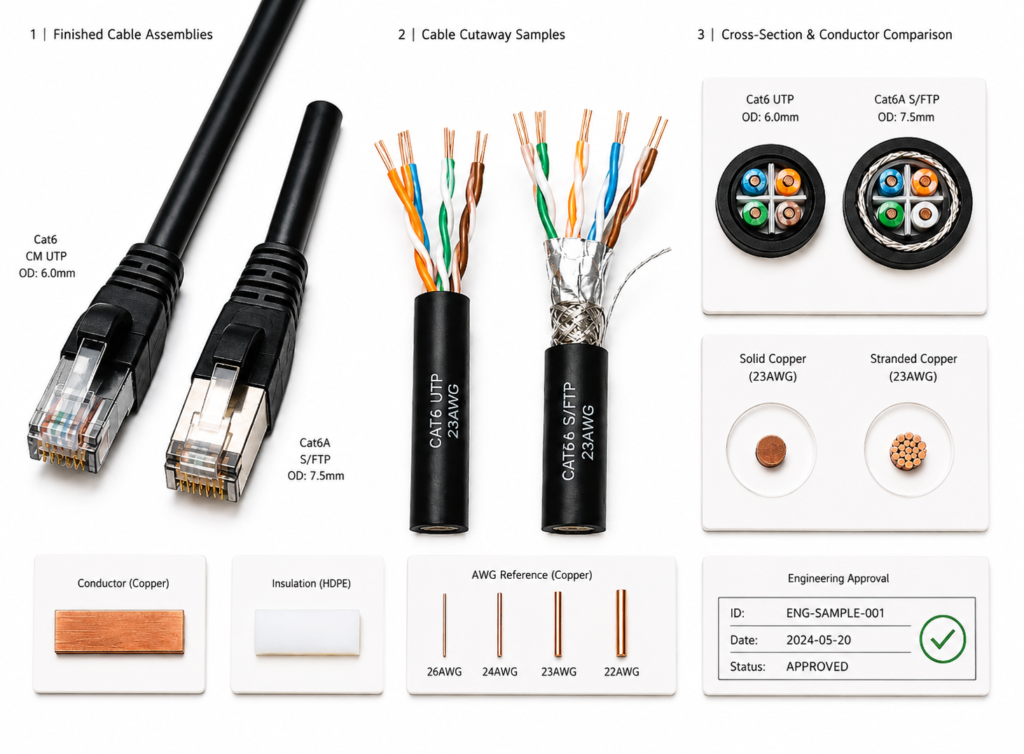
Choose the Right Development Path for Your Ethernet Cable
Standard network cable programs and industrial assemblies follow different evaluation paths. Application conditions determine how materials, connectors, testing, sampling and production controls should be organized.
Standard Network Programs
Standard network cable programs usually focus on cable category, finished length, connector, color, appearance, labeling, packaging and commercial quantity. Common uses include routers, switches, network cabinets, office systems, retail accessories and distributor ranges. Strong execution depends on accurate specifications and controlled SKU files rather than unnecessary complexity.
- Required category and test method
- Exact length and tolerance
- Cable and boot colors
- Barcode and package artwork
- Quantity per SKU
- Repeat-order identification
Industrial Cable Programs
Industrial Ethernet cable programs may require additional attention to movement, interference, connector protection, jacket properties, equipment clearance and installation environment. Project descriptions should include more than a product name.
- Equipment and network interface
- Motion or bending conditions
- Oil, abrasion or temperature exposure
- Shielding and grounding design
- Connector protection
- Required mechanical or environmental tests
How Ethernet Cable Materials Shape Performance and Production
Conductor, insulation, twisted-pair structure, shielding and jacket construction must work as one system. Material decisions influence cable diameter, flexibility, termination, appearance, testing and long-term production consistency.
Conductor and Insulation Form the Electrical Foundation
The conductor and insulation system establishes the foundation for pair construction and later processing. Wire gauge, conductor design, copper preparation and insulation dimensions must follow the intended cable structure. Choosing an AWG value only because it appears common in the market may create problems with connector fit, cable diameter or the targeted performance level.
- Confirm conductor material and structure.
- Define solid or stranded requirements.
- Provide wire gauge or AWG when already specified.
- Describe flexibility and routing expectations.
- Confirm whether the cable will be repeatedly moved.
- Align conductor dimensions with the selected RJ45 termination.
Cablivo’s manufacturing system includes conductor preparation, wire drawing support and 26 high-speed stranding machines. The equipment foundation supports different wire structures before insulation, shielding and assembly. Equipment quantity does not replace a technical specification; it shows the production resources available after the design has been approved.
- Review insulation material and thickness.
- Confirm dimensional requirements.
- Evaluate compatibility with pair twisting.
- Describe flexibility and routing expectations.
- Consider temperature and application needs.
- Maintain consistency across approved production batches.
A stable insulation process helps maintain conductor separation and prepares the cable for twisted-pair formation, shielding and jacket extrusion. Cablivo has 42 inner insulation extrusion machines in Φ45, Φ50 and Φ65 configurations, supporting different cable structures and material preparation requirements.
Pair Construction and Shielding Require Controlled Processing
Ethernet cable performance depends heavily on pair geometry, twist control and shielding construction. Pair structure should not be changed during production without reviewing its effect on the approved cable design. Shielding may involve foil, braid, drain wire and a shielded connector, but the selected combination must match the termination and application.
- 10 high-speed braiding lines with 16, 24 and 32 carrier configurations
- 96 aluminum foil wrapping machines
- Wire storage and active pay-off systems
- Semi-automatic foil removal equipment
- Cable processing and termination resources
Outer Jacket Controls Protection, Handling and Appearance
The outer jacket protects the internal construction and creates the cable’s visible surface. Jacket material influences flexibility, abrasion behavior, color, printing, diameter and processing. Requirements such as oil resistance, low-temperature flexibility, flame performance or low-smoke behavior must be tied to an identified material and supporting documentation.
Cablivo operates 18 outer jacket extrusion lines in Φ65 and Φ80 configurations. The production foundation supports different cable diameters, colors and jacket materials after requirements have been reviewed.
- Material name or required property
- Target outer diameter
- Surface finish
- Cable color
- Printing content
- Indoor or equipment use
- Movement and abrasion conditions
- Required regulatory documentation
Connector and Termination Options for Reliable Network Cable Assembly
Connector fit, contact arrangement, boot construction and strain relief influence assembly quality and installation. Each termination should be reviewed against cable diameter, shielding and equipment clearance.

Standard RJ45 Plug
A standard RJ45 plug remains suitable for many patch cable, equipment and network cabinet programs. Plug selection must match conductor structure, cable category, outer diameter and shielding design.
- Plug model
- Shielded or unshielded construction
- Contact design
- Cable entry size
- Conductor compatibility
- Required wire sequence

Shielded RJ45 Plug
A shielded RJ45 plug forms part of the complete shielding path. Metal shell construction, cable shielding, drain wire and termination method should be considered together.
- Connector shell
- Foil and braid connection
- Drain wire handling
- Cable diameter
- Boot compatibility
- Shield continuity requirement

Snagless Boot
A snagless boot protects the RJ45 latch during handling, packing and installation. Boot shape can also influence port access in densely populated switches or patch panels.
- Boot dimensions
- Latch protection
- Cable entry diameter
- Material and flexibility
- Port spacing
- Color requirement

Molded Strain Relief
Molded strain relief can provide a controlled transition between the connector and cable. Geometry, material hardness, cable diameter and bending direction affect the finished structure.
- Connector geometry
- Cable diameter
- Relief length
- Flex direction
- Logo or marking
- Tooling requirement

Custom Connector Housing
A custom housing may support brand appearance, equipment fit, connector protection or an integrated accessory design. Development normally requires drawings, dimensions, material choices and tooling evaluation.
- 2D or 3D files
- Interface dimensions
- Material and color
- Logo location
- Assembly method
- Sample acceptance criteria

Project-Specific Termination
Some equipment programs require a network cable terminated with a panel connector, internal connector or another assembly instead of two standard RJ45 plugs. A complete pinout and connector reference are essential.
- Connector manufacturer and model
- Pin assignment
- Mating interface
- Cable routing
- Strain relief
- Test method
Organize Multiple Ethernet Cable Variants Without Mixing SKUs
A structured SKU plan connects product specifications, labels, packaging and carton marks. Complete one row for every length, color, connector or package combination.
SKU Field
Example Format
Production Purpose
Internal SKU
ETH-C6-BLK-1M
Links product and order records
Cable Category
Confirmed Cat specification
Defines construction and testing
Finished Length
1 m, 3 ft or exact project length
Controls cutting and inspection
Cable Color
Black, blue or approved custom color
Supports identification and branding
Connector
RJ45 to RJ45 or specified interface
Defines termination
Boot Style
Standard, snagless or molded
Controls assembly and tooling
Cable Marking
Model, length or approved text
Supports product identification
Product Label
SKU, barcode or installation code
Supports warehouse handling
Packaging
Bulk bag, individual bag or retail box
Defines packing process
Quantity per SKU
Exact quantity
Supports scheduling and material planning
Inner Quantity
Units per inner box
Controls packing
Carton Quantity
Units per master carton
Controls export packing
Carton Mark
Approved shipping mark
Supports receiving and distribution
Artwork Version
File name and revision
Prevents old files from being reused
Engineering Review Before Ethernet Cable Sampling and Quotation
A useful review identifies missing information, technical conflicts and manufacturing risks before materials are prepared. Drawings are helpful, but projects can also start from samples, photographs or connector details.
Start with the Files Already Available
A complete drawing is ideal, but many Ethernet cable projects begin with an existing cable, equipment interface or partial specification. Cablivo can first review the available materials and identify additional information needed for sampling.
- Cable drawing
- Existing physical sample
- Sample photographs
- Connector photographs
- Connector datasheet
- Pinout or wire sequence
- Equipment interface drawing
- Cable category requirement
- Finished length
- Target quantity
- Packaging file
- Testing requirement
Identify Risk Before Materials Enter Production
Engineering review is valuable because small specification gaps can become expensive after materials, molds or printed packaging have been prepared.
- RJ45 plug does not match conductor structure.
- Boot is too large for the equipment port.
- Cable diameter exceeds routing space.
- Shielded structure lacks a defined termination.
- Wire sequence is missing or incorrect.
- Length measurement points are unclear.
- Category is requested without a testing method.
- Barcode or SKU file uses an old revision.
- Package size does not fit the wound cable.
Power Supply Cable Projects Cablivo Can Support
Sample development follows a controlled sequence so specifications, appearance, function, labels and packaging can be reviewed before bulk materials and production resources are committed.
Submit Project Files
Send drawings, sample photographs, connector information, cable category, length, quantity, application and testing requirements. Packaging files can be included when the sample must represent a retail or multi-SKU program. Cablivo checks whether the available information is sufficient for quotation and sampling, then lists any missing dimensions, materials, pin assignments or artwork files requiring confirmation.
Review Specifications
Engineering and sourcing teams review cable construction, connector availability, shielding, jacket, color, molding, labels and packaging. Potential conflicts are discussed before materials are prepared. Sample timing depends on product structure, connector availability, material preparation, tooling requirements and testing needs. Complex molded structures or uncommon components require additional review before a schedule can be confirmed.
Prepare Prototype
The prototype is produced according to the confirmed sampling specification. Relevant processes may include cable preparation, cutting, stripping, termination, assembly, molding, marking and packaging. A prototype is not treated as an informal reference. The sample should carry a clear project or revision identity so feedback can be linked to the correct construction.
Check Sample
The sample can be checked for length, wire sequence, connector fit, cable appearance, shielding structure, marking, labels and packaging. Transmission-related verification follows the agreed category and test plan. Any required report, photograph or measurement record should be defined before testing so both sides understand the acceptance basis.
Record Revisions
Feedback should identify the exact issue, required change and acceptance target. Useful revision comments include dimensions, color reference, material change, boot shape, logo position, label content or package structure. Cablivo reviews how each change affects material, tooling, cost and timing before preparing a revised sample. Revision limits and charges depend on project circumstances.
Approve Final Sample
The accepted sample should be linked to the final drawing, specification, BOM details, artwork and packaging instruction. Approval creates a reference for production preparation and outgoing inspection. Bulk production is scheduled only after final commercial details, material availability, quantity, testing and packing requirements have been confirmed.
Production Process for Power Cable Assemblies
Power cable production may include cutting, stripping, crimping, soldering, overmolding, assembly, testing, labeling and packaging, depending on cable structure.
Typical production flow:

Material and connector preparation

Cable cutting and stripping
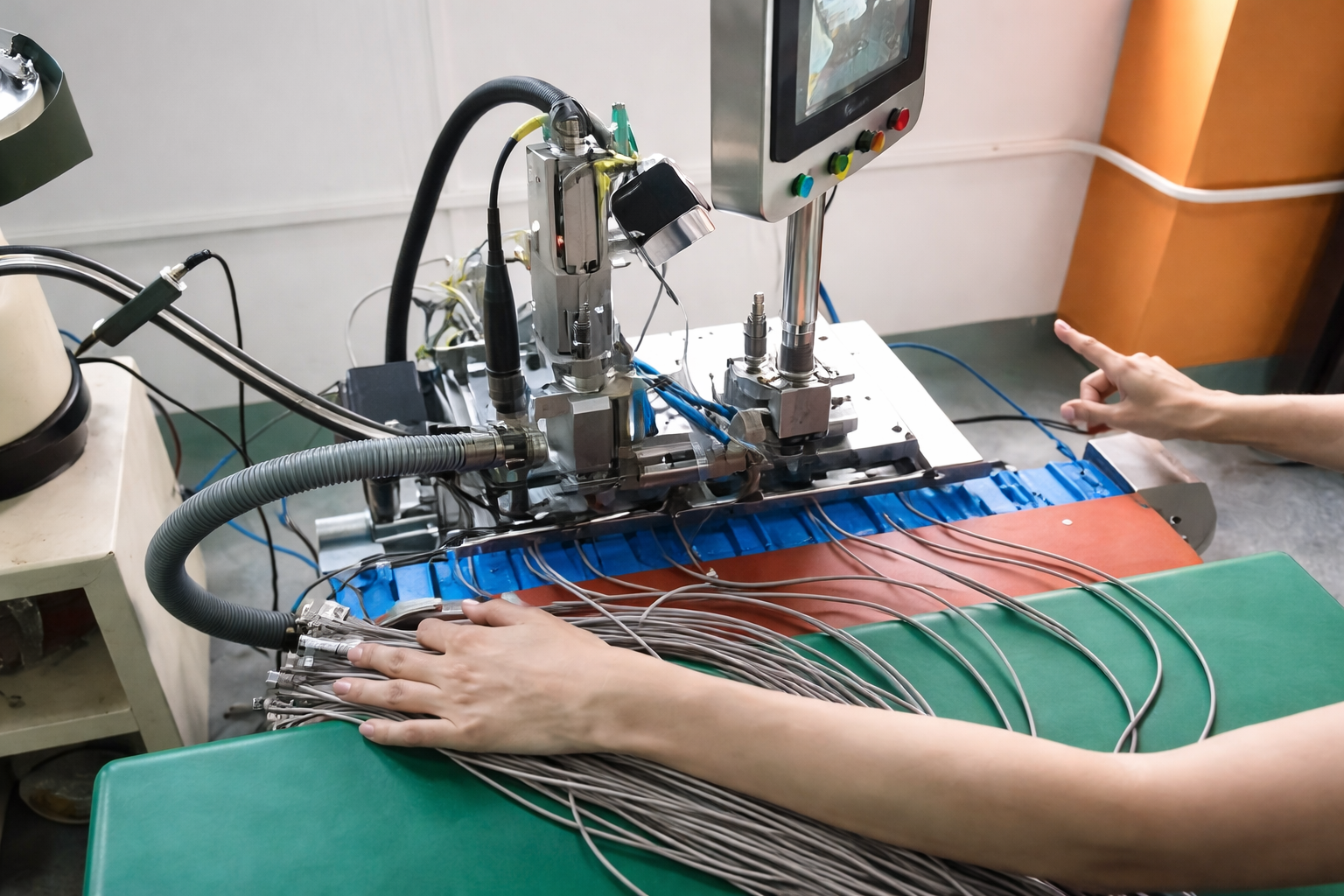
Terminal crimping or soldering

Injection Molding / Connector Assembly
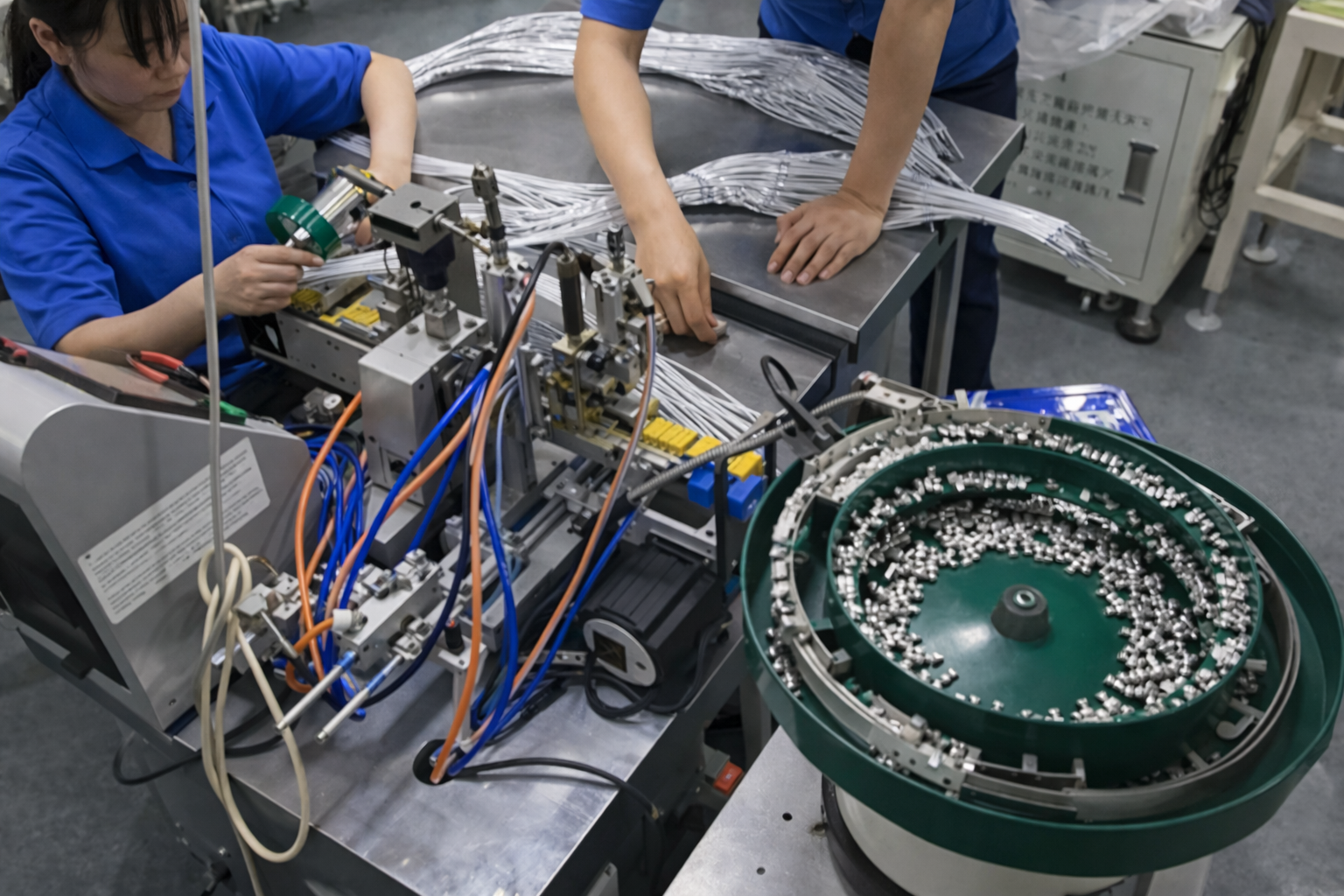
Connector assembly
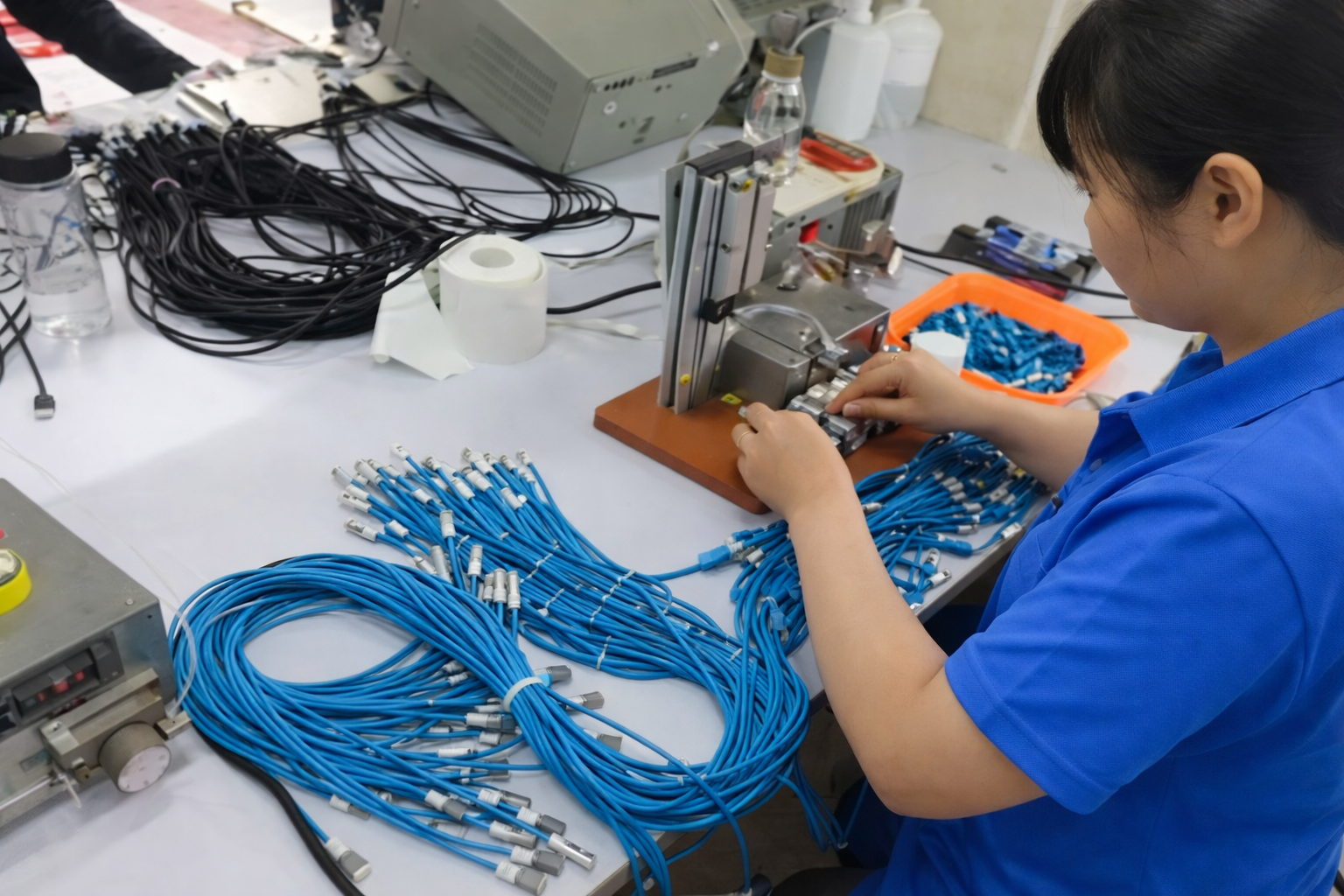
Sleeve, heat shrink or overmold processing
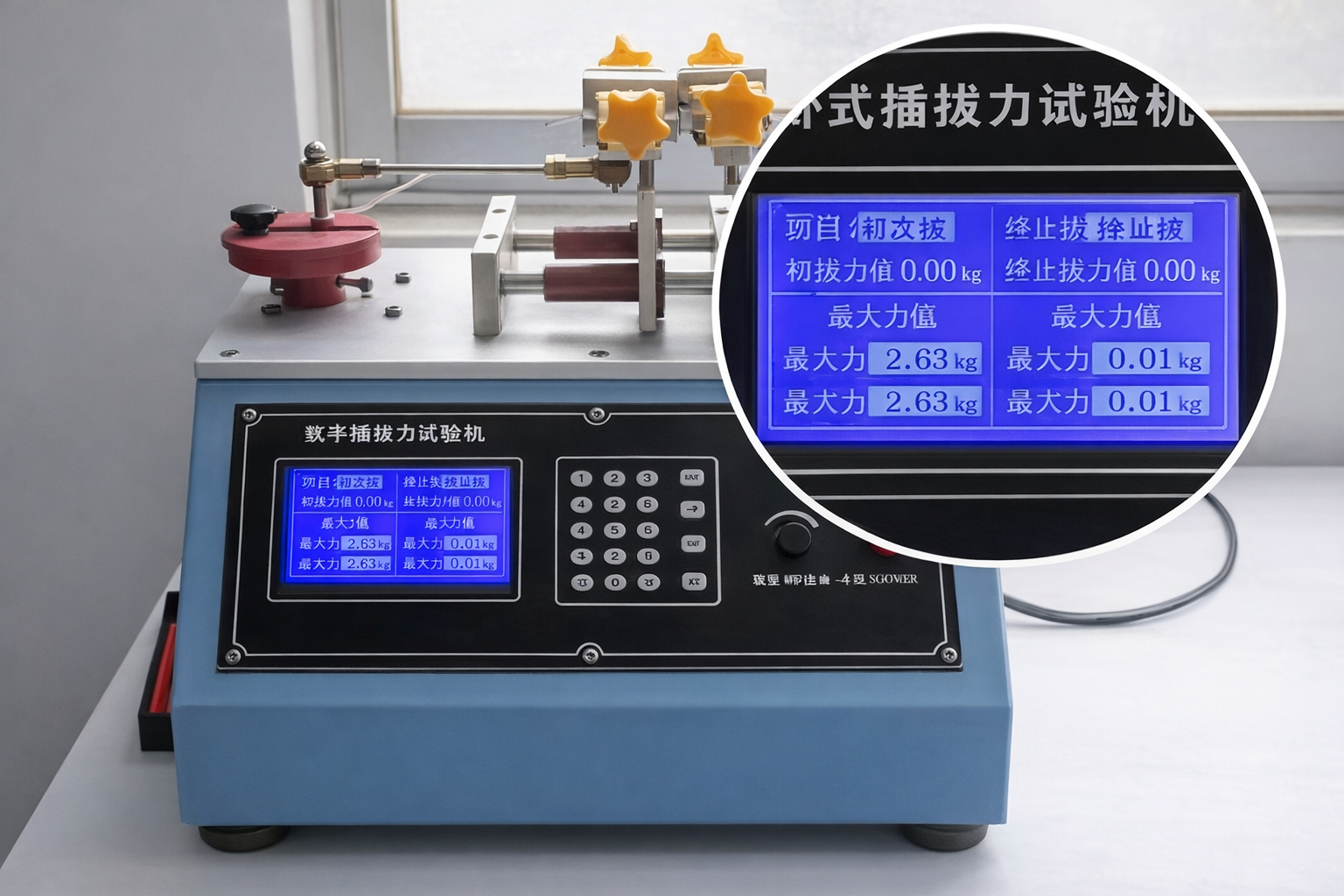
Continuity, polarity or fit check
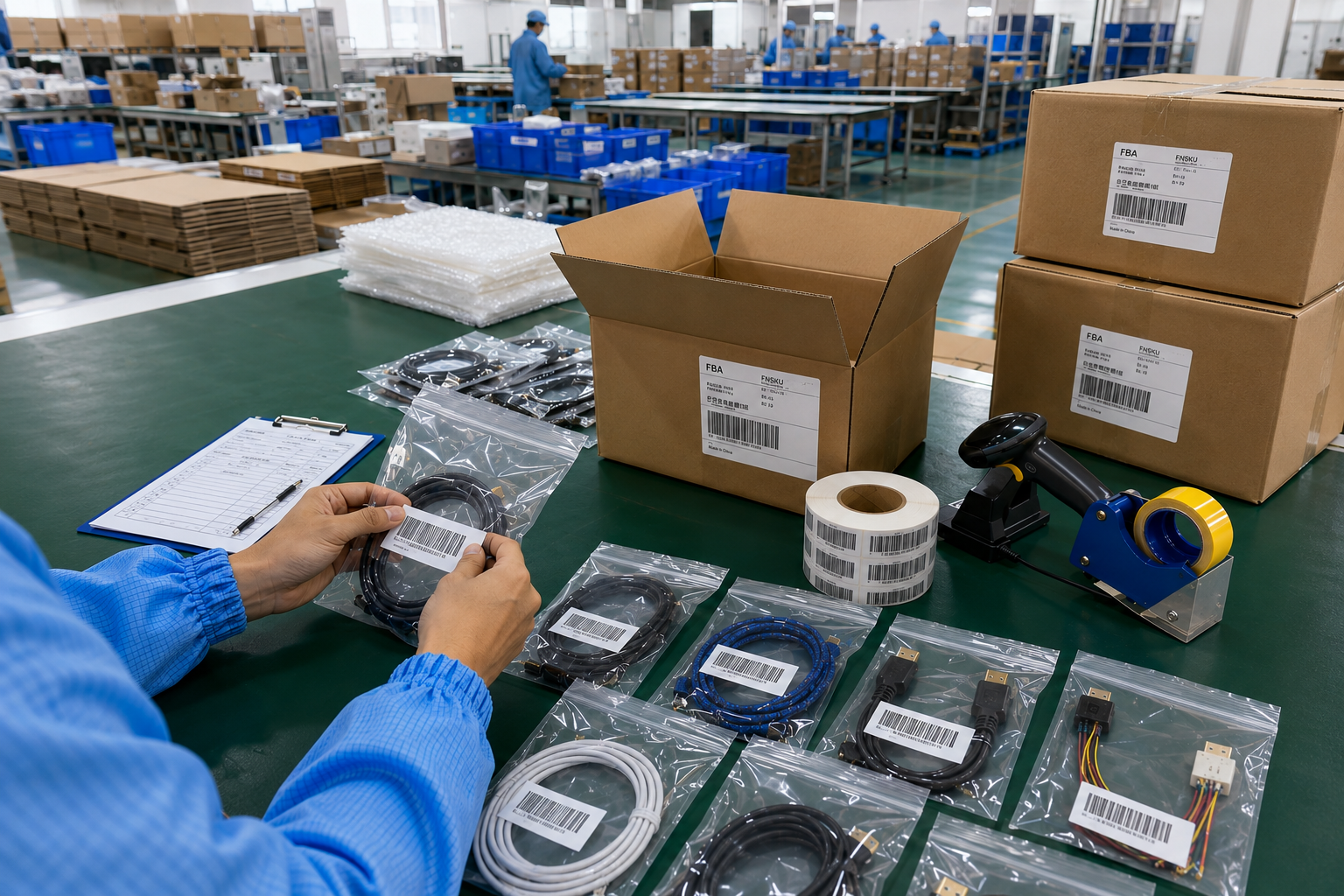
Appearance and label inspection

Packing, carton mark and shipment preparation
Eight Quality Checks for Custom Ethernet Cable Orders
Quality control should verify cable function, construction, dimensions, appearance and shipment identification. Final inspection items and frequency are confirmed according to the specification and application.
Continuity Test
Continuity testing checks whether the required electrical paths are connected through the finished assembly. It helps identify open circuits, missing connections and selected assembly faults before shipment.
- End-to-end connection
- Open circuit
- Short circuit where included
- Fixture compatibility
- Test program identification
- Result recording
Wire Sequence Check
Wire sequence verification confirms conductors are connected to the required RJ45 contact positions or project-specific pinout. A cable may look correct while containing an incorrect sequence.
- Approved wiring scheme
- Connector orientation
- Pair assignment
- End-to-end sequence
- Crossover or straight-through requirement
- Special pinout where specified
RJ45 Fit Check
Connector fit checks confirm whether the plug mates with the intended port or approved reference interface. Fit can be influenced by plug dimensions, shield shell, boot size and latch geometry.
- Plug insertion
- Latch engagement
- Port clearance
- Boot interference
- Connector housing dimensions
- Removal behavior
Cable Length Check
Length inspection confirms the finished assembly matches the approved measurement and tolerance. Measurement points must be defined because connector bodies and strain relief can change the interpretation of finished length.
- Measurement reference
- Length unit
- Approved tolerance
- SKU length
- Label consistency
- Packing identification
Shielding Structure Check
Shielding inspection verifies whether foil, braid, drain wire and shielded connector construction match the approved structure. Visual confirmation may be supplemented by an agreed continuity or construction check.
- Foil coverage
- Braid presence
- Drain wire
- Shield termination
- Connector shell
- Sample comparison
Appearance Inspection
Appearance inspection reviews cable surface, connector assembly, molding, color, printing and workmanship. Acceptance criteria should be defined when appearance is important for retail or branded products.
- Jacket surface
- Connector condition
- Molded area
- Cable color
- Print position
- Contamination or damage
Label Verification
Label verification confirms the correct SKU, barcode, model, length or installation information is attached to the correct cable and package.
- File version
- Text accuracy
- Barcode content
- Label position
- Adhesion and readability
- SKU-to-product match
Packaging Inspection
Packaging inspection verifies product protection, winding, quantity, label placement, inner packing and carton identification. Correct cable function cannot compensate for mixed products or incorrect shipping marks.
- Winding method
- Cable ties
- Bag or box
- Pack quantity
- Carton quantity
- Carton mark
Match Ethernet Cable Testing to the Approved Requirement
Testing should follow a defined purpose, method and acceptance criterion. Use the matrix below to agree which checks apply during sampling, production and outgoing inspection.
Test or Check
Main Purpose
Information Required
Typical Stage
Important Boundary
Continuity Test
Confirms electrical paths
Wiring scheme or pinout
Sample and production
Does not confirm Cat performance
Wire Sequence
Confirms RJ45 contact order
Approved sequence
Sample and production
Sequence must be documented
Short/Open Check
Identifies selected wiring faults
Test program
Sample and production
Scope depends on tester setup
RJ45 Fit Check
Confirms mating and clearance
Reference port or connector data
Sample
Equipment sample may be needed
Length Check
Confirms finished dimensions
Length and tolerance
Sample and production
Measurement points must be defined
Shielding Check
Confirms approved shield construction
Shield drawing
Sample and production
Construction check is not a transmission report
Appearance Check
Confirms visible workmanship
Approved sample and criteria
Sample and production
Color reference may be required
Label Check
Confirms SKU and artwork
Approved label files
Sample and packing
Barcode content comes from approved file
Packaging Check
Confirms protection and quantities
Packing instruction
Sample and production
Packaging can affect MOQ and timing
Transmission Test
Evaluates agreed network performance
Category, standard, equipment and limit
As agreed
Must use a defined method
Mechanical Test
Evaluates pull, bending or connector durability
Test method and acceptance limit
As agreed
Not included automatically
Third-Party Test
Provides independent verification
Target standard and laboratory scope
As agreed
Cost and timing require confirmation
Compliance and Documentation Based on Real Project Requirements
Material declarations, product tests and market documentation should match the actual cable, destination and sales channel. Cablivo confirms document availability rather than applying one certificate claim to every product.
Confirm the Target Market Before Selecting Documents
Compliance planning begins with the destination country, product use and channel requirements. An Ethernet cable supplied inside equipment may follow a different documentation path from a retail cable sold separately. Material restrictions, cable ratings, package wording and importer information may also differ.
- Destination country
- Product application
- Cable sold separately or with equipment
- Required cable category
- Required material declarations
- Retail, industrial or project distribution
- Requested laboratory or certification
- Required package statements
Define Reports, Samples and Records Before Production
Required documents should be listed before sampling or bulk production because testing, material sourcing and labeling may be affected. Waiting until shipment preparation can create delays or require product changes.
- Product specification
- Material declaration
- Inspection report
- Continuity or wire-map result
- Length inspection record
- Packaging checklist
- Barcode verification
- Third-party laboratory report
- Certificate copy where applicable
- Country-of-origin or shipment documents
Private-Label Packaging for Multi-SKU Ethernet Cable Programs
Brand presentation, warehouse identification and export packing should be planned with the cable specification. Every label and package file requires approval before mass printing or packing.

Cable Marking
Cable marking can show brand, model, cable category, length or approved technical wording. Print content, spacing, color and position must be confirmed against the jacket material and cable diameter.
- Approved text
- Logo file
- Print color
- Repeat interval
- Start position
- Artwork revision

Product Labels
Product labels can identify model, SKU, length, color, connector or installation position. Label size and adhesive should suit the cable or package surface.
- Label dimensions
- Material
- Printed content
- Application position
- Barcode or QR code
- Quantity per product

Individual Bags
Individual bags can protect cables, separate SKUs and carry product labels. Bag type and size depend on cable diameter, finished length, winding method and channel requirements.
- OPP, PE, zip or other bag
- Bag dimensions
- Ventilation or warning needs
- Product label
- Cable tie
- Quantity and sealing method

Retail Boxes
Retail boxes support branded presentation, product information and shelf or ecommerce distribution. Box structure must fit the wound cable without excessive pressure on connectors.
- Box dimensions
- Paper and surface finish
- Insert or tray
- Artwork
- Barcode position
- Inner and master carton quantity

Multi-SKU Packing
Multi-SKU programs require clear separation from production through final packing. Similar-looking lengths or colors should not rely on visual memory alone.
- SKU list
- Quantity per SKU
- Product label
- Bag or box code
- Inner carton separation
- Master carton mark

Export Cartons
Export cartons protect finished goods and communicate handling information through the supply chain. Carton size should balance product protection, weight, volume and destination requirements.
- Carton dimensions
- Gross and net weight
- Quantity per carton
- Inner packing
- Shipping mark
- Pallet or forwarder requirement
MOQ, Quotation and Timing for Custom Ethernet Cable Projects
Commercial terms depend on cable structure, connector sourcing, tooling, quantity, testing and packaging. Accurate project information produces a more reliable quotation and production plan.
Project Item
Cablivo Working Basis
Main Influencing Factors
MOQ
Starts from 500 pcs for many custom cable projects
Connector, cable structure, material, molding, tooling, packaging and SKU count
Engineering Review
Begins after project files are received
Drawing completeness, sample availability and connector data
Quotation
Prepared after key specifications are clear
Category, length, conductor, shielding, connector, quantity, testing and packaging
Sample Timing
Confirmed after technical and material review Confirmed after molded structure review
Product structure, connector availability, material preparation, tooling and testing 2D/3D design, mold complexity, material and approval process
Sample Revision
Arranged from confirmed written feedback
Change scope, material, tooling, testing and package revision
Production Scheduling
Confirmed after sample approval and order details
Material readiness, quantity, equipment allocation and test plan
Bulk Lead Time
Confirmed for the approved order
Structure, material availability, connector sourcing, tooling, quantity and packaging
Packaging Timing
Confirmed after artwork and dimensions are approved
Printing process, packaging MOQ, proofing and carton planning
Shipment Preparation
Begins after OQC and packing completion
Carton data, forwarder details, commercial documents and loading plan
Tooling Timing
Confirmed after molded structure review
2D/3D design, mold complexity, material and approval process
Support for Export Delivery and Repeat Ethernet Cable Orders
Manufacturing does not end when cables pass a functional check. Packing records, carton information, shipment coordination and repeat-order files influence receiving and long-term supply stability.
Packing Lists
Packing lists should reflect the actual SKU, quantity, package and carton arrangement. Multi-SKU orders require careful reconciliation between production records and shipment documents. Cablivo can prepare packing information after final packing is completed. Commercial invoice, consignee and destination requirements remain subject to the agreed trade arrangement and information supplied by the purchasing organization.
Carton Data
Carton dimensions, gross weight, net weight and quantity support freight planning and warehouse receiving. Final numbers should come from finished packaging rather than early estimates when retail boxes or mixed SKUs are involved. Cablivo confirms carton data after package dimensions and packing quantities have been approved and verified.
Shipping Marks
Shipping marks help identify the consignee, purchase order, destination, carton sequence and handling information. All wording should be provided or approved before cartons are printed or labeled. Cablivo checks mark placement and carton-to-order consistency during packing inspection, reducing receiving confusion caused by missing or incorrect identifiers.
Forwarder Coordination
Cablivo can coordinate factory-side cargo preparation with an appointed forwarder. Required pickup details, warehouse address, booking reference and documentation should be supplied in time. Freight price, customs clearance and international transit remain governed by the selected logistics arrangement rather than being guaranteed by the manufacturing schedule.
Revision Records
Repeat orders should reference the latest approved specification, sample, artwork and packaging instruction. A clear revision record helps prevent old labels, previous colors or outdated construction details from returning to production. Any requested change should be reviewed for cost, tooling, testing and timing before the next order is released.
Supply Continuity
Long-term supply programs benefit from forecast communication, approved component records and planned reorder timing. Connector or material availability may change, so early quantity planning supports sourcing and production scheduling. Cablivo works with brands, engineering teams, importers and distributors to maintain clearer references across recurring Ethernet cable orders.
How Cablivo Handles Different Ethernet Cable Project Scenarios
The following scenarios show how project information can move through engineering review, sampling, production and packing. They illustrate working methods rather than unnamed performance claims.
Equipment Accessory Program
A network equipment company needs Ethernet cables packed with several hardware models. Each device uses a different cable length, while cable color, connector appearance and package presentation must remain consistent.
- Review the device and cable specifications
- Confirm category, length and connector
- Build a separate SKU for each hardware model
- Prepare prototype cables
- Confirm cable labels and packing
- Approve the final sample and artwork
- Produce and inspect by SKU
- Pack according to equipment-kit quantities
Multi-SKU Distribution Range
A distributor plans a private-label range with multiple lengths, colors and package formats. The main risk is mixing similar products or applying the wrong barcode.
- Create a complete SKU matrix
- Confirm cable specification for each group
- Link barcode files to individual SKUs
- Prepare product and package samples
- Confirm carton quantities
- Set inspection and scanning points
- Separate finished SKUs during packing
- Record artwork versions for repeat orders
Industrial Equipment Connection
An equipment manufacturer needs a network cable routed through a restricted area near electrical components. Connector clearance, cable diameter, shielding and strain relief require review before sampling.
- Review equipment interface photographs
- Confirm installation dimensions
- Discuss movement and interference conditions
- Select connector and shielding direction
- Evaluate jacket and strain relief
- Prepare a prototype
- Check fit and agreed functions
- Finalize production and test files
Prepare the Right Information for an Ethernet Cable Quote
A well-prepared RFQ reduces repeated questions and helps Cablivo evaluate materials, connectors, sampling, testing, packaging and production requirements with greater accuracy.
Product and Engineering Information to Submit
Start with the information already available. A complete engineering drawing is helpful but not mandatory for an initial review.
- Cable category
- Finished length
- Conductor material and AWG
- Solid or stranded requirement
- Shielding structure
- Jacket material and color
- RJ45 or other connector model
- Boot style
- Wire sequence or pinout
- Cable print
- Equipment interface
- Application environment
- Existing sample photographs
- Target testing requirements
- Estimated annual or project quantity
For an existing cable replacement, send clear photographs of both connectors, cable markings, the full cable and any damaged or critical area. A physical sample may be requested when internal construction cannot be confirmed from photographs.
For a new equipment program, provide interface dimensions, routing space, movement conditions and installation notes. Such information helps engineering teams evaluate cable diameter, boot size and strain relief before prototype preparation.
Commercial, Packaging and Delivery Information to Submit
Commercial and packaging details influence quotation nearly as much as the cable construction. Missing artwork, SKU quantities or package requirements can produce a quotation that later needs revision.
- Total order quantity
- Quantity per length or SKU
- Target market
- Individual packing method
- Product label
- Barcode
- Retail artwork
- Inner-box quantity
- Master-carton quantity
- Shipping mark
- Delivery destination
- Appointed forwarder, when available
- Required shipment window
- Repeat-order forecast
Cablivo’s MOQ starts from 500 pcs for many custom cable projects, while final MOQ depends on connector, cable structure, material, molding, tooling, packaging and order composition.
Sample and production timing are confirmed after structure, material availability, tooling, quantity, testing and packaging have been reviewed. A realistic schedule should be based on approved specifications rather than a generic promise.
Why Customers Trust Tianxiaowei
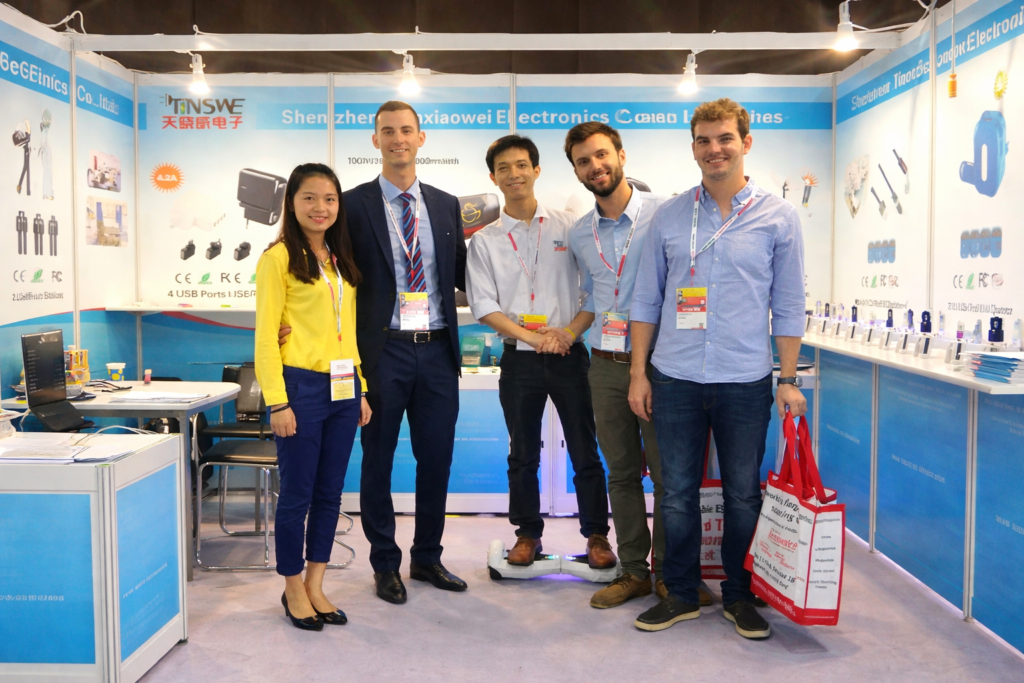
Real customer feedback and cooperation moments that reflect our product quality, responsive service, and
long-term manufacturing support.
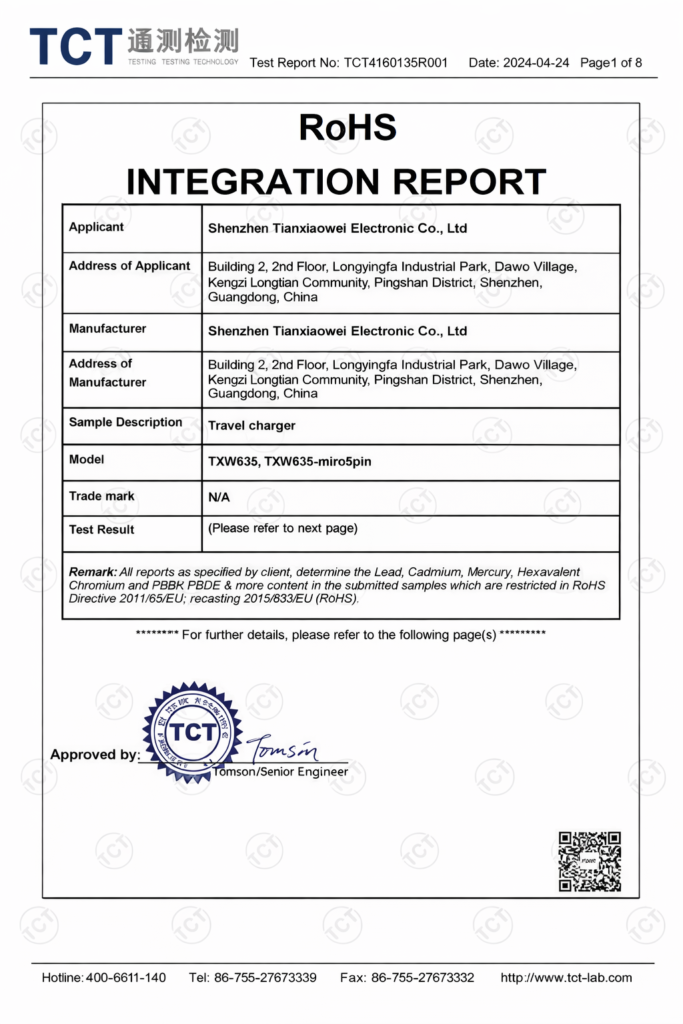
Certificates & material control
Custom Ethernet Cable Frequently Asked Questions
Review common questions about specifications, sampling, MOQ, testing, packaging and production before submitting an Ethernet cable project for evaluation.
What Ethernet cable categories can Cablivo manufacture?
Cablivo can review projects involving Cat5e, Cat6, Cat6A, Cat7 and Cat8 directions. Final category availability and performance depend on the approved cable construction, connector, shielding, material and testing requirement. A category name is not confirmed until the specification and applicable verification method have been reviewed.
Can I order custom Ethernet cable lengths?
Yes. Provide the finished length, measurement unit, tolerance and connector-to-connector reference points. For multi-length orders, send a SKU list showing quantity, color, label and packaging for every length. Clear SKU planning helps prevent different variants from being mixed.
What information is needed for a quotation?
Provide cable category, length, conductor, AWG, shielding, jacket, connector, boot, wire sequence, application, quantity, testing and packaging. Drawings, sample photographs, connector datasheets and SKU files improve quotation accuracy. Missing items can be identified during the initial review.
Can Cablivo copy an existing Ethernet cable sample?
An existing sample can be reviewed for dimensions, connectors, visible construction and application. Internal materials and performance may require additional inspection or testing. Cablivo does not assume every hidden specification from appearance alone. Approved replication details should be documented before sampling.
What is the MOQ for custom Ethernet cables?
MOQ starts from 500 pcs for many custom cable projects. Final MOQ depends on connector type, cable construction, material, molding, tooling, packaging, SKU count and total order quantity. Printed packaging may have a separate supplier MOQ.
How long does Ethernet cable sampling take?
Sample timing depends on product structure, connector availability, material preparation, tooling requirements and testing needs. A schedule is confirmed after drawings, samples or specifications have been reviewed. Complex molded structures and uncommon components may require additional preparation.
How is bulk production lead time confirmed?
Production timing is confirmed after final sample approval, order quantity, material availability, connector sourcing, testing and packaging are clear. Printed boxes, custom molding or special materials may influence the schedule. A confirmed production plan is provided for the approved order.
Which Ethernet cable tests are available?
Project discussions may include continuity, wire sequence, RJ45 fit, length, shielding structure, appearance, label and packaging checks. Transmission-related tests require an agreed cable category, method and acceptance limit. Additional mechanical or third-party tests can be reviewed separately.
Can Cablivo provide private-label packaging?
Yes. Options may include cable printing, product labels, barcodes, individual bags, retail boxes, insert cards, multi-SKU packing and export cartons. Packaging files, dimensions, MOQ, proofing and carton quantities should be approved before bulk packing.
Can several Ethernet cable SKUs share one order?
Yes. Send a complete SKU list showing specification, length, color, connector, quantity, label, barcode and packaging for every variant. Cablivo can organize production, inspection and carton identification around the approved SKU matrix.
Send Your Ethernet Cable Project for Factory Review
Share your available specifications, drawings, existing cable photographs or connector information with Cablivo. A complete project package may include the required cable category, finished length, conductor or AWG, shielding, jacket, color, RJ45 connector, boot style, wire sequence, application, target quantity, testing requirements and packaging files.
When formal drawings are unavailable, begin with clear photographs of the existing cable, connected equipment and connector interfaces. Include dimensions wherever possible. Our team will review the available information and identify any missing details needed for quotation or sample planning.
MOQ starts from 500 pcs for many custom cable projects. Final MOQ, sample timing and production schedule depend on cable structure, connector availability, material preparation, tooling, testing, packaging and order quantity. Cablivo supports projects from engineering review and prototype development through bulk production, inspection, private-label packing and shipment coordination.