 跳到内容
跳到内容 
Custom Ethernet Cable Manufacturer
Engineering-led Ethernet cable manufacturing for global brands, equipment companies, distributors, and long-term supply programs requiring stable, repeatable project execution.
Develop Ethernet cable programs around application, category, length, shielding, connector, labeling, and packaging requirements. Cablivo reviews drawings, BOMs, existing samples, connector details, and testing needs before sampling. Approved specifications guide material preparation, production, inspection, packaging, and repeat orders.
- Category and cable structure review
- RJ45 and connector confirmation
- Sample development and revision
- Project-based testing and inspection
- Private label and multi-SKU packaging
Manufacturing Capacity Behind Every Ethernet Cable Program
Cablivo combines manufacturing experience, factory space, production coordination, molding resources, and overseas project support to move custom Ethernet cable requirements from initial review into controlled sampling and repeatable production.
18 Years Experience
Eighteen years in cable manufacturing represent more than a date on a company profile. The experience covers requirement review, drawing interpretation, sample development, production preparation, inspection, packaging, and shipment coordination. For Ethernet cable programs, accumulated manufacturing knowledge helps identify missing specifications before sampling and keeps engineering discussions connected with repeatable factory execution.
20,000+ m² Factory
More than 20,000 square meters of factory space provide a manufacturing foundation for custom cables, wire harnesses, cable assemblies, molded connectors, packaging operations, and project-based production. Larger project areas also support material preparation, production scheduling, inspection, finished-goods management, and multi-SKU separation without relying on a small workshop arrangement.
1,500+ Person Team
A team of more than 1,500 people supports coordination across engineering, purchasing, quality, production, warehousing, international sales, order follow-up, packaging, and shipment preparation. Ethernet cable programs often involve more than cable assembly alone, especially when several lengths, colors, labels, cartons, or delivery batches must follow approved files.
3 Manufacturing Bases
Three manufacturing bases provide a stronger foundation for parallel projects, production coordination, and long-term supply programs. The value lies in managing different cable categories, production stages, material requirements, and order schedules across a broader manufacturing system rather than depending on one small line or a limited assembly area.
80+ Molding Machines
More than 80 injection molding machines support molded cable and overmolded connector projects. For Ethernet cable programs requiring customized strain relief, connector protection, molded logos, special boot structures, or application-specific cable ends, molding capability connects appearance requirements with mechanical protection and repeatable mass-production tooling.
Overseas Market Experience
Cablivo supports projects serving Europe, North America, South America, Oceania, and other overseas markets. Export-oriented work requires attention to product identification, packaging files, carton marks, shipment documents, target-market requirements, and communication across time zones. Project specifications and compliance documents are confirmed according to the actual product and destination.
Ethernet Cable Support for Different Project Teams
Network products reach the market through engineering, purchasing, manufacturing, branding, distribution, and supply-chain teams. Each role evaluates different risks, so project communication must reflect the information needed for its own decision process.
Network Equipment Brands
Network equipment brands often need Ethernet cables developed around routers, switches, communication devices, control units, or accessory product lines. Product appearance is only one part of the program. Stable specifications, recognizable SKUs, repeatable packaging, and long-term version control are equally important.
- Category, length, and connector confirmation
- Cable color and molded appearance
- Product labels and model numbers
- Retail or project packaging
- Repeat-order specification control
Engineering Teams
Engineering teams usually begin with a drawing, device interface, existing sample, connector photo, specification sheet, or application description. Early review focuses on whether cable construction, RJ45 selection, shielding, jacket, length, and testing requirements support the intended installation.
- Drawing and BOM review
- Wire sequence confirmation
- Connector and boot discussion
- Shielding structure review
- Sample feedback and revision
Procurement Teams
Procurement teams need more than a unit price. A usable quotation requires clear specifications, quantity breakdowns, material assumptions, packaging requirements, sample conditions, and production timing factors. Missing project information can create misleading comparisons between suppliers.
- MOQ and quantity breakdown
- Material and connector sourcing
- Sample and tooling discussion
- Production schedule factors
- Packaging and shipment information
Industrial Manufacturers
Industrial equipment manufacturers may use Ethernet cables inside machinery, automation systems, control cabinets, sensors, cameras, or communication modules. Installation space, electromagnetic conditions, connector orientation, cable flexibility, mechanical protection, and maintenance access can influence the final structure.
- Installation environment review
- Connector fit and direction
- Shielding and jacket discussion
- Length and routing requirements
- Functional and visual inspection
Importers and Distributors
Importers and distributors frequently manage several categories, lengths, colors, and packaging versions. A technically correct cable can still create warehouse or channel problems when SKU labels, barcodes, cartons, or packing quantities are not controlled accurately.
- Multi-SKU product lists
- Barcode and label files
- Packing quantity confirmation
- Export carton marks
- Repeat-order identification
Long-Term Supply Programs
Long-term programs require stable files and controlled changes. Approved samples, final drawings, BOM versions, packaging artwork, label files, and inspection requirements should remain connected with each order. Any material or design change must be discussed before production.
- Approved sample reference
- Final BOM and drawing version
- Packaging file control
- Batch and SKU identification
- Repeat-order coordination
What Global Brands Evaluate Before Selecting a Manufacturer
A manufacturer enters a serious supplier shortlist by proving technical understanding, factory execution, quality planning, packaging accuracy, and long-term consistency. Strong claims alone cannot replace project files, inspection steps, or manufacturing evidence.
Ethernet Product Knowledge
Ethernet cable manufacturing begins with understanding the application rather than selecting a product name from a catalog. Category, cable construction, conductor type, shielding, outer jacket, RJ45 connector, boot design, length, installation environment, and testing requirements must be reviewed together.
- Application before specification
- Structure before quotation
- Category based on actual requirements
- Testing scope confirmed by project
Engineering Review
Project files should be reviewed before materials are prepared. Drawings, BOMs, sample photos, connector specifications, wire sequence information, packaging artwork, and testing requirements may contain missing or conflicting details. Early clarification reduces repeated sampling and late production changes.
- Drawing review
- BOM review
- Sample comparison
- Missing-information checklist
Sample Development
A prototype should verify more than appearance. Cable length, connector fit, wire sequence, shielding arrangement, material feel, label position, boot structure, and packaging presentation may all require confirmation. Approved samples create a clearer production reference.
- Prototype preparation
- Feedback recording
- Revision discussion
- Sample approval reference
Testing Capability
Testing should match the cable category, application, and agreed specification. Continuity, connector fit, cable length, shielding structure, appearance, labels, and packaging may be included according to project requirements. Transmission-related tests are discussed separately when required.
- Test scope confirmation
- Inspection criteria
- Records and approval points
- Pre-shipment review
Material Control
Conductors, insulation, shielding materials, jackets, connectors, boots, labels, and packaging components can affect function, appearance, cost, and delivery. Final material decisions should be recorded in the BOM or approved specification before production begins.
- Material identification
- Connector sourcing
- Incoming inspection
- Change approval before production
Production Consistency
Mass production should follow approved samples, final drawings, final BOMs, work instructions, and packaging files. Incoming inspection, in-process inspection, functional checks, appearance review, and outgoing inspection help reduce variation between samples and production batches.
- Approved production references
- Process checkpoints
- OQC review
- Repeat-order file control
Packaging Execution
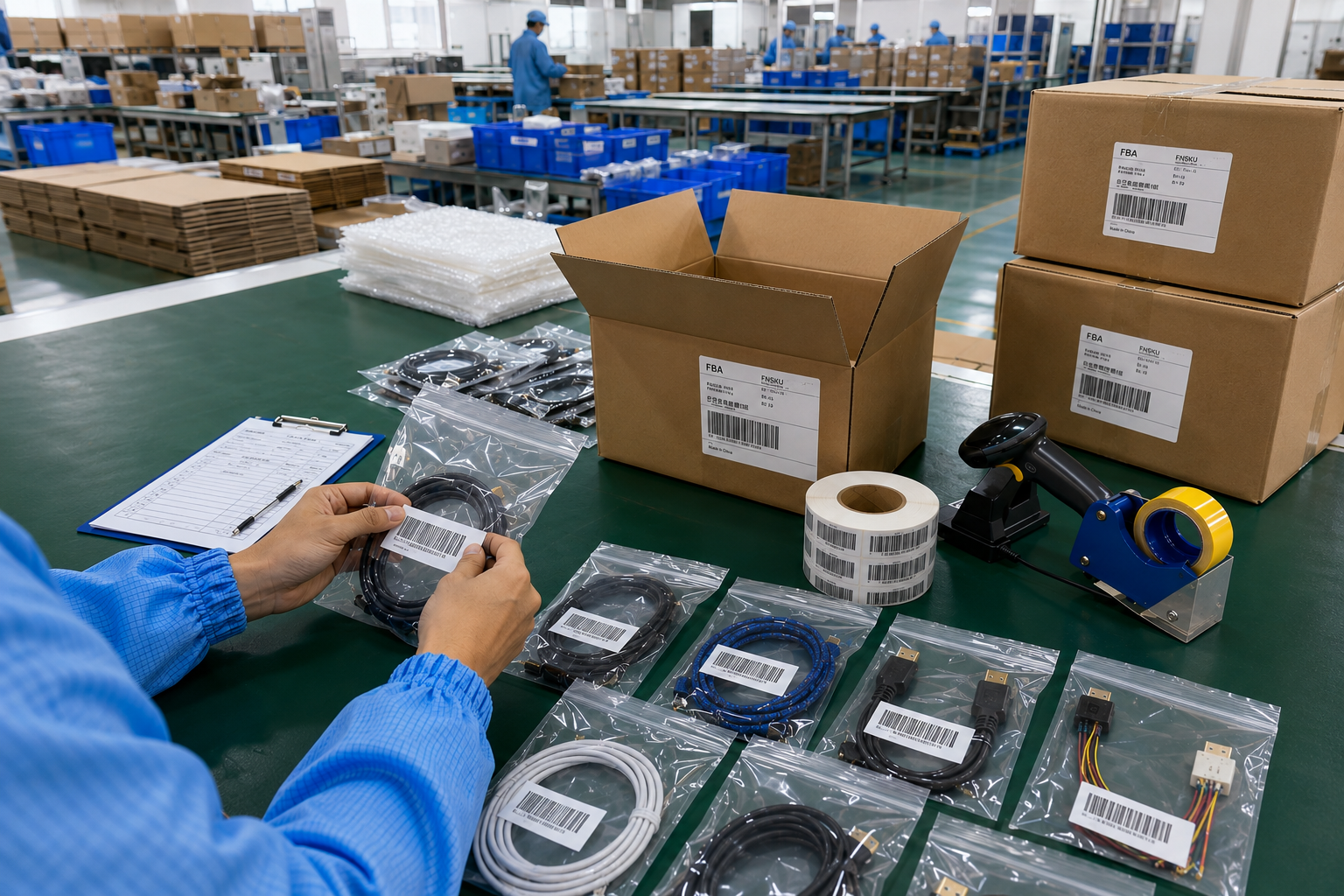
Private label programs depend on accurate labels, barcodes, packaging artwork, packing quantities, inserts, and carton marks. Packaging mistakes can create warehouse, distribution, and retail problems even when cable function is correct.
- Barcode verification
- SKU separation
- Packing quantity control
- Carton mark confirmation
Long-Term Supply Support
Long-term cooperation requires more than completing the first order. Project versions, approved materials, sample references, label files, packaging revisions, order history, and quality feedback should remain traceable for future production.
- Version management
- Repeat-order review
- Approved change records
- Multi-batch coordination
Reduce Risk Before Ethernet Cable Production Begins
Many cable failures begin before a production line starts. Incomplete specifications, unclear connectors, missing testing requirements, and uncontrolled packaging files can turn a simple-looking Ethernet cable into an expensive supply problem.
Specifications Before Quotation
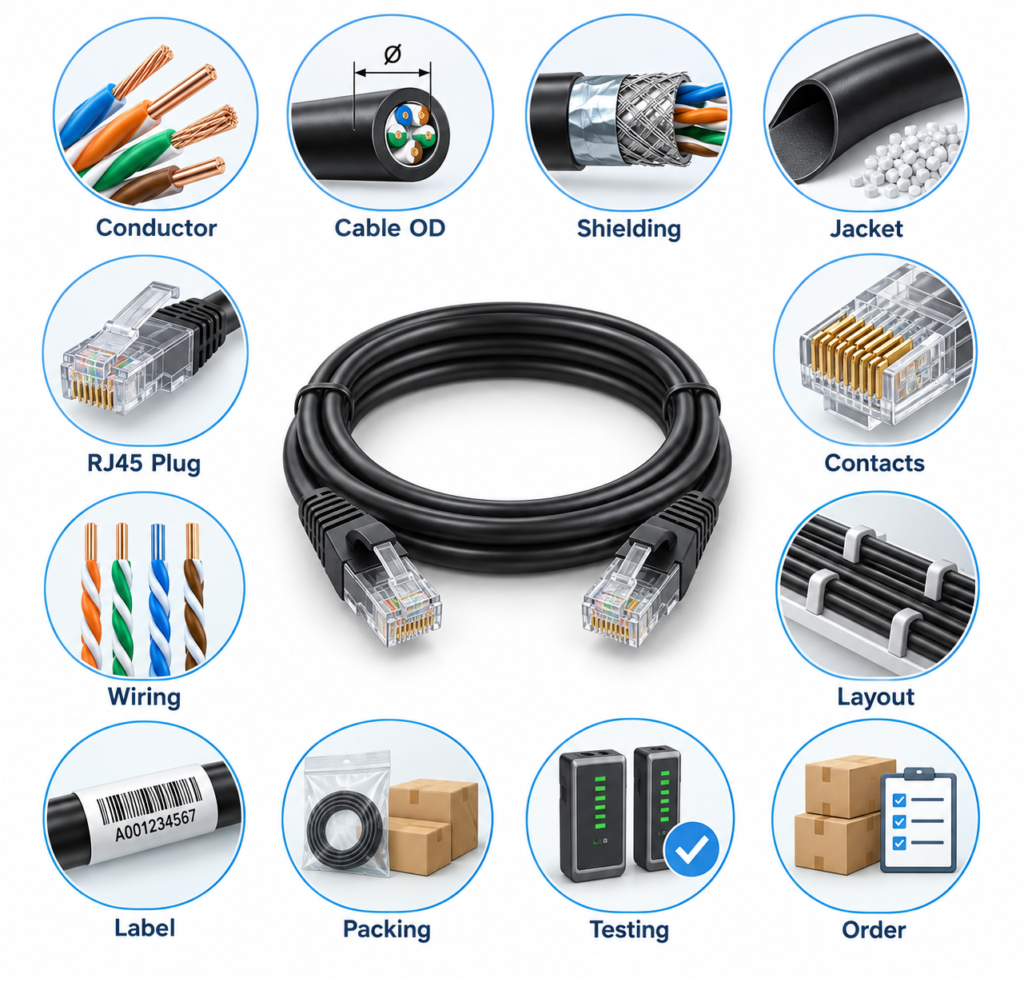
A reliable quotation begins with a defined product. “Cat6 cable, black, one meter” may appear clear, yet several decisions remain open: conductor construction, cable diameter, shielding, jacket material, RJ45 plug, contact requirements, boot style, wiring arrangement, label content, packing method, testing scope, and order breakdown.
Cablivo can begin with a drawing, BOM, existing sample, sample photos, connector photos, specification sheet, application description, or SKU list. Complete files are useful, but early communication can also start with partial information.
- Where will the cable be installed?
- Which device interfaces must connect?
- Is shielding required by the application?
- Which cable category is required?
- Are several lengths or colors involved?
- Is private label packaging required?
- Which tests or reports must be discussed?
- What is the target quantity for each SKU?
Approved Sample Controls Production
A sample becomes valuable when it creates a stable production reference. Visual approval alone is not enough for many Ethernet cable programs. Length, connector fit, wiring, shielding, jacket, color, boot shape, printing, label position, barcode, and packaging presentation may need separate confirmation.
After feedback is received, revision points should be recorded clearly. A revised sample can then be prepared according to confirmed changes. Once approval is complete, the final sample should connect with a final drawing, final BOM, packaging file, and inspection requirements.
- Approved physical sample
- Final drawing and dimensions
- Final connector model
- Final wire or cable specification
- Confirmed material and color
- Label and barcode artwork
- Packaging layout
- Testing and inspection checklist

Packaging Files Protect Every SKU
Multi-SKU programs introduce risks beyond cable construction. Several lengths may share the same color and connector, making them difficult to identify after packaging. Similar barcodes, model numbers, carton marks, or packing quantities can also lead to warehouse errors.
A packaging review should connect each physical cable with its own SKU information. Label dimensions, barcode content, print location, bag or box style, insert card, packing quantity, inner box, export carton, and carton mark should be confirmed before mass packing begins.
- SKU list
- Quantity per SKU
- Barcode files
- Product label artwork
- Packaging artwork
- Insert card or instruction sheet
- Packing quantity
- Carton mark template
- Destination or channel requirements

Ethernet Cable Categories Reviewed Around Your Application
Cable category selection should follow application requirements, installation conditions, device compatibility, cable construction, and testing needs. Cablivo can review several Ethernet cable directions before sampling, subject to actual product capability and agreed specifications.

Cat5e Cable
Cat5e remains relevant for many network devices, commercial installations, security equipment, control systems, and distribution programs where the project specification calls for a proven category without unnecessary construction complexity. Length, conductor structure, shielding, jacket, color, connector, label, and packaging can be reviewed according to application requirements.
- Suitable specification must be confirmed
- Shielded or unshielded direction can be discussed
- Custom lengths and labels can be reviewed
- Testing scope follows the project requirement
Cat6 Cable
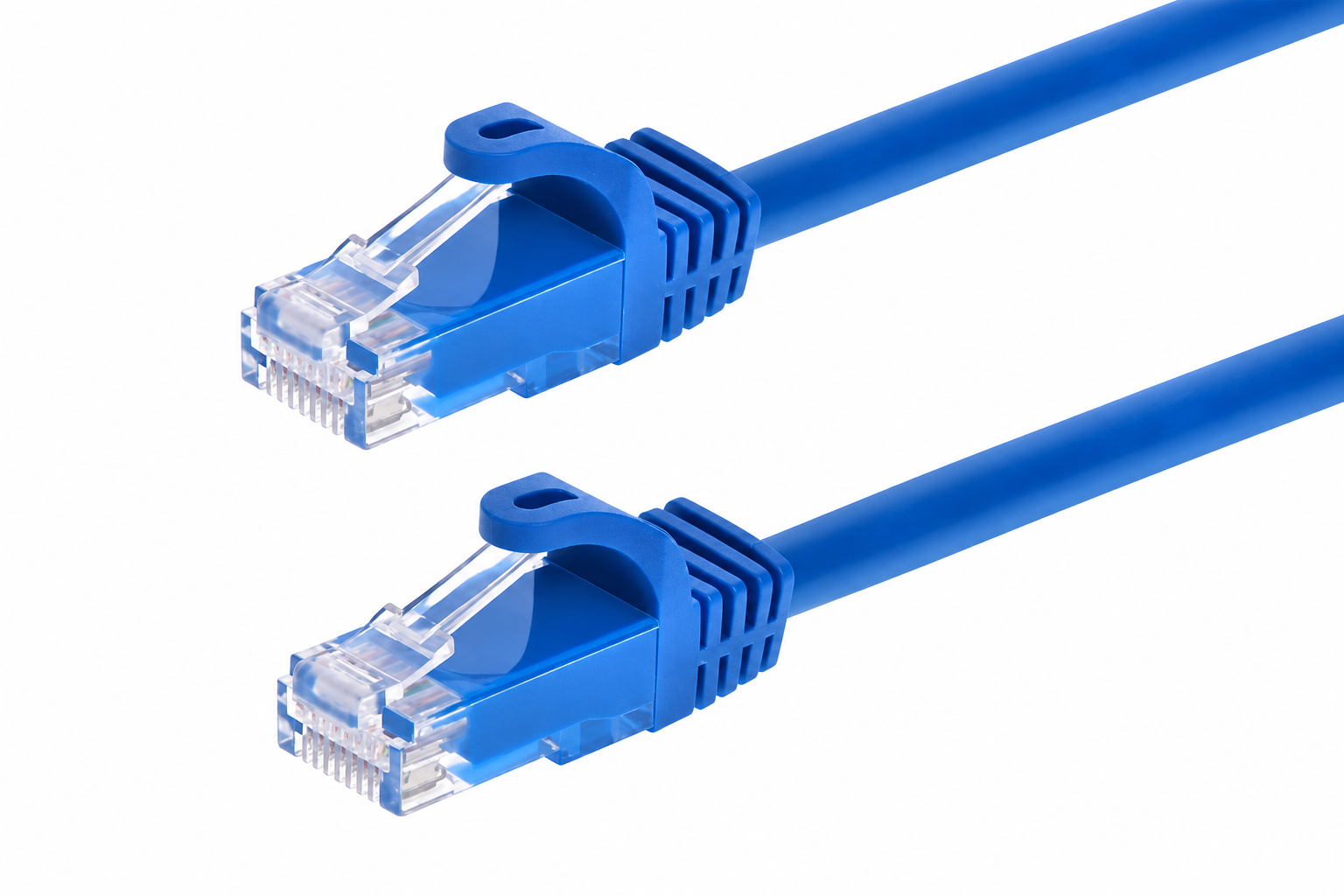
Cat6 cable programs often require a balance between network performance, cable flexibility, outer diameter, installation space, connector fit, packaging, and commercial cost. Project review should confirm whether the product is used for equipment connection, structured cabling accessories, retail patch cords, industrial systems, or another defined application.
- Conductor and cable construction review
- RJ45 and boot style discussion
- Length and color options
- Private label and multi-SKU packaging

Cat6A Cable
Cat6A projects generally require closer attention to cable construction, shielding, connector selection, outer diameter, bend requirements, installation space, and transmission-related testing. A category name alone does not confirm the final structure. Drawings, application details, target length, testing requirements, and connector specifications should be reviewed before sampling.
- Shielding structure discussion
- Connector compatibility review
- Application and routing assessment
- Test requirements confirmed before production

Cat7 Cable
Cat7 cable directions may be discussed for projects requiring enhanced shielding structures, specific connectors, industrial communication, network accessories, or private label product programs. Actual structure, connector configuration, cable category requirements, and testing expectations must be confirmed according to the intended application.
- Shielding and jacket review
- Connector and boot confirmation
- Custom appearance options
- Target-market documents discussed separately

Cat8 Cable
Cat8-related projects require careful review of the real cable structure, connector system, intended length, equipment application, installation environment, and testing requirements. Product claims should follow verified specifications and available test evidence rather than category wording used only for marketing.
- Application-led specification review
- Connector and cable structure confirmation
- Testing method discussed before sampling
- Packaging and labeling available by project

Custom RJ45 Assembly
Some programs do not fit a standard patch-cord format. Requirements may involve special cable lengths, panel routing, device connection, molded boots, labels, identification sleeves, packaging kits, or a combination with other cable assemblies. Cablivo can review drawings, device interfaces, existing samples, and application notes before confirming production feasibility.
- Non-standard lengths
- Custom boots or molded protection
- Identification and labeling
- Equipment-oriented assembly requirements
Specifications to Confirm Before Ethernet Cable Sampling
A clear specification improves quotation accuracy, material preparation, sample review, test planning, packaging execution, and repeat-order consistency. The following items should be confirmed according to the intended application.
Specification Area
Available Discussion Direction
Confirmation Focus
Cable Category
Cat5e, Cat6, Cat6A, Cat7, Cat8, subject to actual capability
Application, construction, target performance, testing
Cable Length
Single length or multi-length SKU program
Finished length, tolerance, quantity per SKU
Conductor Structure
Solid or stranded direction according to product
Installation, flexibility, cable design
Wire Gauge
Confirmed by drawing, sample, or project requirement
Structure, length, application, connector
Shielding
UTP, foil, braid, or combined shielding discussion
Interference environment and cable construction
RJ45 Connector
Connector model and shielded or unshielded direction
Fit, contact arrangement, boot, orientation
Outer Jacket
PVC or other materials according to project requirements
Flexibility, appearance, environment, target market
Cable Color
Standard colors or project color matching
Sample approval and production consistency
Boot Style
Standard boot, snagless boot, or molded structure discussion
Protection, space, appearance, installation
Labeling
Model label, barcode, serial information, SKU label
Content, size, position, print quality
Packaging
Bag, box, kit, inner carton, export carton
Channel, packing quantity, artwork
Testing
Continuity, fit, length, shielding, appearance, packaging
Test criteria and reporting needs
Nine Ways to Build Your Ethernet Cable Program
Custom manufacturing should connect technical specifications with installation, branding, packaging, and repeat-order needs. Nine main customization areas form the working foundation for quotation, sampling, approval, and production.
Cable Category
Category selection should follow the network application, cable construction, device requirements, installation environment, target length, and testing plan. Cablivo can review Cat5e, Cat6, Cat6A, Cat7, or Cat8 directions according to actual product capability and submitted specifications.
- Provide the required category
- Explain the installation or device
- Share applicable test requirements
Cable Length
Length affects material use, signal-related requirements, packaging size, SKU planning, production identification, and installation convenience. Multi-length programs should include a clear quantity breakdown so each finished length connects with the correct label and package.
- Confirm finished length and tolerance
- Separate quantity by SKU
- Provide packaging requirements for each length
Wire Gauge
Wire gauge cannot be selected independently from cable construction, conductor type, target length, flexibility, connector compatibility, and application. A drawing, existing sample, specification sheet, or device requirement helps establish a more accurate direction.
- Share the required AWG
- Identify solid or stranded construction
- Confirm connector and cable diameter limits
Shielding Structure
Shielding should respond to a defined electrical environment rather than being added as a marketing feature. Foil, braid, and combined structures influence cable diameter, flexibility, termination, connector selection, production process, and cost.
- Describe interference conditions
- Confirm shielded connector requirements
- Provide transmission or application expectations
RJ45 Connector
RJ45 selection influences mechanical fit, shielding continuity, contact arrangement, cable diameter compatibility, boot design, and installation space. Connector photos, model information, device interface details, or existing samples can support review.
- Confirm shielded or unshielded type
- Share device interface information
- Specify boot and orientation requirements
Jacket Material
Outer jacket selection affects appearance, flexibility, abrasion resistance, manufacturing process, installation environment, packaging, and target-market documentation. Material claims should follow real material specifications and supplier documents.
- Describe the operating environment
- Explain flexibility and appearance needs
- Confirm required compliance documents
Cable Color
Color can support product identification, branding, installation management, multi-SKU separation, or retail presentation. Color references should be confirmed during sampling, especially when a branded shade or matching connector color is required.
- Provide a color reference
- Confirm cable and connector color
- Record the approved sample for production
Labels and SKU
Labels connect each physical cable with its model, barcode, length, batch, or inventory identity. Clear label artwork and SKU lists help reduce mixing during packaging, warehousing, distribution, and repeat ordering.
- Provide final barcode files
- Confirm label position and dimensions
- Separate quantity by SKU
Retail Packaging
Packaging may involve bags, printed boxes, inserts, labels, inner cartons, master cartons, and carton marks. Artwork, materials, dimensions, packing quantity, and approval steps should be reviewed before mass production.
- Submit packaging artwork
- Confirm packing quantity
- Provide carton mark requirements
Inside the Structure of a Custom Ethernet Cable
A finished Ethernet cable appears simple from the outside, yet performance, flexibility, termination, durability, appearance, and production consistency depend on several connected layers. Each layer should be selected according to real project requirements.
Conductor and Insulation Foundation
The conductor carries the electrical signal and forms the base of the cable structure. Conductor construction, material, diameter, stranding, and surface condition can influence flexibility, termination, cable size, and manufacturing consistency. Copper-related specifications should be confirmed through the project BOM, drawing, sample, or material requirements.
Individual conductors are covered by insulation before pair formation. Insulation dimensions, material direction, color identification, and production consistency influence the geometry of each conductor and the stability of the twisted-pair structure.
- Required conductor construction
- Solid or stranded direction
- Wire gauge
- Insulation identification colors
- Cable flexibility
- Connector compatibility
- Material document requirements

Twisted Pair Geometry
Ethernet cable conductors are arranged in twisted pairs to support signal transmission and reduce interference between pairs. Pair construction involves more than twisting wires together. Conductor size, insulation geometry, pair lay, color identification, cable assembly, and production control all influence the finished structure.
Different cable categories and designs may require different internal arrangements. Some structures may include a separator or additional internal component. Final construction should follow an approved specification rather than a generic illustration copied from another category.
- Number of pairs
- Pair color sequence
- Pair construction
- Internal separator direction
- Cable diameter
- Flexibility and bend needs
- Termination method
- Target category and testing requirements

Shielding Structure
Shielding may be used when a project requires additional control of electromagnetic interference or a defined shielded cable construction. Foil shielding, braided shielding, pair shielding, or combined structures can influence cable diameter, flexibility, termination, connector design, grounding direction, production time, and cost.
Not every Ethernet cable requires the same shielding arrangement. The selected structure should follow equipment needs, installation conditions, cable category, connector type, and testing requirements.
- Interference environment
- Overall or pair shielding
- Foil or braid direction
- Drain wire requirement
- Shielded RJ45 connector
- Shield termination method
- Cable flexibility
- Transmission-related test discussion

Jacket Connector and Strain Relief
The outer jacket protects the internal structure and creates the finished appearance. Jacket material, wall thickness, color, texture, flexibility, printing, and outer diameter influence installation, packaging, handling, and connector termination.
The RJ45 connector and boot complete the cable assembly. Plug construction, contact arrangement, cable entry, shielding, boot shape, latch protection, molding, and strain relief should match the cable diameter and application environment.
- Jacket material direction
- Color and surface finish
- Cable printing
- Finished outer diameter
- RJ45 model
- Shielded or unshielded plug
- Boot style
- Molded strain relief
- Logo or identification
- Connector fit check

Ethernet Cable Manufacturing for Defined Applications
Application information helps determine cable structure, connector selection, length, shielding, jacket, labeling, testing, and packaging. Project review should begin with where and how the cable will be installed.

Network Equipment
Routers, switches, gateways, communication modules, and related network products may require cables supplied as accessories, installation components, or internal project items. Product teams often need several lengths, branded colors, labels, manuals, and packaging versions connected with specific device models.
- Device interface confirmation
- Length and color planning
- Model and SKU labeling
- Accessory packaging support

Data Systems
Data systems may involve racks, cabinets, server accessories, connection panels, or structured installation projects. Cable category, length identification, connector fit, bend requirements, shielding, and packaging quantity should follow the installation plan.
- Rack and cabinet routing
- Length identification
- Cable organization
- Project-based testing discussion

Industrial Automation
Industrial automation projects can expose Ethernet cables to limited installation space, electrical interference, repeated maintenance, machinery movement, or demanding routing. Jacket, shielding, connector protection, strain relief, and identification should be discussed around the real operating environment.
- Equipment interface details
- Interference environment
- Mechanical protection
- Installation and maintenance needs

Telecom Equipment
Communication equipment manufacturers may require cables integrated into systems, cabinets, modules, accessory kits, or installation packages. Drawing review, connector confirmation, labeling, quantity planning, and repeat-order file management help keep products aligned with equipment versions.
- Drawing and BOM review
- Equipment-specific labeling
- Packaging kits
- Version-controlled repeat orders

Security Systems
Cameras, access-control equipment, monitoring devices, and security systems may use Ethernet cables in indoor, cabinet, device, or installation environments. Cable length, routing, connector protection, color identification, and packaging should follow the installation method.
- Camera or device connection
- Installation length planning
- Connector fit
- Label and kit packaging

IoT Devices
IoT hardware teams may begin with a device interface, prototype enclosure, sample cable, or early-stage drawing. Cable diameter, connector size, routing space, length, flexibility, and appearance should be evaluated before the final enclosure and packaging are approved.
- Interface photo review
- Space and routing assessment
- Prototype sample
- Production-ready specification

Commercial Installations
Commercial installation programs may require standardized lengths, several colors, clear product identification, bulk packaging, project labels, or installer-friendly cartons. Accurate packing quantities and carton marks can be as important as the cable specification.
- Standardized SKU planning
- Color-based identification
- Bulk packaging
- Carton and project labels

Distribution Programs
Distributors often manage a broad assortment of categories, lengths, colors, packaging types, and replenishment schedules. Product files should connect every cable with a unique SKU, barcode, packaging version, packing quantity, and carton reference.
- Multi-SKU management
- Barcode and label control
- Retail or bulk packaging
- Repeat-order coordination
Engineering Review Before Ethernet Cable Sample Development
Early engineering review helps identify missing specifications, conflicting files, sourcing risks, connector issues, and testing gaps before materials are prepared. Cablivo can begin with complete files or a smaller set of project information.
Requirement Review
Requirement review begins with the application, target category, installation environment, cable length, quantity, connector, shielding, jacket, packaging, and test expectations. The goal is to create a clear project outline before detailed quotation or sampling.
- Product and application definition
- Required specifications
- Target quantity
- Packaging and delivery needs
Drawing Review
A drawing may include dimensions, connector information, cable construction, labels, packaging, and notes. Engineering review checks whether important details are clear enough for quotation and sampling and identifies where clarification is required.
- Length and tolerance
- Connector and boot
- Cable construction
- Labels and special notes
Sample Review
An existing sample can provide information not visible in a basic specification. Cable diameter, flexibility, connector shape, boot structure, color, label position, material feel, and packaging can be reviewed through physical samples, photographs, or video.
- Overall product photos
- Connector close-ups
- Cable and boot details
- Packaging reference
BOM Review
BOM review connects product requirements with actual materials. Connector models, cable specifications, jackets, accessories, labels, packaging items, and possible sourcing risks can be discussed before quotation or sampling.
- Material completeness
- Connector availability
- Missing items
- Sourcing and timing factors
Connector Confirmation
RJ45 plugs and related connector structures must match cable diameter, shielding, termination method, equipment interface, installation space, and boot requirements. Connector photos, models, data sheets, or samples can reduce selection errors.
- Connector model
- Shielded or unshielded type
- Cable diameter range
- Device fit requirements
Testing Review
Testing requirements should be confirmed before production planning. Continuity, connector fit, length, shielding structure, appearance, labeling, packaging, and transmission-related test discussions may apply according to the product and target market.
- Required inspection items
- Acceptance criteria
- Report or record needs
- Third-party test discussion
From Project Files to an Approved Ethernet Sample
Sample development turns drawings, specifications, photos, or existing products into a production reference. Timing depends on cable structure, connector availability, materials, tooling, testing requirements, and the clarity of submitted information.
Review Files
Engineering and sales teams review available drawings, BOMs, photos, samples, connector data, application information, target quantity, packaging needs, and testing requirements. Missing information is listed before material preparation begins.
Confirm Details
Cable category, length, conductor direction, shielding, jacket, connector, boot, color, label, package, and test scope are confirmed. Open questions should be resolved before the sample specification is released.
Prepare Materials
Cable, connectors, boots, jackets, labels, packaging components, and other required materials are prepared according to the reviewed specification. Availability and special sourcing needs may influence the sample schedule.
Build Prototype
The prototype is produced according to confirmed information. Cable preparation, termination, connector assembly, molding when required, labeling, and packaging follow the agreed sample direction.
Test and Review
The sample can be checked for continuity, connector fit, cable length, appearance, labels, packaging, and other agreed items. Feedback should identify exact changes rather than relying on general comments.
Approve Sample
Once the sample meets the confirmed requirements, approval should connect with a final drawing, final BOM, packaging file, and inspection checklist. These references guide production and later repeat orders.
Production Process for Power Cable Assemblies
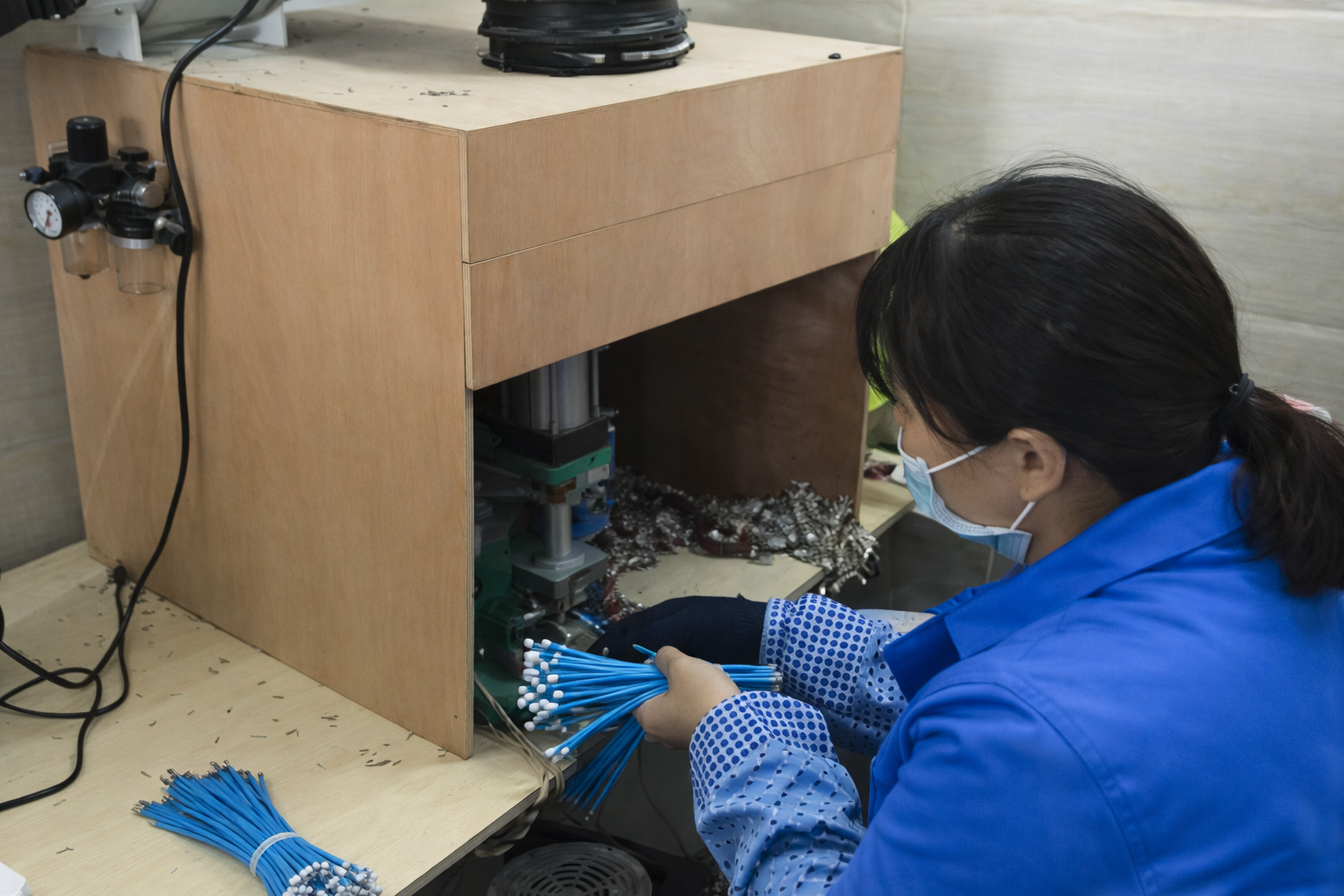
Power cable production may include cutting, stripping, crimping, soldering, overmolding, assembly, testing, labeling and packaging, depending on cable structure.
Typical production flow:

Material and connector preparation
Cable cutting and stripping
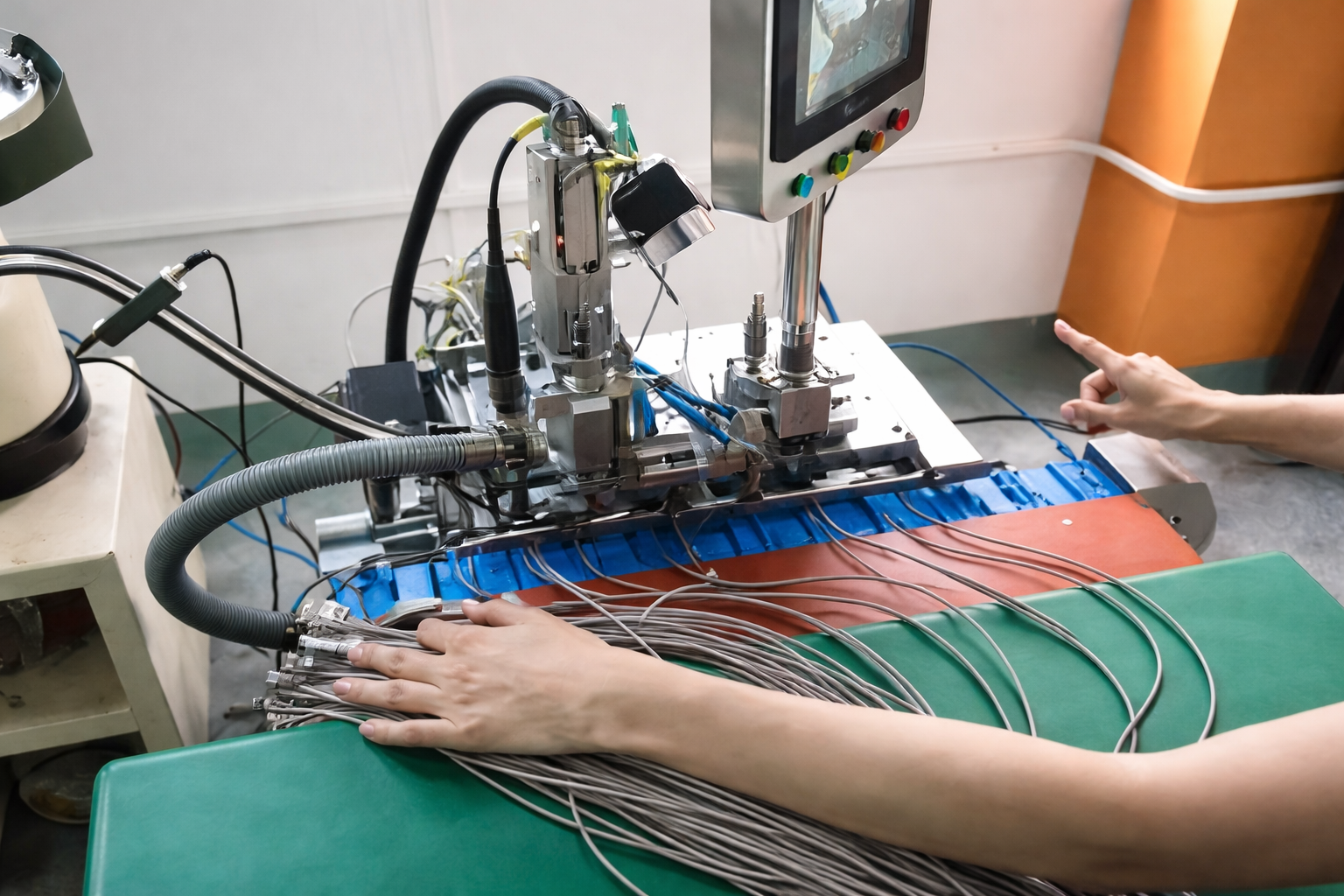
Terminal crimping or soldering

Injection Molding / Connector Assembly
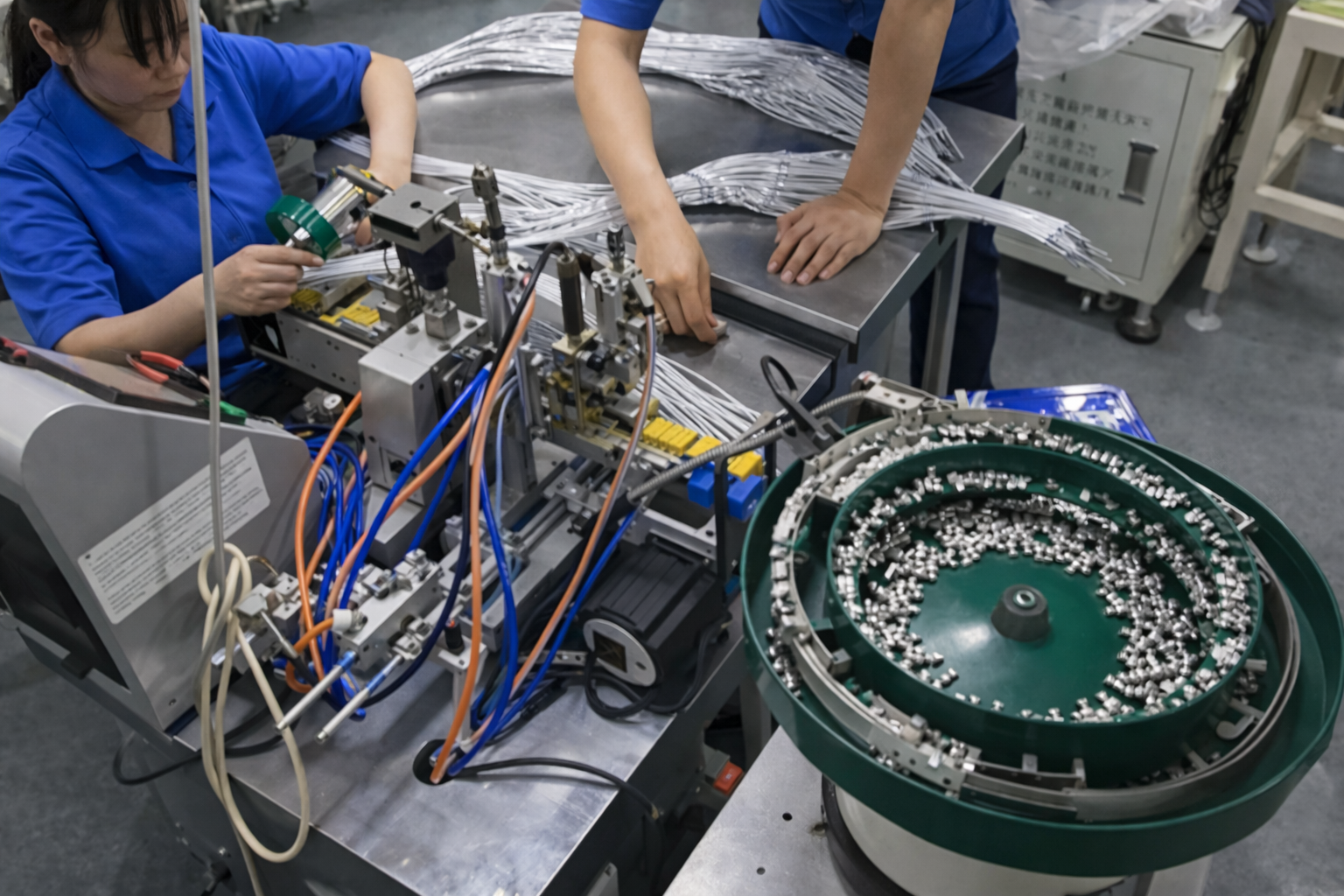
Connector assembly
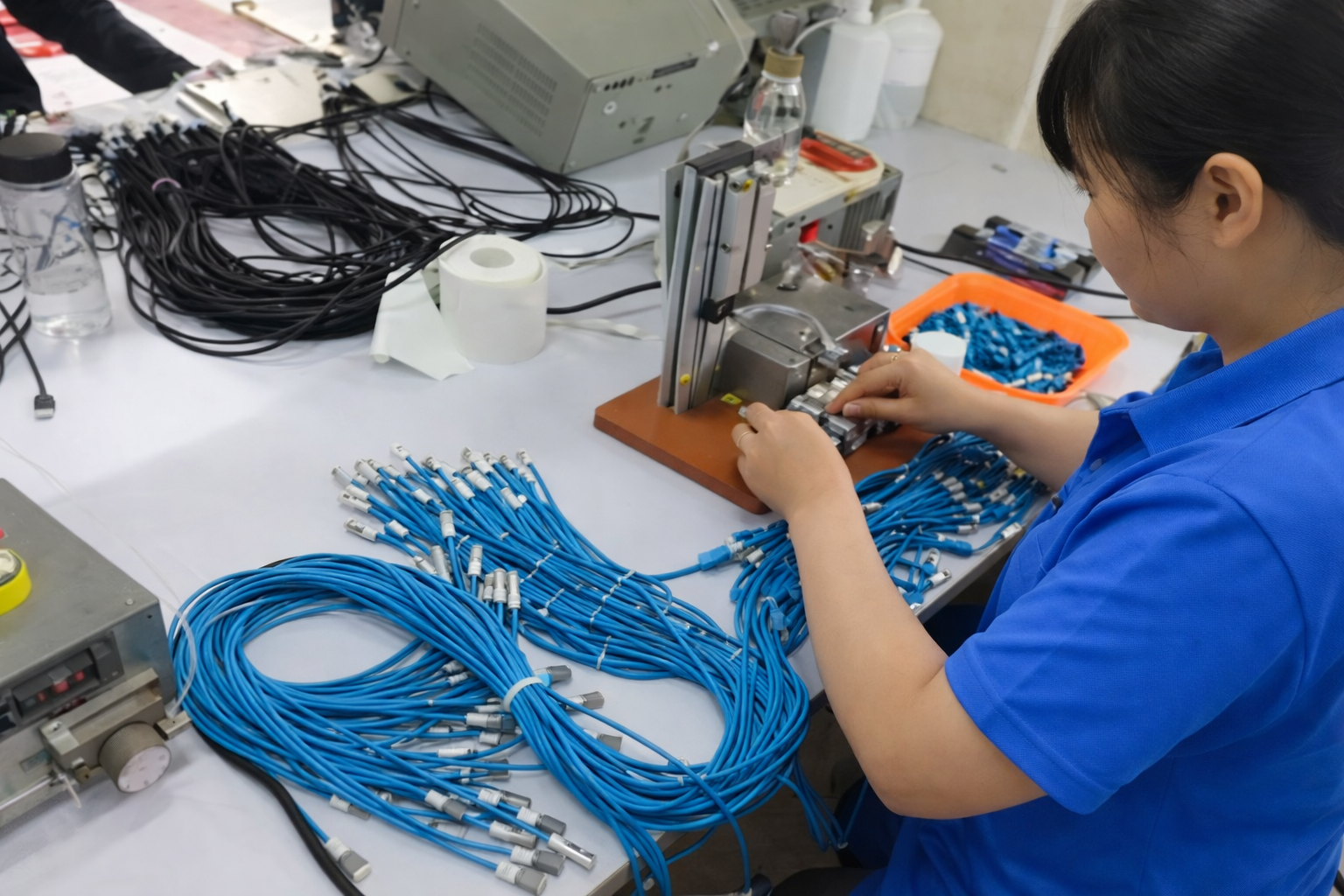
Sleeve, heat shrink or overmold processing
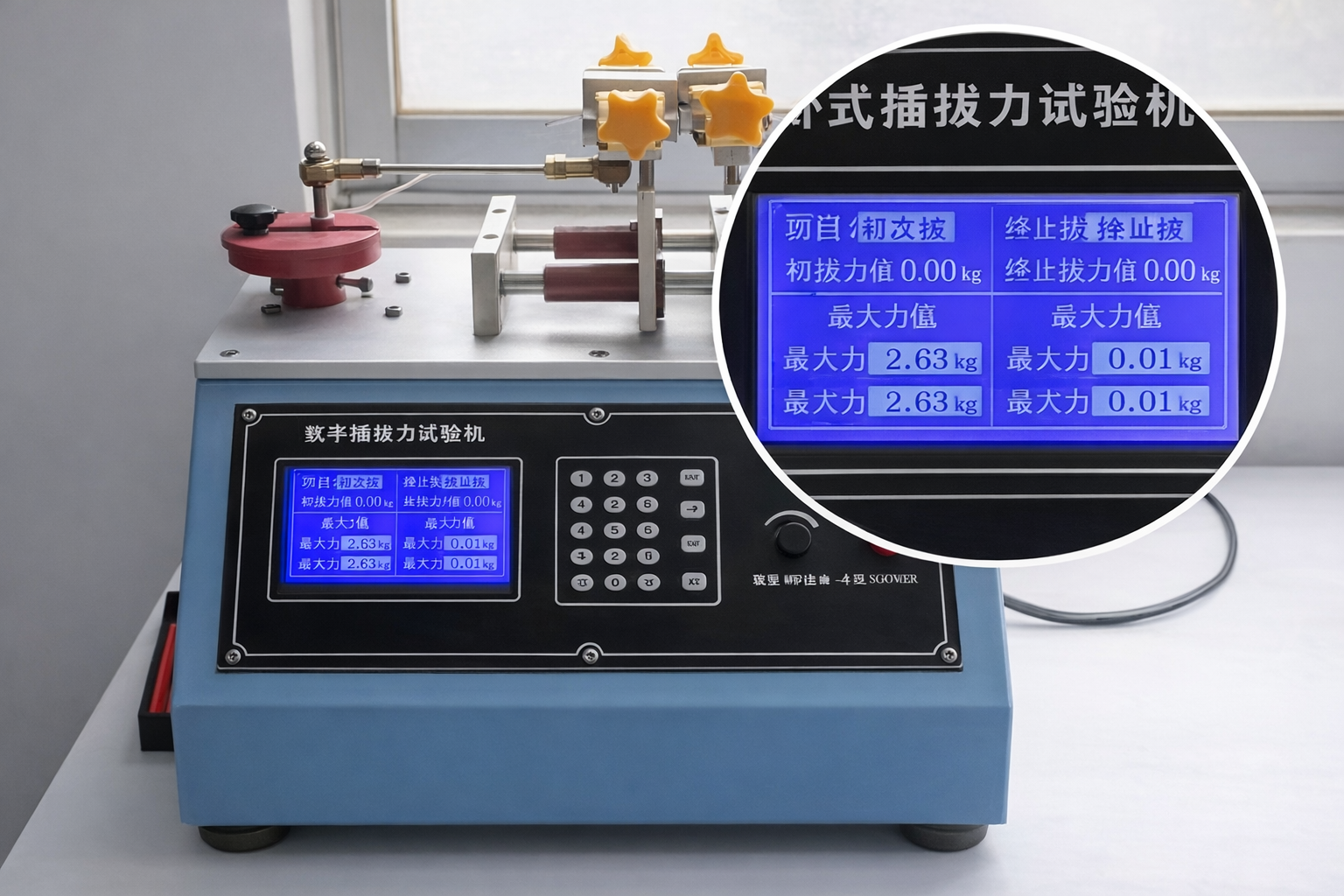
Continuity, polarity or fit check
Appearance and label inspection

Packing, carton mark and shipment preparation
Ethernet Cable Testing Based on Project Requirements
Inspection should follow the cable category, application, drawing, approved sample, target market, and agreed acceptance criteria. Not every program requires the same test combination.
Continuity Test
Continuity testing helps identify open circuits, incorrect connections, or incomplete termination. The test setup and acceptance criteria should follow the approved cable wiring and project requirements.
- Connection path check
- Open-circuit identification
- Termination verification
- Project-based records
Wire Sequence Check
Wire sequence inspection verifies whether conductors are arranged according to the approved wiring requirement. Incorrect sequence can prevent equipment communication even when the cable appears visually correct.
- Approved wiring reference
- Pair arrangement
- Connector-end comparison
- Error identification before packing
Connector Fit Check
Connector fit review checks whether the RJ45 plug, latch, boot, molded structure, and cable entry match the intended equipment or mating interface. Physical samples or device-interface information can support confirmation.
- Plug insertion
- Latch operation
- Boot clearance
- Device-interface compatibility
Cable Length Check
Finished cable length should follow the drawing, SKU list, and agreed tolerance. Multi-length programs require additional identification controls to prevent similar products from being mixed.
- Finished length
- Tolerance
- SKU identity
- Label correspondence
Shielding Inspection
Shielding inspection can review whether foil, braid, drain wire, shielded connector, and termination follow the approved structure. Relevant checks depend on the actual cable design and application.
- Shielding material
- Coverage and arrangement
- Connector connection
- Structure comparison
Appearance Inspection
Appearance inspection may cover cable color, surface condition, printing, connector assembly, boot shape, molding, label position, contamination, damage, and packaging presentation.
- Color and surface
- Connector appearance
- Printing and labels
- Molded-part inspection
Label Verification
Product labels, model numbers, barcodes, length identification, and package labels should match approved artwork and the correct SKU. Accurate labels support warehousing, distribution, and repeat ordering.
- Artwork version
- Barcode content
- Label position
- SKU matching
Packaging Inspection
Packaging inspection checks the approved bag or box, inserts, packing quantity, inner carton, master carton, carton mark, and SKU separation before shipment.
- Packing material
- Quantity per package
- Carton identification
- Final packing review
Maintain Consistency from Sample to Bulk Production
A successful prototype does not automatically guarantee stable production. Consistency comes from approved references, controlled materials, clear work instructions, process inspection, packaging files, and version management.
Approved References Define the Product
The approved sample should represent the product expected in mass production. Approval can cover cable length, connector, wiring, shielding, jacket, color, boot, printing, labels, packaging, and agreed inspection items.
A physical sample alone may not record every requirement. Final production references should include a drawing, BOM, packaging file, testing requirement, and written approval points.
- Approved sample
- Final drawing
- Final BOM
- Connector specification
- Color or material reference
- Label artwork
- Packaging artwork
- Inspection checklist

Materials Follow the Final BOM
Material preparation should follow the final approved BOM rather than early quotation assumptions. Cable materials, conductors, connectors, boots, labels, packaging components, and cartons may all affect product consistency.
Incoming inspection can help confirm whether prepared materials match the required identity, dimensions, appearance, and project documents before production.
- Cable and conductor specification
- Connector model
- Jacket or boot material
- Shielding components
- Label and printing materials
- Packaging components
- Approved substitutions
- Change communication

Production Uses Defined Checkpoints
Production consistency relies on work instructions and checkpoints connected with the approved product. Cable cutting, termination, crimping, connector assembly, molding, testing, labeling, and packing should follow the applicable manufacturing documents.
Inspection may occur during several stages rather than only after packing.
- Incoming material inspection
- First-article review
- Cable length verification
- Termination inspection
- Functional testing
- Appearance inspection
- Label and barcode check
- Packaging inspection
- OQC

Repeat Orders Follow Version Control
Repeat orders should begin with a review of the approved product version. Drawing revisions, BOM changes, packaging artwork, barcode updates, color changes, and quantity breakdowns should be checked before materials are prepared.
Long-term supply programs may involve several batches and SKU extensions. Clear records help distinguish an unchanged repeat order from a revised product.
- Previous approved sample
- Current drawing version
- Current BOM version
- Packaging revision
- Barcode and SKU list
- Quantity breakdown
- New compliance requirements
- Target shipment schedule

Private Label and Multi-SKU Ethernet Cable Programs
Brand presentation continues from the cable body to labels, packaging, cartons, and repeat-order files. A structured SKU program helps products remain identifiable through production, warehousing, distribution, and replenishment.

Custom Cable Colors
Cable color can support brand identity, installation management, product differentiation, or SKU separation. A color reference, physical sample, or approved shade should be used before production when a specific branded appearance is required.
- Cable jacket color
- Connector and boot color
- Color sample approval
- Repeat-order color reference

Molded or Printed Logo
Logo options may include molded marks, printed identification, cable printing, labels, or packaging artwork according to product structure and production feasibility. Logo size, position, color, readability, tooling, and legal authorization should be confirmed before sampling.
- Logo file
- Position and dimensions
- Molded or printed direction
- Sample approval

Product Labels
Product labels can carry model numbers, cable lengths, SKU information, batch references, warnings, or installation identification. Label material, size, printing, position, and adhesion should suit the cable and packaging environment.
- Label artwork
- Label dimensions
- Print content
- Placement reference

Barcode and SKU
Barcode files should connect with a clear SKU list and quantity breakdown. Similar cables with different lengths or categories need accurate identification to prevent mixed packaging and warehouse errors.
- Final barcode file
- SKU-to-product mapping
- Quantity per SKU
- Barcode verification

Retail Packaging
Retail packaging may include printed boxes, bags, inserts, hang tabs, labels, or bundled kits. Artwork, dimensions, materials, packing method, and approval samples should be confirmed before mass production.
- Packaging artwork
- Box or bag dimensions
- Insert cards
- Packaging sample approval
Export Carton Marks
Export cartons help identify product, SKU, quantity, destination, and handling information. Carton dimensions, gross weight, packing quantity, inner boxes, labels, and carton marks should follow confirmed shipping and warehouse requirements.
- Carton mark template
- Quantity per carton
- SKU separation
- Shipment identification
Compliance Documents Confirmed for Each Target Market
Compliance needs vary by cable type, material, application, destination, sales channel, and internal brand standards. Document availability should be checked against the exact product rather than assumed from a general company statement.
Material Declaration
Material declarations may identify conductors, jackets, connectors, shielding components, packaging materials, or other project items. Available documents depend on the actual selected materials and their suppliers.
- Confirm the exact material
- Provide the required document list
- Review supplier-document availability
- Connect files with the approved BOM
RoHS Discussion
RoHS-related requirements can be discussed according to the product, selected materials, destination, and requested document format. Cablivo should review available material records or testing needs before making a compliance statement.
- Target market
- Product model
- Material list
- Required report or declaration
REACH Discussion
REACH-related requirements may involve material declarations, supplier documents, or testing discussions. Availability and applicability should be confirmed for the actual cable structure and chosen materials.
- Confirm applicable requirement
- Review material documents
- Identify missing information
- Discuss further testing when needed
Product Test Requirements
Electrical, mechanical, appearance, packaging, or transmission-related test requirements should be defined according to the product specification and application. Not every Ethernet cable program follows the same testing plan.
- Required test items
- Acceptance criteria
- Test method
- Report or record format
Packaging Documents
Packaging documents may include artwork, barcode files, SKU lists, packing instructions, carton marks, material descriptions, or target-channel requirements. Files should be approved before mass packaging.
- Packaging artwork
- Barcode and SKU files
- Packing quantities
- Carton specifications
Third-Party Testing
Third-party testing can be discussed when required by the product, destination, brand standard, or project specification. Scope, samples, laboratory, cost, timing, and reporting should be confirmed before arranging the test.
- Test standard
- Sample quantity
- Laboratory requirement
- Schedule and report needs
Ethernet Cable Programs Built Around Defined Requirements
The following project profiles show how different Ethernet cable requirements can be organized before quotation and sampling. Final specifications, materials, testing, timing, and commercial terms require project-specific confirmation.
Network Equipment Program
A North American network equipment brand may need several cable lengths supplied with routers, switches, gateways, or installation kits. Project files could include device models, cable categories, RJ45 requirements, length breakdowns, branded colors, labels, manuals, packaging artwork, and target quantities.
- Device and connector information
- Length and SKU matrix
- Cable and boot appearance
- Product labels and barcodes
- Accessory packaging
- Repeat-order file control
Industrial Equipment Cable
A European industrial equipment manufacturer may need an Ethernet cable routed through machinery, a control cabinet, an automation system, or a communication module. Installation space, interference conditions, cable flexibility, connector orientation, jacket, strain relief, and maintenance access may influence the design.
- Equipment interface photos
- Installation environment
- Shielding direction
- Length and routing
- Connector and boot protection
- Inspection requirements
Distributor SKU Program
A distributor may need several categories, lengths, colors, packaging styles, and replenishment quantities under one private label program. Similar-looking products create a higher risk of barcode errors, mixed cartons, incorrect packing quantities, and repeat-order confusion.
- Product and SKU list
- Quantity per model
- Barcode artwork
- Packaging versions
- Packing quantities
- Carton marks and repeat-order files
Information Needed for an Accurate Ethernet Cable Quote
An accurate quotation depends on product specifications, quantity, material, connector, testing, packaging, and delivery requirements. Sharing more information early reduces assumptions and repeated clarification during sampling.
Quote Item
Cablivo Project Direction
MOQ
MOQ starts from 500 pcs for many custom cable projects
Final MOQ
Depends on category, cable structure, connector, material, molding, packaging, SKU quantity, and total order volume
Product Files
Drawing, BOM, specification sheet, existing sample, or detailed photos
Cable Details
Category, length, wire gauge, conductor direction, shielding, jacket, color
Connector Details
RJ45 model, shielded or unshielded direction, boot, molded structure
Quantity Branding
Total quantity and quantity per SKU Cable printing, molded logo, product labels, barcode
Packaging
Bag, box, insert, inner carton, export carton, carton mark
Testing
Required inspection items, acceptance criteria, report needs
Target Market
Destination, channel, and required compliance documents
Delivery Requirement
Target date, shipment method, destination, and packaging readiness
Project Timeline Planning
Project Stage
Stage Begins After
Main Timing Factors
Main Output
Initial Review
Basic project files are received
File completeness, product complexity, open questions
Review comments and missing-information list
Quotation
Core specifications and quantity are confirmed
Materials, connectors, packaging, tooling, testing
Commercial quotation
Sample Preparation
Sample specification is confirmed
Connector availability, material preparation, tooling, complexity
Prototype sample
Sample Revision
Confirmed feedback is received
Revision scope, new materials, tooling changes, retesting
Revised sample
Sample Approval
Required checks and appearance are accepted
Approval feedback and final files
Approved sample and final specification
Material Preparation
Order and final BOM are confirmed
Material availability, connector sourcing, packaging readiness
Production materials
Bulk Production
Approved sample and production files are released
Quantity, product structure, production schedule
Finished cable assemblies
OQC and Packing
Production is completed
Test scope, SKU count, packaging complexity
Packed finished products
Shipment Preparation
Packing and shipping information are confirmed
Carton data, documents, forwarder coordination
Shipment-ready order
Frequently Asked Questions About Custom Ethernet Cable Manufacturing
Review common questions about cable categories, engineering files, samples, testing, MOQ, packaging, compliance, production timing, and repeat-order management before sending project specifications.
What Ethernet cable categories can Cablivo manufacture?
Cablivo can review Cat5e, Cat6, Cat6A, Cat7, and Cat8 project directions according to actual product capability, cable construction, application, connector, length, shielding, and testing requirements. Category availability should be confirmed after drawings, specifications, samples, or application details are reviewed.
Can Ethernet cables be made in custom lengths?
Yes. Single-length and multi-length programs can be reviewed. Please provide finished length, tolerance, quantity per length, label requirements, and packaging details. Similar lengths should use clear SKU or barcode identification to reduce mixing during production, warehousing, and distribution.
What shielding structures can be discussed?
UTP, foil shielding, braided shielding, and combined shielding directions may be discussed according to cable category, interference environment, connector type, cable diameter, installation, and test requirements. Final construction must follow the approved drawing or specification.
Can Cablivo reproduce an existing Ethernet cable sample?
Existing samples can support review of cable diameter, flexibility, connector, boot, shielding, color, label, construction, and packaging. For complex products, a physical sample provides more information than photographs. Production feasibility and final specifications still require confirmation before sampling.
What files are needed before sample development?
Useful files include drawings, BOMs, existing sample photos, connector photos, cable specifications, wire sequence information, target lengths, quantities, testing requirements, labels, and packaging artwork. A project can begin with partial information when complete files are unavailable.
How are wire sequence and continuity checked?
Wire sequence and continuity can be checked according to the approved wiring requirement and project testing plan. Inspection helps identify open circuits, incorrect connections, or termination errors. Test methods and acceptance criteria should be confirmed before production.
Can Cablivo support private label packaging?
Yes. Available directions include cable colors, molded or printed logos, product labels, barcodes, SKU labels, bags, printed boxes, inserts, inner cartons, export cartons, and carton marks. Final artwork and packing instructions should be approved before mass packaging.
What is the MOQ for custom Ethernet cables?
MOQ starts from 500 pcs for many custom cable projects. Final MOQ depends on cable category, structure, connector, material, molding, tooling, packaging, number of SKUs, and total quantity. Share a quantity breakdown for a more accurate evaluation.
How long do samples and production take?
Sample time depends on cable structure, connector availability, material preparation, tooling, testing, and file completeness. Production lead time depends on approved samples, final BOM, material availability, quantity, testing scope, packaging readiness, and production scheduling.
How are repeat-order versions managed?
Repeat orders should reference the approved sample, final drawing, BOM version, label artwork, barcode files, packaging revision, quantity breakdown, and any approved changes. A version review before production helps prevent outdated files or materials from entering a new batch.
Send Your Ethernet Cable Specifications for Review
Share available drawings, BOMs, existing sample photos, connector details, cable category, finished length, wire gauge, shielding, jacket, color, quantity, testing requirements, labels, and packaging files. Complete specifications help Cablivo prepare a more accurate project review, while early discussions can also begin with a device interface photo, an existing sample, or a basic requirement list.
For multi-SKU programs, include the quantity for each length, color, category, barcode, and packaging version. For equipment-oriented projects, describe the installation environment, device interface, available space, routing, and mechanical requirements. For private label programs, provide logo files, label artwork, barcode files, box artwork, packing quantities, and carton marks.
Cablivo will review the submitted information around engineering feasibility, missing specifications, connector and material preparation, sample development, testing, packaging, MOQ, and production planning. Sample and production timing will be discussed after the main project details are confirmed.
